 How-to
7 Steps to Emergency Dental Care for Children and Toddlers
Quick Summary
Emergency dental care for children and toddlers means treating severe pain, uncontrolled bleeding, a knocked-out or loose permanent tooth, or significant trauma to the mouth or jaw as urgent. Call a dentist right away when any of these occur, and do not wait for a minor-looking problem to resolve on its own.
- Call a dentist immediately if a permanent tooth is knocked out, loosened or pushed out of place.
- Bleeding that does not stop after 10 minutes of gentle pressure needs urgent attention.
- Do not reinsert a knocked-out baby tooth, because replanting can damage the permanent tooth underneath.
- Facial swelling, fever or a bad taste suggests infection and needs same-day care.
- Trauma to the face or head should always be evaluated medically, even if the teeth look fine.
Table of Contents
- What Counts as a Pediatric Dental Emergency
- Step 1: Check Whether It Is a True Emergency
- First Aid for a Child's Toothache at Home
- What to Do When a Child Breaks a Tooth
- Knocked-Out Baby Teeth: What Parents Should Do
- Warning Signs That Need an ER Visit or 911
- Booking Same-Day Emergency Care for Your Child
- Frequently Asked Questions
Last updated: November 21, 2026
Most parents discover a dental emergency at the worst possible moment: a toddler face-plants on the kitchen tile, a six-year-old bites down on a hard candy, or a child wakes at midnight crying about a throbbing tooth. Emergency dental care for children and toddlers works differently from adult care, because a child's teeth, jaw and pain tolerance are different, and the decisions you make in the first hour can shape the outcome for years. Kevin Nail DDS, a privately owned practice in Copperfield, Houston, treats families of all ages, and the steps below reflect common questions parents ask in a panic.
What Counts as a Pediatric Dental Emergency
A pediatric dental emergency is any dental problem that involves severe pain, bleeding that will not stop, a knocked-out or loose permanent tooth, or significant trauma to the mouth, teeth or jaw. Not every upset is an emergency, but a child's mouth can change quickly, so it is better to call early than to wait.
Common examples include:
- A knocked-out permanent tooth
- A chipped, cracked or broken tooth
- A loose or displaced tooth
- Severe toothache that keeps a child awake or does not respond to care
- Swelling of the gums, cheek or face
- Injury to the lips, tongue, cheeks or gums from a fall or sports accident
Baby teeth that are knocked out need a different response than permanent teeth, and we cover that later in this guide.
Step 1: Check Whether It Is a True Emergency
Use this checklist to decide how urgently your child needs care:
- Is there bleeding that does not stop after 10 minutes of gentle pressure?
- Has a permanent tooth been knocked out, loosened or pushed out of place?
- Is the pain severe enough to disrupt sleep or eating?
- Is there facial swelling, fever or a bad taste that suggests infection?
- Did the injury involve a blow to the head or jaw?
If you checked one or more boxes, treat the situation as urgent and call a dentist right away. If none apply and the problem is minor, such as a small chip on a baby tooth, you can usually schedule an appointment within a day or two.
For a deeper look at what qualifies, see our article on What Is Considered a Dental Emergency: A Clear Guide.
First Aid for a Child's Toothache at Home
A toothache in a toddler and a toothache in a school-age child are not the same problem. In children under about three, teething, a lodged piece of food, and early decay can all produce the same fussiness, and a toddler cannot tell you where it hurts. In older children, decay, a cracked tooth, or an infection under a filling are the usual causes.
Step 1: Rule out the simple causes first.
- Look inside the mouth with a flashlight. Check for a piece of food, popcorn hull, or floss caught between the teeth, and remove it gently with floss or a soft brush.
- Rinse the mouth with warm water, not hot, to clear debris. A toddler who cannot spit can be given a small sip of water to swish and swallow.
- Feel the outside of the cheek for warmth or swelling. Compare both sides; one-sided swelling is a red flag for infection.
Step 2: Control pain safely.
- Give an age-appropriate pain reliever, acetaminophen or ibuprofen, dosed by your child's current weight, not age alone. Confirm the dose with a pharmacist or your doctor if you are unsure.
- Apply a cold compress to the outside of the cheek for 15 minutes on, 15 minutes off. Wrap the compress in a thin cloth; do not place ice directly on skin.
- Keep your child from chewing on the sore side, and offer soft, cool foods rather than hot or sticky ones.
Watch out: Do not place aspirin, crushed pain pills, whiskey, clove oil, or teething gels containing benzocaine directly on a child's gum or tooth. Aspirin can burn tissue, and benzocaine products carry a known risk of methemoglobinemia in children under two and should not be used without a clinician's direction.
Step 3: Know when a toothache is more than a toothache.
A toothache that comes with facial swelling, fever, a bad taste, or a visible pus-filled bump on the gum is likely an infection and needs same-day care, not home treatment (the NHS). Swelling that spreads toward the eye or neck is an emergency-room situation.
Step 4: What to expect at the visit.
A dentist will typically examine the tooth, take an X-ray if the child can tolerate it, and decide between a filling, a pulpal treatment such as a pulpotomy, or an extraction if the tooth cannot be saved.
A child's toothache often eases once the underlying problem is treated. A dental consultation can assess the tooth and recommend the right next step.
What to Do When a Child Breaks a Tooth
A broken tooth can look dramatic, but the response depends on how much tooth is missing and whether the nerve is exposed.
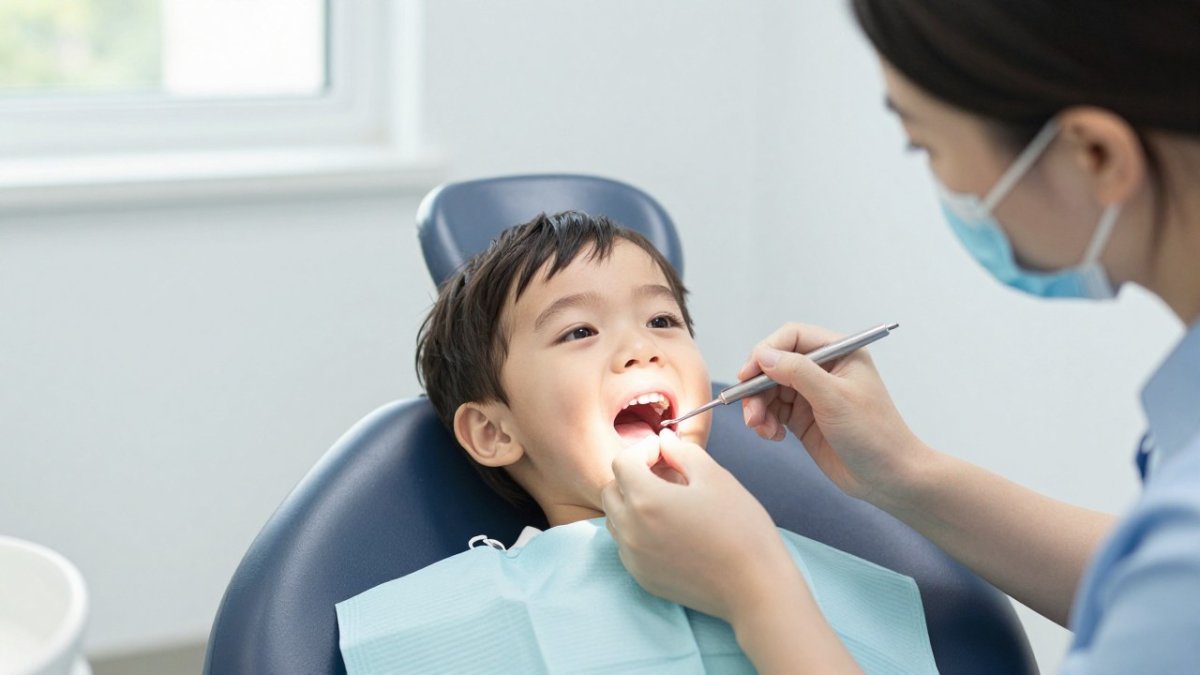
First, find the broken piece if you can and bring it with you in a clean container or wrapped in damp gauze. Do not scrub it or put it back in the socket. Rinse the mouth with warm water and hold a cold compress against the lip or cheek to limit swelling.
A small chip on the edge of a tooth may only need smoothing. A larger break that exposes the inner tooth often needs prompt treatment to protect the nerve. Gentle, bone-preserving extraction and tooth-saving techniques are sometimes needed, and our office uses the Acteon Cube piezoelectric system for procedures that aim for less swelling and faster healing. Learn more about our gentle tooth extraction and oral surgery services.
The sooner a broken tooth is assessed, the better the chance of saving it.
Knocked-Out Baby Teeth: What Parents Should Do
Parents often ask whether a knocked-out baby tooth should be put back in. The answer is no. Replanting a primary tooth can damage the developing permanent tooth underneath, so do not try to reinsert it.
Instead:
- Keep the child calm and check the mouth for other injuries.
- Rinse any bleeding gently with clean water.
- Hold a cold compress against the area.
- Call your dentist to report the injury, even though the tooth itself will not be saved.
Your dentist may want to check for damage to the gums, lip or nearby permanent teeth, and may recommend a follow-up visit to monitor how the mouth heals.
Baby teeth and permanent teeth need different responses, so the steps differ depending on which tooth is affected.
| Situation | What to do | Note |
|---|---|---|
| Knocked-out baby tooth | Do not reinsert it | Replanting can damage the permanent tooth underneath |
| Bleeding from injury | Rinse gently and apply cold compress | Keep the child calm and check for other injuries |
| Knocked-out permanent tooth | Call the dentist immediately | The replantation window is measured in minutes |
| Any tooth injury | Call your dentist to report it | Even when the baby tooth cannot be saved |
Warning Signs That Need an ER Visit or 911
Most dental emergencies can be handled in a dental office, but some situations need emergency medical care. Call 911 or go to the nearest emergency room if your child has:
- Bleeding that does not slow after sustained pressure
- Difficulty breathing or swallowing
- Swelling that spreads into the neck, throat or under the eye
- A blow to the head with confusion, vomiting, loss of consciousness or unequal pupils
- A jaw injury that prevents the mouth from closing or causes obvious deformity
Trauma to the face or head should always be evaluated medically, even if the teeth look fine.
Booking Same-Day Emergency Care for Your Child
When a dental emergency happens during office hours, call the practice directly rather than booking online, a front desk can triage a child faster than a web form. Calling promptly helps a child get timely care, and knowing what to do during a dental emergency can make the wait for an Hour Dental appointment less stressful.
What to have ready before you call.
- What happened, and how long ago.
- Which tooth or area is involved, and whether it is a baby tooth or a permanent tooth.
- Whether there is bleeding, swelling, fever, or any blow to the head.
- Your child's age and weight, and any medication they take.
- Your insurance information, or a plan to discuss self-pay if you are uninsured.
What the visit usually involves.
A same-day emergency visit generally follows a predictable sequence: a focused history and exam, imaging when it will change the decision, then treatment or a temporary measure with a follow-up plan.
After hours and weekends.
Ask your dentist for the after-hours number before you need it, and save it in your phone alongside your pediatrician's line. If the office is closed and your child has facial swelling, fever, or trouble swallowing, do not wait for morning, use an urgent care or emergency room.
Cost and insurance questions.
Many parents ask whether urgent care is worth it without insurance. For a deeper answer, read Is Emergency Dental Care Worth the Cost Without Insurance? You can also review our guide to same-day emergency dental care and what to do now.
For injuries and problems that are not urgent, a regular visit is a good time to discuss treatment options with your dentist.
Kevin Nail DDS is a privately owned practice in Copperfield, Houston, with long-term staff who know our patients by name. Dr. Kevin Nail personally performs every procedure, and our team is ready to help your family through a dental emergency with care and clear communication.
Frequently Asked Questions
Should I take my child to the ER for tooth pain?
Not always. For most toothaches, a pediatric dentist can see your child faster and more appropriately than an emergency room, which typically treats pain but cannot repair teeth. Go to the ER right away if your child has facial swelling that affects breathing or swallowing, a fever with swelling, or injuries to the head or jaw. Otherwise, call a dentist first, describe the symptoms, and ask whether same-day care is available. Keep your child comfortable with a cool compress on the outside of the cheek while you wait.
What is a dental emergency for a child?
A children's dental emergency includes severe or persistent toothache, a knocked-out permanent or baby tooth, a broken or cracked tooth, a loose tooth that has moved out of position, bleeding that does not stop after 10 minutes of gentle pressure, and swelling of the gums or face. Any injury involving the mouth after a fall or sports collision should be checked. When in doubt, call the dental office and describe what happened. Most practices triage calls and tell you whether your child needs to be seen today.
What should I do if my toddler knocks out a baby tooth?
Do not try to reinsert a knocked-out baby tooth, because doing so can damage the developing permanent tooth underneath. Rinse the mouth gently with water, apply pressure to any bleeding with clean gauze, and call a pediatric dentist to report the injury. Keep the tooth if you can find it and bring it along. Many dentists will want to check the mouth even when a baby tooth is lost, so schedule an evaluation promptly rather than waiting for the next routine visit.
How can I help a child with a toothache before seeing a dentist?
Consider a children's pain reliever as directed on the label, and confirm the correct dose with a pharmacist or doctor. Rinse the mouth with warm salt water and gently floss around the affected tooth to remove trapped food. Apply a cold compress to the outside of the cheek for 15 minutes at a time. Avoid placing aspirin or numbing products directly on the gums, and check with a doctor before giving any medication to a young infant.