 blog
5 Best Practices for Toddler Dental Hygiene at Home
Table of Contents
- Start Brushing Early and Brush Twice Daily
- How to Brush Toddler Teeth: Technique and Supervision
- How Much Toothpaste for a Toddler: Fluoride Guidelines
- Build a Consistent Toddler Brushing Routine
- Introduce Flossing and Limit Cavity-Causing Foods
- Schedule Your Toddler's First Dental Visit
- Handle Resistance and Make Brushing Fun
- Frequently Asked Questions
Last Updated: October 9, 2026
Start Brushing Early and Brush Twice Daily
The best time to start toddler dental hygiene is as soon as the first tooth appears, usually around six months of age. Early brushing establishes healthy habits that last a lifetime. At Kevin Nail DDS, we recommend establishing a twice-daily routine from the start, morning and before bedtime.
Brushing twice daily removes plaque and food debris that cause cavities. Most families find success by linking brushing to existing routines: right after breakfast and before bed. This consistency makes the habit automatic for both you and your child.
Starting early also helps your toddler become comfortable with the brushing sensation. Many children who begin brushing early show less resistance during dental visits later. The key is making it part of daily life, not a special event.
How to Brush Toddler Teeth: Technique and Supervision
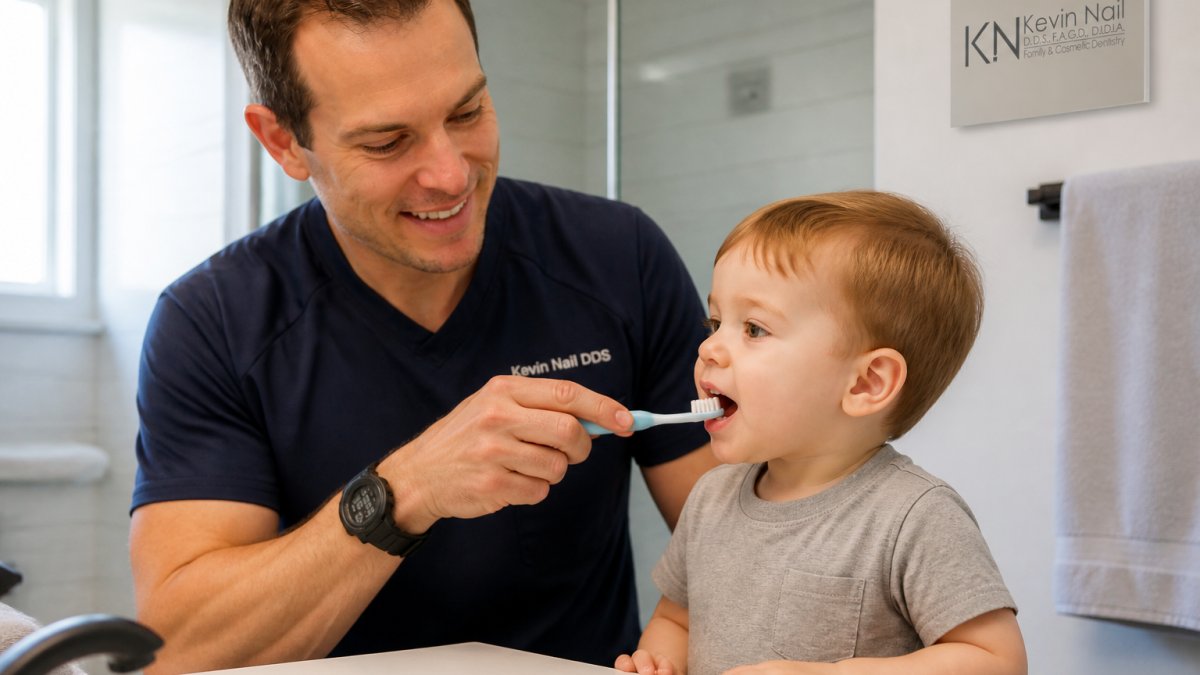
Proper brushing technique matters more than you might think. Hold your toddler's toothbrush at a 45-degree angle toward the gum line. Gently brush in small circular motions, not back-and-forth sawing movements. This angle helps clean where the tooth meets the gum, the spot where cavities often start.
Supervise your toddler's brushing until age six or seven. Young children lack the fine motor skills to brush effectively on their own. You'll need to help them reach all surfaces: the front teeth, inside surfaces, and the back molars.
A step-by-step routine you can actually follow
Most caregivers brush the front teeth well and miss the back molars and the gum line. A repeatable sequence fixes that. Try this order every time:
- Position first. Sit on the floor or a bed with your back supported, and have your toddler lie back with their head in your lap, facing up. This "knee-to-knee" or lap position gives you a clear view of the upper teeth and keeps your child's head still. A second adult can sit knee-to-knee with you for a two-person version if your toddler is especially wiggly.
- Start with the upper back molars. These are the hardest to see and the most cavity-prone. Brush the chewing surfaces with short back-and-forth strokes, then sweep the bristles down toward the gum line on the outside.
- Move to the upper front teeth. Brush the outside surfaces with small circles, then tilt the brush to reach the inside surfaces facing the tongue.
- Repeat on the lower arch. Brush the lower back molars first, then the lower front teeth, inside and out.
- Finish at the gum line. Run the bristles gently along where each tooth meets the gum, since that is where plaque tends to collect.
Spend about two minutes total. Many families use a timer or a short song to track time. Songs that last two minutes work well, sing it twice, and brushing time is done.
Flossing in the same session
Once two teeth touch, usually around age two or three, add flossing to the routine. A floss pick sized for small mouths is easier to handle than string floss. Slide it gently between the teeth, curve it against one tooth, and wipe up and down along the side, then repeat against the neighboring tooth. Floss the teeth that touch; you do not need to floss gaps. Doing it right after brushing keeps it from becoming a separate battle.
How Much Toothpaste for a Toddler: Fluoride Guidelines
The amount of toothpaste matters significantly for young children. Use only a grain-of-rice sized amount for toddlers under three years old (the CDC). For children ages three to six, use a pea-sized amount.
Fluoride toothpaste strengthens tooth enamel and prevents cavities. However, toddlers tend to swallow toothpaste rather than spit it out. Using the correct amount reduces fluoride ingestion while still protecting teeth.
Your toddler's developing teeth need fluoride protection. Fluoride hardens enamel and makes teeth more resistant to decay. Choosing a fluoride toothpaste designed for toddlers ensures the right concentration for young children.
Many families worry about fluoride safety. The key is using the proper amount. A grain of rice or a pea-sized portion is safe and effective, even if some is swallowed. Dentists recommend fluoride toothpaste as the gold standard for cavity prevention.
Build a Consistent Toddler Brushing Routine
Consistency is the foundation of good oral health habits. A toddler brushing routine works best when it happens at the same time every day. Your child's brain learns to expect brushing as part of the daily rhythm.
Create a routine that fits your family's schedule. Morning and bedtime brushing should feel natural, not forced. If mornings are rushed, simplify the routine: brush teeth, get dressed, eat breakfast.
Here's how to build a routine that sticks:
- Pick the same times each day (example: 7:30 a.m. and 8 p.m.)
- Link brushing to another activity (breakfast, bedtime story)
- Use the same location (bathroom, bedroom)
- Keep supplies in one easy-to-reach spot
- Make it part of the transition between activities
Children thrive on predictability. When brushing happens at the same time daily, resistance drops. Your toddler knows what to expect and accepts it as normal.
The consistency matters more than the specific time. Some families brush right after waking up. Others brush after breakfast. What matters is doing it twice every day without skipping.
Introduce Flossing and Limit Cavity-Causing Foods
Flossing begins when two teeth touch each other. For most toddlers, this happens around age two or three. Flossing removes plaque between teeth where a toothbrush can't reach.
Start with floss picks designed for small hands and mouths. They're easier to handle than traditional floss. Gently slide the floss between teeth and along the gum line. Your toddler may resist at first, that's normal.
The foods and drinks your toddler consumes directly affect their teeth. Sugary foods and acidic drinks create an environment where cavities thrive. Plaque bacteria feed on sugar and produce acid that damages tooth enamel.
Limit these cavity-causing culprits:
- Sugary snacks between meals (cookies, candy, crackers)
- Sugary drinks (juice, soda, sweetened milk)
- Acidic fruits and drinks (citrus, fruit juice)
- Frequent snacking throughout the day
Water is the best drink for your toddler's teeth. Milk provides calcium for strong teeth. Avoid putting juice or sugary drinks in sippy cups for extended periods.
Schedule Your Toddler's First Dental Visit
Your toddler's first dental visit should happen around age one or within six months of the first tooth appearing. Early dental visits establish a relationship with a dentist and catch problems early.
The first visit is usually short and simple. The dentist examines your child's teeth and gums. They'll check for signs of tooth decay and discuss your child's oral health habits.
Regular dental visits every six months help maintain your toddler's oral health. Dentists can spot early signs of decay that parents might miss.
At Kevin Nail DDS, we understand that many families want comprehensive dental care in one place. Our practice serves patients of all ages, including young children who need gentle, patient-focused care.
Preparing your toddler for the first visit reduces anxiety. Read children's books about dental visits. Talk positively about what the dentist does. Avoid using scary language like "shot" or "pain."
Handle Resistance and Make Brushing Fun
Toddler resistance to brushing is common and manageable. Many children balk at brushing because they want control, dislike the sensation, or are simply tired at bedtime. Matching the strategy to the cause works better than repeating the same tip.
Give limited choices
Let your toddler make choices within boundaries. Ask, "Do you want to brush first or get dressed first?" Offer two toothbrush colors and let them pick. Small choices give children a sense of control without derailing the routine.
Make it enjoyable
Make toddler dental hygiene enjoyable with these tactics:
- Sing a two-minute song during brushing
- Read a short book about dental hygiene
- Let your child pick a special toothbrush with their favorite character
- Brush your own teeth at the same time (modeling)
- Use a timer and make it a game ("Can we finish before the timer beeps?")
- Praise effort, not perfection ("Great job brushing the back teeth!")
When your toddler fights, bites, or clamps down
Resistance usually shows up in a few predictable forms. Here is how to handle each:
- Clamping the mouth shut. Try brushing while your toddler lies back with their head in your lap and looks up at you. The change in position often relaxes the jaw enough to slip the brush in. Start with the front teeth, which are easier to reach, and work back.
- Biting the brush. A chewed brush does not clean. Use a toothbrush with a thin, flexible head and bristles soft enough that biting does not hurt. If biting continues, pause, let your child chew on a clean teething ring or washcloth for a moment, then try again.
- Grabbing the brush. Give your toddler their own brush to hold and "brush" with while you use a second brush to do the real cleaning. This satisfies the urge to participate without giving up the cleaning.
- Full tantrum. Stay calm and consistent. Don't skip brushing because of resistance, that teaches your child that refusing works. Brush gently but firmly, keep the session short, and move on. Most tantrums fade once the routine is predictable.
Sensory sensitivities
Some children resist brushing because of how it feels, not because they want control. Signs include gagging, turning away from the brush, or distress over the toothpaste taste. If your toddler gags easily, try a smaller toothbrush head or softer bristles, and use only a grain-of-rice-sized smear of fluoride toothpaste so there is less to swallow. If the taste is the problem, ask your dentist about a different fluoride toothpaste flavor. Introduce the brush slowly, let your child hold it, touch it to their lips, and get used to the sensation before you brush.
Consistency combined with patience transforms resistance into acceptance. Most children who resist initially settle into the routine within a few weeks once the same sequence, position, and timing are repeated every day.
Frequently Asked Questions
How often should you brush a toddler's teeth?
Brush your toddler's teeth twice daily, once in the morning and once before bedtime. Twice-daily brushing removes plaque and food debris that cause cavities. Once your toddler's baby teeth begin to touch each other, add daily flossing to your routine. Consistency is key to establishing healthy oral habits early.
How much toothpaste should you use for a toddler?
For toddlers ages 2 to 3 years old, use a smear of fluoride toothpaste about the size of a grain of rice. From ages 3 to 6, increase to a pea-sized amount. This small quantity provides cavity protection while minimizing the risk of fluorosis if swallowed. Supervise brushing to ensure your toddler spits out the toothpaste rather than swallowing it.
When should a child first visit the dentist?
Schedule your toddler's first dental visit around age 1, or within six months of their first tooth erupting. Early dental visits establish healthy habits, allow the dentist to screen for tooth decay, and help your child become comfortable with dental care. Regular checkups every six months support optimal oral health and catch problems early.
How do you brush a toddler's teeth when they resist?
Make brushing fun by using songs, books, or videos to hold their attention. Let your toddler pick a toothbrush with their favorite character or color. Practice on stuffed animals first so they understand what to expect. Stay calm during tantrums and sensory sensitivities, and offer praise for cooperation. Consistency and patience help toddlers adjust to the routine over time.