 comparison
Are Clear Aligners Worth It for Adults? A 2026 Guide
Table of Contents
- Are Clear Aligners Worth It for Adults? The Short Answer
- Clear Aligners Pros and Cons: What Adults Should Weigh
- Clear Aligner Cost for Adults: What Goes Into the Total
- Clear Aligner Treatment Time: A Realistic Timeline
- Clear Aligners vs Braces for Adults: A Decision Framework
- Who Is Not a Good Candidate for Clear Aligners
- Risks, Side Effects, and Long-Term Retention
- Questions to Ask at Your Consultation
- Frequently Asked Questions
Last Updated: October 18, 2026
Are Clear Aligners Worth It for Adults? The Short Answer
For many adults with mild to moderate crowding or spacing, clear aligners are worth it: they straighten teeth discreetly, come out for meals, and make oral hygiene easier than fixed brackets and wires. Clear aligners are a treatment tool, not a magic fix, and whether they pay off depends on your bite, your wear discipline, and your budget. (Source: American Association of Orthodontists's data)
Clear aligners are custom-fit, removable plastic trays that apply gentle pressure to move teeth into a planned position. They work best for adults with mild to moderate cases and require roughly 20 to 22 hours of daily wear to stay on schedule.
The catch most guides skip: aligners only work if you actually wear them. Adult life gets in the way, and inconsistent use is the number one reason treatment runs long or stalls.
Clear Aligners Pros and Cons: What Adults Should Weigh
Clear aligners trade some control for convenience. That trade is usually a good deal for adults with straightforward cases and a disciplined routine, and a poor one for complex bite problems or anyone who knows they will not commit to wear time.
The Advantages That Matter Most
- Nearly invisible appearance. Most people will not notice the trays in conversation or photos, which matters for work and social occasions.
- Removable trays. You take them out to eat, drink, brush, and floss, so mealtime and oral hygiene stay simple.
- Comfort. No brackets and wires means less irritation to cheeks and gums, though you will feel gentle pressure when you switch trays.
- Fewer food restrictions. With metal braces you avoid sticky or hard foods; with aligners you simply remove them first.
The Real Drawbacks to Plan For
- Compliance is everything. Leave trays out too long and tooth movement slows or reverses.
- Speech changes. A slight lisp is common for the first few days with each new tray.
- Lost or broken trays. Replacements cost time and money, and adults who snack often are at higher risk.
- Limited for complex cases. Severe crowding, significant bite problems, and rotated teeth may need braces or a combined approach.
Clear Aligner Cost for Adults: What Goes Into the Total
Clear aligner cost for adults is not one number. It is a range driven by case complexity, the number of trays, the clinician's fee structure, and whether refinements and retainers are included. Most practices quote a total treatment fee rather than a per-tray price, and two adults with the same "crooked teeth" complaint can receive quotes that differ by thousands of dollars because their bite problems are not the same.
A realistic way to think about the investment is to separate the fee into what you are actually buying:
- Diagnostic records, imaging, a digital scan or impressions, and the treatment plan itself. These are sometimes bundled into the total fee and sometimes charged separately.
- The active aligner series, the custom trays and the clinician's oversight of the movement plan.
- Progress check-ins, visits to confirm teeth are tracking as planned.
- Refinements, additional trays if teeth do not move exactly as predicted. Ask upfront whether one round is included.
- Retainers, the long-term appliance that protects your result. This is not optional, and it is the line item adults most often forget to budget for.
What Actually Drives Your Quote Up or Down
- Case complexity. Mild crowding or spacing needs fewer trays and fewer visits than a case involving bite correction, rotated teeth, or extractions.
- Number of aligners and refinements. More trays mean more material, more planning, and more monitoring.
- Clinician experience and practice overhead. Fees vary by region and by who is overseeing the case.
- What is bundled. A quote that includes records, refinements, and retainers is not comparable to a lower headline price that excludes them.
- Retainer replacement. Retainers wear out and get lost. Plan for periodic replacement over the years.
Insurance and Financing: The Questions That Save Money
Dental insurance coverage for adult orthodontics varies widely. Some plans include an orthodontic benefit with a lifetime maximum, some cover a percentage up to a cap, and many exclude adult orthodontics entirely. Before you commit, ask for a written breakdown of what your plan will pay and what you will owe. Many practices also offer in-house or third-party financing that spreads the total across monthly payments.
A Practical Way to Compare Quotes
When you have two or more quotes, compare them line by line: records, active trays, check-ins, refinements, retainers, and any emergency or replacement fees. The lowest total is not always the best value if it leaves out retention. The right question is what the full plan, start to retainer, will cost you out of pocket after insurance.
Clear Aligner Treatment Time: A Realistic Timeline
Most adult clear aligner treatment runs somewhere between 6 and 18 months for mild to moderate cases, with many finishing in about a year. Complex cases and patients with inconsistent wear time run longer.
The Daily Wear Math
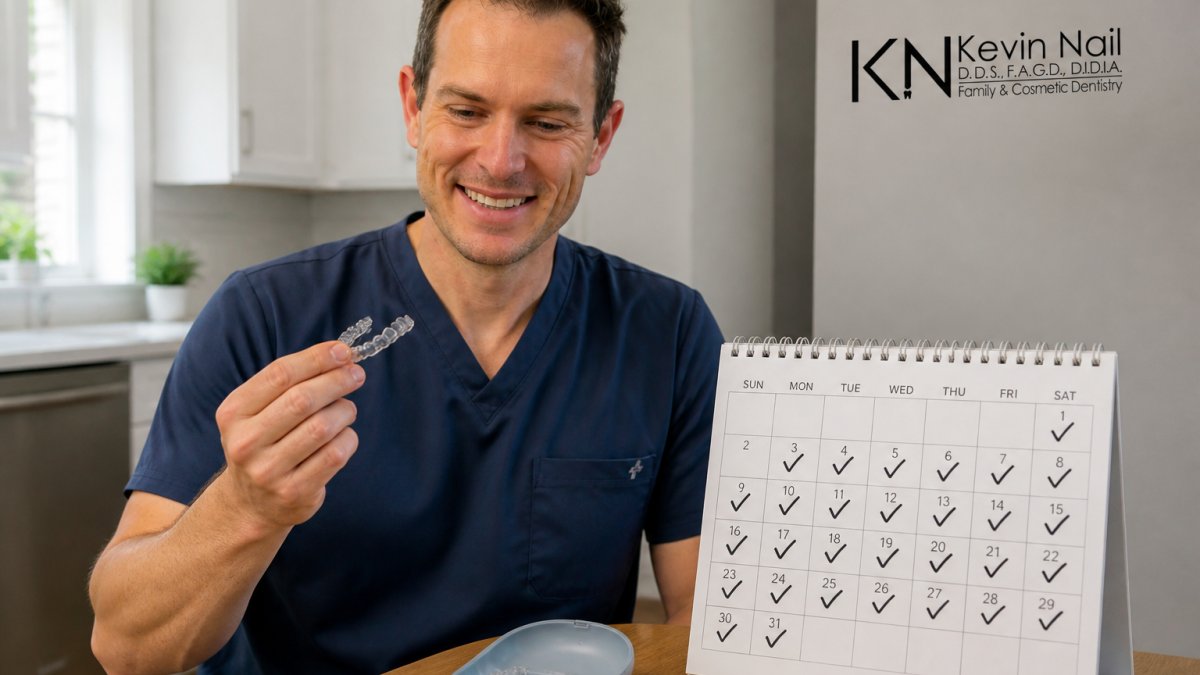
The standard instruction is 20 to 22 hours of wear per day. That leaves roughly two hours for eating, drinking anything other than water, and brushing. Adults who travel, snack frequently, or sip coffee all day often struggle here, and the math is unforgiving.
A common pattern is that missed wear does not just delay the current tray; it causes teeth to stop tracking the plan, which triggers additional refinement trays and more visits. In practical terms, a few weeks of casual wear can add months to the total.
What the Timeline Is Made Of
- Consultation and records, imaging and a digital scan to confirm case suitability.
- Digital treatment plan, the clinician maps each stage of tooth movement before any tray is made.
- Aligner delivery, you receive trays and a schedule for switching to the next set, typically every one to two weeks depending on the plan.
- Check-ins, periodic visits, often every several weeks, to confirm teeth are tracking. Some practices use remote monitoring between visits.
- Refinements, if teeth do not track as planned, additional trays are ordered. This is common and adds time.
- Retention, retainers begin immediately after active treatment and continue long term.
How to Keep Your Timeline on Track
- Wear trays the full 20 to 22 hours, removing them only to eat, drink anything besides water, and clean your teeth.
- Switch trays on the schedule your clinician sets, not when it feels convenient.
- Keep trays in their case when out, lost trays mean replacement delays.
- Attend check-ins even when everything feels fine; tracking problems are easier to fix early.
- Ask about remote monitoring if your schedule makes in-person visits difficult.
Setting Realistic Expectations
Ask your clinician for a projected number of trays and an estimated completion date, then ask what happens if you need refinements. A good plan includes a buffer. Adults who go in expecting about a year and hear "possibly longer with refinements" are far better prepared than those who anchor on the shortest number they were quoted.
Clear Aligners vs Braces for Adults: A Decision Framework
Choose clear aligners if your case is mild to moderate, you will commit to 20-plus hours of daily wear, and discreet appearance matters for your work or social life. Choose traditional braces if your case is complex, you know your routine will not support removable trays, or you would rather have the orthodontist control movement continuously.
| Factor | Clear Aligners | Traditional Braces |
|---|---|---|
| Appearance | Nearly invisible | Visible brackets and wires |
| Removability | Removable for eating and cleaning | Fixed in place |
| Wear discipline | Fully dependent on patient compliance | No compliance needed |
| Best for | Mild to moderate cases | Complex cases and bite problems |
| Oral hygiene | Easier brushing and flossing | Harder to clean around wires |
| Food restrictions | None while trays are out | Avoid sticky and hard foods |
That is the whole framework. The rest is honesty about your own habits.
Who Is Not a Good Candidate for Clear Aligners
Clear aligners are a poor fit for some adults, and saying so upfront saves everyone time and money. You may not be a good candidate if you have severe overcrowding, significant bite problems, teeth that need rotation or extraction, or untreated gum disease.
Adults with heavy grinding, multiple crowns, or prior complex orthodontic work need a careful evaluation before starting. A consultation with imaging tells you more in twenty minutes than months of online research.
Risks, Side Effects, and Long-Term Retention
Clear aligner risks are modest but real. Expect temporary pressure and soreness with each new tray, possible speech changes, and a higher chance of tooth decay if you trap saliva and sugar under trays by eating or drinking without removing them.
Relapse is the risk adults underestimate most. Teeth shift back over time, which is why retainers are not optional. Plan on wearing retainers long term, often nightly, and budget for replacements if you lose them. Skipping retention can undo months of tooth movement.
Questions to Ask at Your Consultation
Bring a short list and get direct answers before you commit. Ask whether your case falls into the mild to moderate range or needs a different approach, how long your specific treatment plan should take, and what happens if teeth stop tracking.
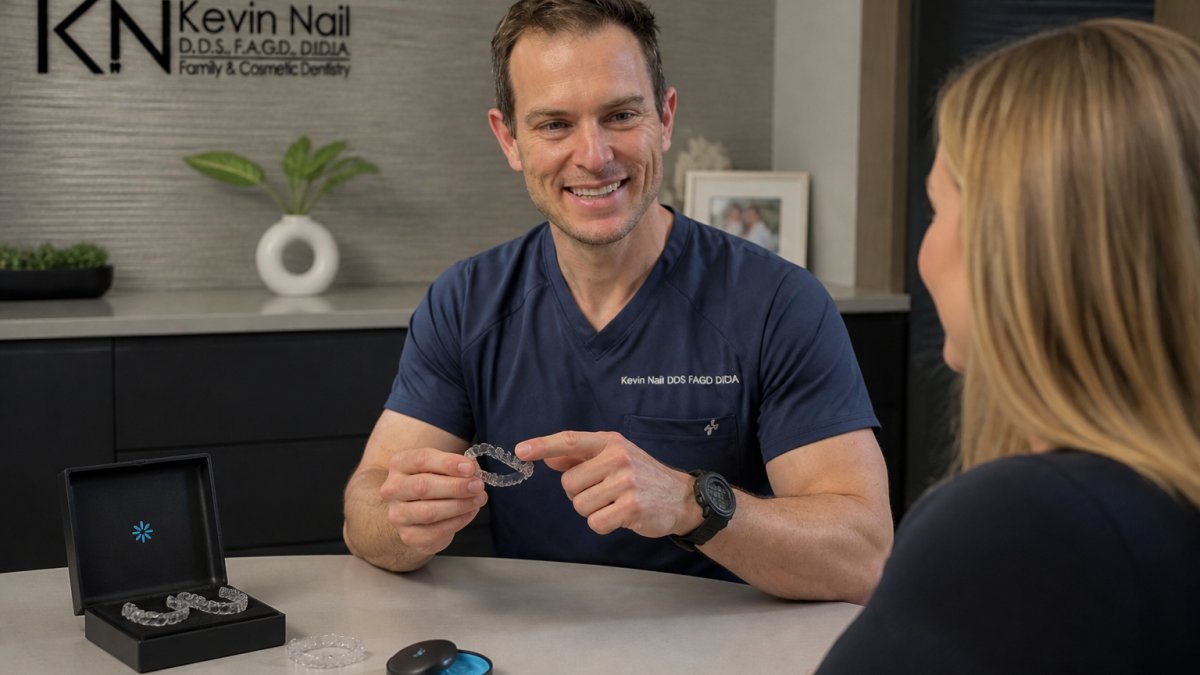
At Kevin Nail DDS, Dr. Kevin Nail personally performs every procedure, and our team walks you through imaging, candidacy, and a written plan before you decide anything.
Frequently Asked Questions
Are clear aligners worth it for adults?
For many adults with mild to moderate crowding, spacing, or bite problems, clear aligners are worth it. They offer a discreet appearance, are removable for eating and drinking, and make oral hygiene easier than brackets and wires. The catch is compliance: you must wear them 20 to 22 hours a day. Complex cases may still need traditional braces. A consultation with a dentist can confirm whether your case suits aligner therapy.
How long does clear aligner treatment take for adults?
Clear aligner treatment time for adults varies by case. Mild crowding or spacing may finish in 6 to 12 months, while moderate cases often take 12 to 18 months. Complex bite problems can run 18 to 24 months or longer. Daily wear time directly affects the timeline: wearing trays fewer than 20 hours a day can extend treatment. Your dentist will map a projected duration after a 3D scan and treatment plan.
What are the pros and cons of clear aligners?
Pros include a nearly invisible look, removable trays for eating and drinking, easier brushing and flossing, and fewer food restrictions. Cons include the need for strict wear time, the risk of lost or broken trays, possible speech changes for a few days, and the need for retainers after treatment to prevent relapse. Clear aligners also may not handle severe crowding or complex bite issues as well as braces.
Who is not a good candidate for clear aligners?
Clear aligners may not suit adults with severe crowding, large tooth rotations, significant bite problems, or teeth that need vertical movement. Patients who cannot commit to 20 to 22 hours of daily wear, or who have untreated gum disease or tooth decay, should address those issues first. Heavy grinders or those with certain dental work may also need a different approach. A dentist can assess case suitability with a 3D scan.
Deciding whether clear aligners are worth it comes down to your case, your budget, and your willingness to wear trays consistently. If you want a straight answer from a dentist who handles the full picture, from imaging to retention, Kevin Nail DDS offers personalized evaluations, 3D cone beam CT imaging for precision, and a comfortable, familiar setting where you see the same team each visit. Call 281-550-9054 to schedule your consultation and get a plan built around your smile.