 how-to
Risks of Guided Dental Implant Surgery
Table of Contents
- What Guided Dental Implant Surgery Is and How It Works
- Guided vs. Freehand Dental Implant Surgery: Risk Differences
- Nerve Injury and Numbness: The Most Common Complication
- Sinus Injury and Sinus-Related Complications
- Guided Dental Implant Surgery Complications: Infection, Implant Failure, and Bone Loss
- Dental Implant Infection Symptoms and When to Seek Care
- Dental Implant Surgery Recovery Time and Aftercare
- Accuracy Limits and What Happens If the Guide Doesn't Fit
- Frequently Asked Questions
Last Updated: October 12, 2026
What Guided Dental Implant Surgery Is and How It Works
Guided dental implant surgery is a technique that uses computer imaging and surgical guides to place dental implants with high precision, though understanding guided dental implant surgery risks is essential before proceeding.
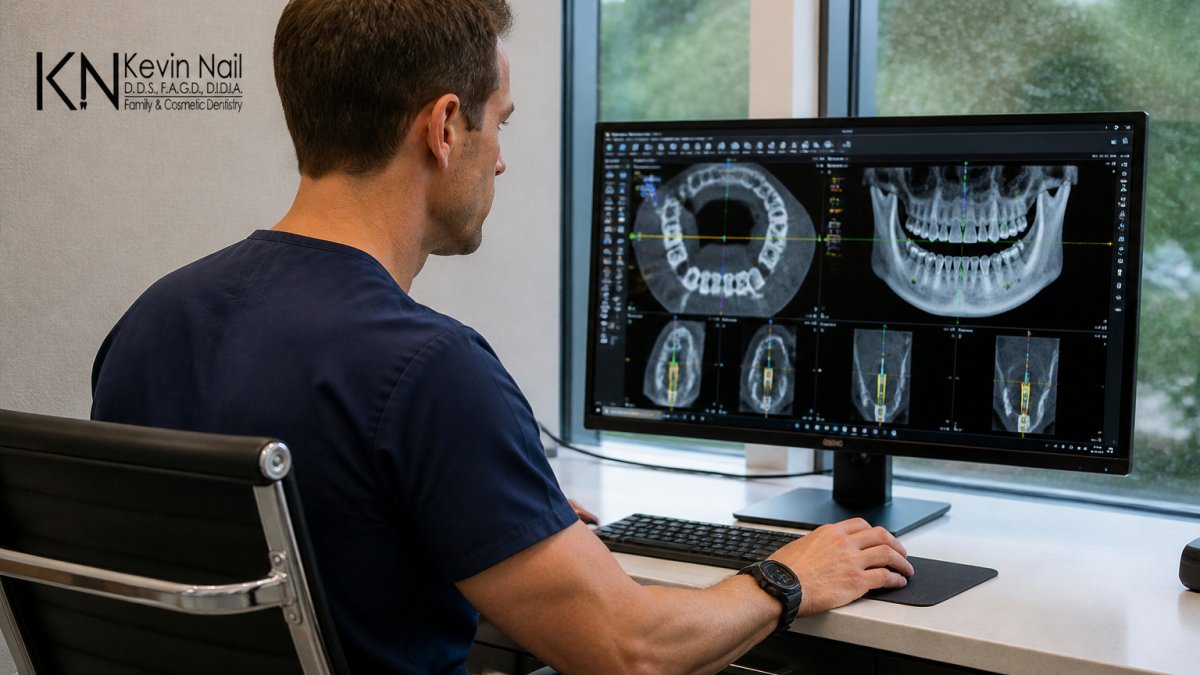
The process starts with a CBCT scan, which creates a detailed 3D image of your jaw, teeth, and bone structure.
Digital Planning and Surgical Guides
Digital treatment planning is the foundation of guided surgery. The dentist maps out where nerves, sinuses, and blood vessels are located. They then design the ideal implant position based on your bone volume, bone density, and jaw anatomy.
Once the plan is complete, a physical surgical guide is created. This guide fits over your teeth or bone and has openings that direct the drill to the exact angle and depth planned on the computer. Some guides are static, meaning they stay in one position throughout surgery.
Static Guides vs. Dynamic Navigation
Static guides are physical templates that attach to your teeth or bone. The drill slides through guide sleeves that control both angle and depth. Once the guide is placed, it doesn't move.
Dynamic navigation uses optical or electromagnetic tracking. A camera or sensor follows the drill position during surgery and displays it on a screen. The dentist can see live whether they're following the planned path. If they drift, the system alerts them immediately.
Static guides are simpler and don't require extra equipment during surgery. Dynamic systems offer real-time feedback but demand more training and specialized instruments.
Guided vs. Freehand Dental Implant Surgery: Risk Differences
The core advantage of guided surgery is placement accuracy. Freehand implant placement relies on the dentist's judgment and experience. Guided surgery removes guesswork by following a pre-planned path.
This difference matters for nerve injury, sinus injury, and implant failure.
However, guided surgery introduces its own risks. The surgical guide itself must fit precisely. If the guide shifts during surgery or doesn't seat properly, the drill trajectory changes.
Research shows that guided surgery typically reduces deviation from the planned implant position compared with freehand placement. But perfect accuracy is never guaranteed.
Nerve Injury and Numbness: The Most Common Complication
Nerve injury is the most frequently reported complication among guided dental implant surgery risks.
When an implant comes too close to this nerve or damages it during placement, patients experience numbness or tingling.
Most nerve injuries from implant surgery are temporary. The nerve bruises but doesn't tear completely. Sensation usually returns within weeks or months as the nerve heals.
The risk exists with both guided and freehand surgery. Guided surgery is designed to prevent nerve injury by keeping the implant away from the nerve.
Warning signs of nerve damage include:
- Numbness or tingling in the lower lip, chin, or teeth
- Loss of sensation that doesn't improve within a few days
- Burning or shooting pain in the affected area
- Difficulty eating or speaking due to lack of sensation
If you experience these symptoms after implant surgery, contact your dentist immediately. Early intervention may help prevent permanent damage.
Sinus Injury and Sinus-Related Complications
The maxillary sinus sits above the upper teeth. When implants are placed in the upper jaw, the sinus is a major anatomical landmark that must be avoided.
Sinus perforation occurs when the drill or implant breaks through the sinus floor. This creates an opening between the mouth and the sinus cavity. Symptoms include:
- Sudden increase in postoperative pain
- Swelling and bruising in the cheek
- Sinus congestion or drainage into the mouth
- Difficulty chewing or swallowing
Small perforations often heal on their own. Larger ones may require additional surgery to close the opening with a graft or flap.
Guided surgery reduces the risk of sinus perforation by planning the implant depth to stop before the sinus floor.
Even without perforation, implants placed too close to the sinus can cause sinus problems. Chronic inflammation, infection, or sinus pain can develop months or years after surgery.
Guided Dental Implant Surgery Complications: Infection, Implant Failure, and Bone Loss
Infection and Inflammation at the Implant Site
Infection at the implant site is a serious complication that can lead to implant failure. Bacteria can enter the surgical site during or after surgery, or from poor oral hygiene after the procedure.
Early signs of infection include:
- Increased pain or swelling days after surgery
- Warmth or redness around the implant site
- Pus or drainage from the surgical area
- Fever or chills
Infection can be treated with antibiotics if caught early. However, severe infections may require the implant to be removed and the site to be cleaned and allowed to heal before a new implant can be placed.
Guided surgery doesn't eliminate infection risk, but minimally invasive flapless techniques (which many guided surgeries use) may reduce it. Smaller incisions mean less tissue trauma and faster healing, which can lower infection rates compared with traditional flap surgery.
Implant Failure and Osseointegration Problems
Osseointegration is the process where bone grows around the implant and locks it in place. This takes several months. If osseointegration fails, the implant never becomes stable and must be removed.
Implant failure can result from:
- Insufficient bone volume or density to support the implant
- Implant placed at the wrong angle or depth
- Infection or inflammation around the implant
- Smoking, uncontrolled diabetes, or other medical conditions
- Overloading the implant before it's fully integrated
Guided surgery is designed to prevent failure by ensuring the implant is placed in the best bone available and at the correct angle for load distribution. However, if the plan underestimates bone quality or the implant is placed too shallow or at an angle that creates stress, failure can still occur.
Bone Loss and Soft-Tissue Damage
Bone loss around an implant can happen months or years after surgery. This is different from failure during integration. Progressive bone loss may lead to implant loosening and eventual failure.
Soft-tissue damage includes injury to the gums, lips, or tongue during surgery. This can cause scarring, altered sensation, or difficulty with eating and speaking.
Guided surgery minimizes soft-tissue damage by using precise incisions and avoiding excessive trauma. Many guided procedures use a flapless approach, where no flap of gum tissue is lifted. This preserves blood supply and reduces inflammation, which supports better bone healing and lower soft-tissue complications.
Dental Implant Infection Symptoms and When to Seek Care
Infection at an implant site requires prompt attention. The earlier you catch it, the better the outcome.
Seek immediate care if you experience:
- Severe pain that doesn't improve with over-the-counter pain relief
- Significant swelling or bruising that worsens after a few days
- Pus, discharge, or a bad taste from the surgical site
- Fever above 101°F
- Difficulty swallowing or breathing
- Spreading redness or warmth in the jaw or face
Even minor symptoms that persist beyond a week deserve evaluation. What seems like normal healing can sometimes be the start of infection.
At Kevin Nail DDS, our minimally invasive flapless technique reduces tissue trauma, which supports faster healing and lower infection risk.
Dental Implant Surgery Recovery Time and Aftercare
Recovery from guided dental implant surgery is typically faster than traditional implant surgery because of the minimally invasive approach.
Immediate recovery (first 24 hours):
- Swelling and bruising peak at 24-48 hours
- Pain is usually mild to moderate
- Bleeding may continue for several hours
First week:
- Swelling gradually decreases
- Pain typically improves significantly
- Most people return to light activities
- Stick to soft foods and avoid chewing near the implant
First month:
- Swelling and bruising resolve
- Sensitivity around the site decreases
- Most people feel back to normal
- Avoid strenuous exercise and contact sports
Three to six months:
- Osseointegration occurs (bone grows around the implant) (pubmed.ncbi.nlm.nih.gov)
- The implant becomes stable and load-bearing
- A crown or restoration is placed on top
Aftercare instructions matter. Follow these steps to prevent complications:
- Take prescribed antibiotics as directed
- Use ice for the first 24 hours, then heat if recommended
- Sleep with your head elevated to reduce swelling
- Rinse gently with salt water starting 24 hours after surgery
- Avoid smoking and alcohol during healing
- Don't disturb the surgical site with your tongue or fingers
- Attend all follow-up appointments
Minimally invasive techniques like those used at Kevin Nail DDS typically result in less swelling, bleeding, and recovery time compared with traditional approaches.
Accuracy Limits and What Happens If the Guide Doesn't Fit
Guided surgery is precise, but it's not perfect. Several factors can cause deviation from the planned implant position.
Why guides don't fit perfectly:
- Bone resorbs or shifts between the scan and surgery
- Soft tissue swelling makes it hard to seat the guide
- The guide itself warps or is manufactured with slight error
- Patient anatomy varies more than the scan predicted
What happens during surgery: If the guide doesn't fit well or shifts, the dentist has several options.
Switching to freehand placement mid-surgery is not a failure. It's an adaptation that happens when precision isn't possible.
Accuracy limits by guide type:
- Static guides: typically accurate to within 0.5-1.5 mm
- Dynamic navigation: typically accurate to within 0.5-1 mm
- Freehand with digital reference: accuracy varies more, typically 1-2 mm
Even with these limits, guided approaches reduce deviation compared with freehand surgery without any digital reference.
At Kevin Nail DDS, Dr.
| Complication | Typical Timing | Common Symptoms | When to Seek Care |
|---|---|---|---|
| Nerve injury | Immediate to days | Numbness, tingling in lip or chin | Immediately if symptoms appear |
| Sinus perforation | During or immediately after surgery | Sudden pain increase, sinus drainage | Within 24 hours |
| Infection | Days to weeks | Pain, swelling, pus, fever | Immediately if fever or spreading swelling |
| Implant failure | Months | Loosening, pain, mobility | At follow-up appointments |
| Bone loss | Months to years | Gradual loosening, gum recession | At regular checkups |
Guided dental implant surgery offers precision and safety advantages over freehand placement. But like all surgery, it carries real risks.
Frequently Asked Questions
What are the main risks of guided dental implant surgery compared to freehand surgery?
Guided dental implant surgery reduces some risks by using digital planning and surgical guides to position implants more precisely. However, risks still include nerve injury, sinus perforation, infection, and implant failure. The key difference is that guided surgery minimizes deviation from the planned position, but complications can still occur if the guide doesn't fit properly during surgery, if bone anatomy differs from the CBCT scan, or if patient factors like smoking or diabetes affect healing. Guided surgery is not risk-free, but evidence suggests it reduces certain placement errors.
What are the symptoms of dental implant infection, and when should I contact my dentist?
Contact your dentist immediately if you experience fever, severe or worsening pain beyond the first few days, persistent swelling or redness around the implant site, pus or discharge, difficulty swallowing, or a bad taste in your mouth. Early infection is treatable with antibiotics or additional care, but delayed treatment can lead to implant failure or bone loss. Do not wait for symptoms to resolve on their own; infections require professional evaluation.
How long is the recovery time after guided dental implant surgery?
Most patients experience initial swelling and discomfort for 3-7 days, with significant improvement by 2 weeks. Minimally invasive flapless techniques often reduce swelling and recovery time compared to traditional surgical approaches. However, full bone integration (osseointegration) takes 3-6 months, during which the implant must be protected from heavy chewing. Your dentist will provide specific aftercare instructions, including activity restrictions, dietary guidelines, and follow-up appointments to monitor healing.
Can a surgical guide for dental implants be inaccurate, and what happens if the plan changes during surgery?
Yes, surgical guides can deviate from the planned position due to guide fit issues, bone density variations not visible on the CBCT scan, or changes in jaw anatomy during surgery. Deviation of even 1-2 millimeters can affect implant success or nerve proximity. If the guide doesn't fit properly or the surgeon identifies a problem during the procedure, the plan may need to be adjusted in real time. Your surgeon's experience and ability to adapt are critical. Discuss contingency plans with your dentist before surgery.