 blog
10 Benefits of Conscious Sedation Dentistry
Table of Contents
- What Conscious Sedation Dentistry Is
- Benefit 1: Significant Anxiety and Fear Reduction
- Benefit 2: Effective Pain and Discomfort Management
- Benefit 3: Remaining Awake and Aware During Treatment
- Benefits 4-6: Gag Reflex Control, Complex Procedures in Fewer Visits, and Improved Patient Cooperation
- Safety of Dental Sedation and What to Expect
- Conscious Sedation Recovery Time and Preparation
- Sedation Dentistry Risks and Side Effects
- Frequently Asked Questions
Last Updated: October 10, 2026
What Conscious Sedation Dentistry Is
Conscious sedation dentistry is a pharmacological technique that reduces anxiety and awareness during dental procedures while keeping patients awake, responsive, and able to follow simple commands. Unlike general anesthesia, patients remain conscious, they can hear the dentist, respond to verbal cues, and maintain protective reflexes. The key distinction is that sedation manages anxiety and awareness; it does not numb pain.
This separation is critical for realistic expectations. Sedation makes you calm and less aware of time passing; local anesthesia prevents you from feeling the tooth itself. Together, they create comfort, but sedation alone does not eliminate pain sensation.
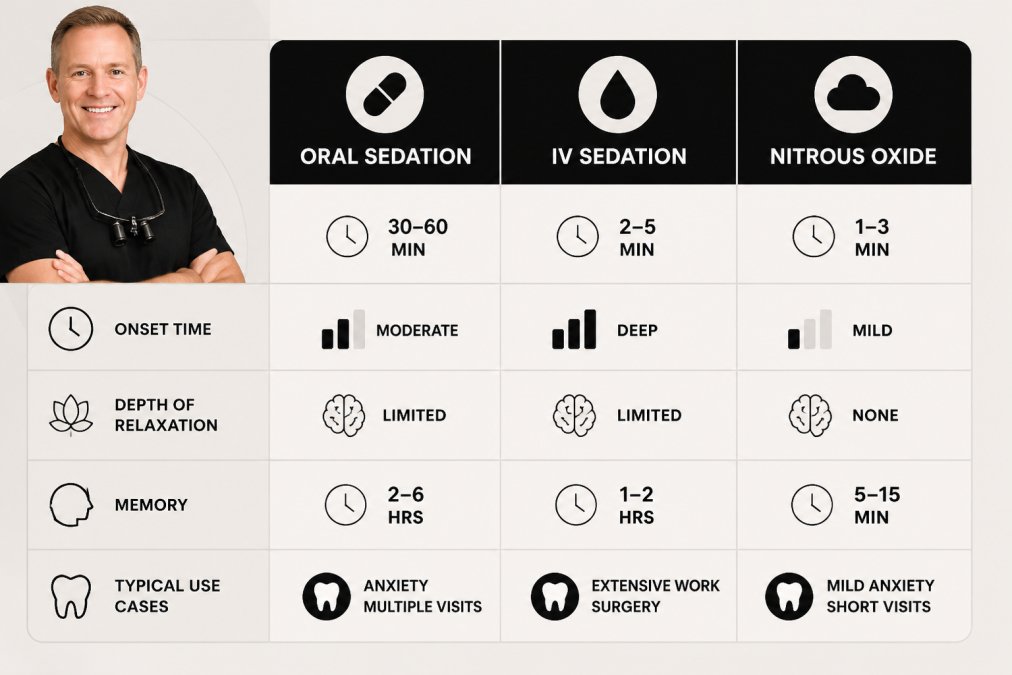
Three common sedation methods differ in onset, depth, recovery, and typical use:
Nitrous oxide (laughing gas). Inhaled through a nose mask, nitrous oxide takes effect within 3-5 minutes and wears off within minutes of stopping. Patients remain fully conscious and can drive home immediately. It produces mild relaxation and mild anxiety reduction, making it suitable for patients with low-to-moderate anxiety or for shorter procedures. Nitrous is often combined with local anesthesia alone for simple cleanings or fillings.
Oral sedation. A tablet or liquid taken 30-60 minutes before the appointment, oral sedation produces moderate relaxation and memory loss (anterograde amnesia). Patients are drowsy but responsive. Onset takes 30-60 minutes; recovery typically requires 4-6 hours, and patients cannot drive. This method suits patients with moderate anxiety undergoing procedures lasting 30-90 minutes, such as multiple fillings or crown prep.
Intravenous (IV) sedation. Administered through a vein by a trained dentist or anesthesiologist, IV sedation provides rapid onset (1-2 minutes) and deeper sedation than oral methods. Patients enter a twilight state with minimal memory of the procedure. Recovery takes 1-2 hours, and patients require a driver.
Conscious sedation differs fundamentally from general anesthesia. With general anesthesia, patients are completely unconscious, cannot respond, and require an anesthesiologist or specialized provider. Conscious sedation keeps patients in a lighter state where they remain responsive but deeply relaxed, making it safer for most dental settings and suitable for office-based dentistry.
Benefit 1: Significant Anxiety and Fear Reduction
Dental anxiety stops many people from seeking needed care. For those with dental phobia, the thought of sitting in a dental chair triggers panic. Conscious sedation dentistry eliminates this barrier by allowing patients to relax before treatment even begins.
When sedation takes effect, the fear response quiets down. Patients report feeling calm and peaceful throughout the procedure. The anxiety that normally prevents them from scheduling appointments simply doesn't surface. This means people who avoided dentists for years can finally get treatment.
Many patients find that after one positive experience with sedation dentistry, their overall anxiety decreases. They realize dental work isn't as frightening as they imagined. Some even choose sedation for future appointments simply because they prefer the relaxed experience.
Benefit 2: Effective Pain and Discomfort Management
Pain during dental procedures is a major concern for anxious patients. Even with local anesthesia, some people feel pressure, vibration, or other sensations that feel uncomfortable. Conscious sedation changes this by reducing awareness of these sensations.
The sedative medication works alongside local anesthesia to block pain signals. Patients feel minimal discomfort during treatment. The combination means dentists can work efficiently while patients remain comfortable and relaxed.
Local anesthesia numbs the tooth and surrounding area. Conscious sedation adds a layer of relaxation that makes the entire experience feel painless. Together, they create an ideal environment for pain-free dental care.
Benefit 3: Remaining Awake and Aware During Treatment
A key advantage of conscious sedation dentistry is that patients stay awake. Unlike general anesthesia, patients can hear and respond to the dentist. This creates a sense of control and safety during the procedure.
Patients under conscious sedation can follow simple instructions. If the dentist needs the patient to move their head or open their mouth wider, they can respond. This cooperation helps the dentist work more effectively and complete treatment faster.
Many patients appreciate staying conscious because they don't feel completely out of control. They're relaxed but aware. This balance between relaxation and consciousness appeals to patients who worry about losing awareness entirely.
Benefits 4-6: Gag Reflex Control, Complex Procedures in Fewer Visits, and Improved Patient Cooperation
Gag reflex control. A strong gag reflex makes dental work difficult and uncomfortable. Conscious sedation reduces the gag reflex, allowing dentists to access the back of the mouth easily. Patients who normally struggle with gagging find they can tolerate treatment without triggering their reflex.
Complex procedures in fewer visits. When patients are relaxed and cooperative, dentists can accomplish more in a single appointment. Conscious sedation allows dentists to complete extensive work, multiple fillings, crown preparation, or implant placement, without the patient becoming fatigued or anxious. This means fewer appointments and faster treatment completion.
Improved patient cooperation. Relaxed patients cooperate better during treatment. They sit still, keep their mouth open as needed, and don't move suddenly. This cooperation helps the dentist work with precision and efficiency. At Kevin Nail DDS, Dr. Nail's minimally invasive implant techniques benefit greatly from patient cooperation, allowing for precise sub-millimeter placement using 3D cone beam CT scans.
Patients also tend to be more honest with sedated dentists about their comfort level. They communicate needs clearly without the stress response that normally accompanies anxiety.
Safety of Dental Sedation and What to Expect
Conscious sedation dentistry is a safe procedure when administered by trained professionals in a controlled setting. However, safety depends on thorough pre-procedure assessment, proper monitoring, and provider qualifications.
Pre-procedure assessment. Before sedation, patients complete a detailed medical history covering:
- Cardiovascular conditions (heart disease, arrhythmia, high blood pressure)
- Respiratory issues (asthma, sleep apnea, COPD)
- Liver or kidney disease
- Diabetes and blood sugar control
- Allergies to medications or latex
- Previous adverse reactions to sedation
- Current medications (prescription, over-the-counter, and supplements)
- Substance use history (alcohol, tobacco, recreational drugs)
- Pregnancy status
The dentist reviews this history to identify contraindications, conditions that make sedation inappropriate or require modification. For example, patients with uncontrolled sleep apnea face higher risk during sedation due to airway compromise. Those taking blood thinners may need dosing adjustments. Patients with severe liver disease may metabolize sedatives poorly, requiring lower doses or alternative methods.
Medication interactions. Sedative medications interact with many common drugs. Opioid pain medications, benzodiazepines, antihistamines, and certain blood pressure medications can amplify sedation effects or cause dangerous respiratory depression. The dentist reviews all current medications and may request that patients pause certain drugs before the appointment or adjust timing.
Provider qualifications. Dentists who administer conscious sedation must complete specialized training and continuing education. Many states require dentists to obtain a sedation permit or license specific to the sedation method (nitrous, oral, or IV). The American Dental Association (ADA) and state dental boards set standards for training, monitoring protocols, and emergency preparedness.
Monitoring during the procedure. A trained assistant or the dentist continuously monitors vital signs throughout sedation:
- Heart rate and rhythm (via pulse oximetry or cardiac monitor)
- Blood oxygen saturation (SpO₂)
- Blood pressure
- Respiratory rate and breathing pattern
- Level of consciousness and responsiveness
Monitoring equipment alerts the provider to any changes. If oxygen levels drop or heart rate becomes irregular, the provider can intervene immediately, administering oxygen, adjusting medication, or calling emergency services if needed.
Common side effects. Mild, temporary effects include drowsiness, dizziness, nausea, dry mouth, or headache after the procedure. These resolve within hours and do not require intervention.
Rare but serious risks. Allergic reactions to sedative medications, respiratory depression (shallow breathing), aspiration (inhaling fluid or debris), or cardiovascular events are uncommon but possible. This is why pre-procedure assessment and continuous monitoring are essential. Emergency equipment and trained personnel must be present.
Recovery expectations. Recovery time depends on the sedation method. Nitrous oxide clears within minutes; oral sedation requires 4-6 hours; IV sedation requires 1-2 hours. Patients should not drive, operate machinery, or make important decisions until fully alert. Most patients can return to normal activities the next day.
The key to safe sedation is honest, detailed communication with your dentist before the appointment. Disclose all medical conditions, medications, allergies, and previous reactions. Ask about your dentist's training, monitoring protocols, and emergency procedures. This transparency allows the dentist to make informed decisions and tailor sedation to your individual safety profile.
Conscious Sedation Recovery Time and Preparation
Recovery from conscious sedation is typically fast. Most patients feel alert within 30 minutes to an hour after the procedure ends. They can resume normal activities the same day, though some drowsiness may linger for a few hours.
Preparation before the appointment:
- Avoid eating or drinking for several hours before the procedure (follow dentist instructions)
- Wear loose, comfortable clothing
- Arrange transportation home (required, patients cannot drive after sedation)
- Take any regular medications as directed by the dentist
- Arrive early to allow time for pre-procedure checks
After the appointment:
- Rest for the remainder of the day
- Avoid operating machinery or making important decisions
- Stay hydrated and eat light meals
- Take prescribed pain medication if needed
- Follow all post-care instructions provided by the dentist
Most patients can return to work or normal activities the next day. Some mild drowsiness or grogginess may continue for a few hours, but this resolves quickly.
Sedation Dentistry Risks and Side Effects
Like any medical procedure, conscious sedation carries some risks. However, serious complications are rare when sedation is administered by trained professionals in a controlled dental environment.
Common side effects include drowsiness, dizziness, nausea, or a headache after the procedure. These effects are typically mild and resolve within a few hours. Some patients experience a dry mouth or sore throat.
Rare but possible risks include allergic reactions to the sedative medication, temporary confusion, or changes in blood pressure. Patients with certain medical conditions, such as heart problems, respiratory issues, or sleep apnea, may face higher risks. This is why a complete medical history is essential before sedation.
Medication interactions can occur if the patient takes other medications. The dentist reviews all current medications to identify potential conflicts. Some medications may need to be paused before the procedure.
Patients who have had adverse reactions to sedation in the past should inform their dentist. Those with a history of substance abuse should discuss this openly, as it may affect sedation choices.
The key to safe sedation is honest communication with the dentist. Disclosing all medical conditions, medications, and previous reactions allows the dentist to make informed decisions about sedation safety.
If dental anxiety has kept you from getting the care you need, conscious sedation dentistry offers a path forward. At Kevin Nail DDS, we understand that every patient has unique comfort needs. Dr. Nail personally performs every procedure using advanced techniques like minimally invasive flapless implant surgery, ensuring precision while prioritizing your comfort. Our team is trained in sedation protocols and patient safety. Call 281-550-9054 to schedule a consultation and discuss whether conscious sedation dentistry is right for you.
Frequently Asked Questions
Is conscious sedation dentistry safe?
Yes, when administered by trained dental professionals with proper monitoring. Safety of dental sedation depends on pre-procedure assessment, continuous patient monitoring during treatment, and appropriate medication selection. Your dentist will review your medical history, current medications, and any conditions that might affect sedation before the procedure. During treatment, your vital signs are monitored to ensure your safety throughout the appointment.
How long does conscious sedation recovery time take after a dental procedure?
Conscious sedation recovery time varies by sedation type and individual response, typically ranging from 30 minutes to several hours. Most patients feel alert within an hour but may experience mild drowsiness for the rest of the day. You'll need a trusted adult to drive you home, as reaction time and judgment remain impaired. Plan to rest for the remainder of the day and avoid operating machinery or making important decisions.
What are the common side effects of conscious sedation dentistry?
Common side effects of sedation dentistry risks and side effects include drowsiness, mild headache, nausea, and temporary memory gaps about the procedure itself. Most side effects resolve within hours. Serious complications are rare when proper screening and monitoring occur. Discuss any medical conditions, medications, or previous sedation reactions with your dentist beforehand to minimize risk and ensure the safest sedation approach for your situation.
Who is a good candidate for conscious sedation at the dentist?
Candidates include patients with dental anxiety or phobia, those with difficulty sitting still, people with a strong gag reflex, and patients needing multiple or complex procedures. Conscious sedation dentistry also benefits individuals with medical conditions affecting dental tolerance and those completing extensive restorative work. Your dentist will assess your health history, current medications, and specific dental needs to determine if conscious sedation is appropriate for you.