 listicle
Benefits of Sedation Dentistry for Nervous Patients
Table of Contents
- What Sedation Dentistry Is and How It Helps Nervous Patients
- Types of Dental Sedation: Options for Every Comfort Level
- How to Manage Dental Anxiety Before, During, and After Your Visit
- Is Sedation Dentistry Safe? What You Need to Know
- Financial Planning and Insurance Coverage for Sedation Dentistry
- What to Expect: A Step-by-Step Patient Journey
- Sedation for Children vs. Adults: Key Differences
- Frequently Asked Questions
Last Updated: September 15, 2026
What Sedation Dentistry Is and How It Helps Nervous Patients
Sedation dentistry is the use of controlled sedative medication to help patients relax during dental treatment, and for nervous patients it often means the difference between avoiding care for years and finally sitting through a full appointment. At Kevin Nail DDS, we see patients every week who haven't had a cleaning in a decade because of dental anxiety. A relaxed patient holds still, tolerates longer visits, and needs fewer appointments to finish a treatment plan.
The American Dental Association's guidance on anxiety and pain control recognizes sedation as a legitimate tool for managing fear, not a shortcut around it.
The Difference Between Sedation and General Anesthesia
Sedation and general anesthesia are not the same thing. Sedation dentistry puts you in a relaxed, drowsy state while you stay responsive; general anesthesia makes you fully unconscious, requires a machine to support your breathing, and is typically reserved for hospital settings or major surgery. Most nervous patients need conscious sedation, a lighter touch, with faster recovery and fewer side effects.
Types of Dental Sedation: Options for Every Comfort Level
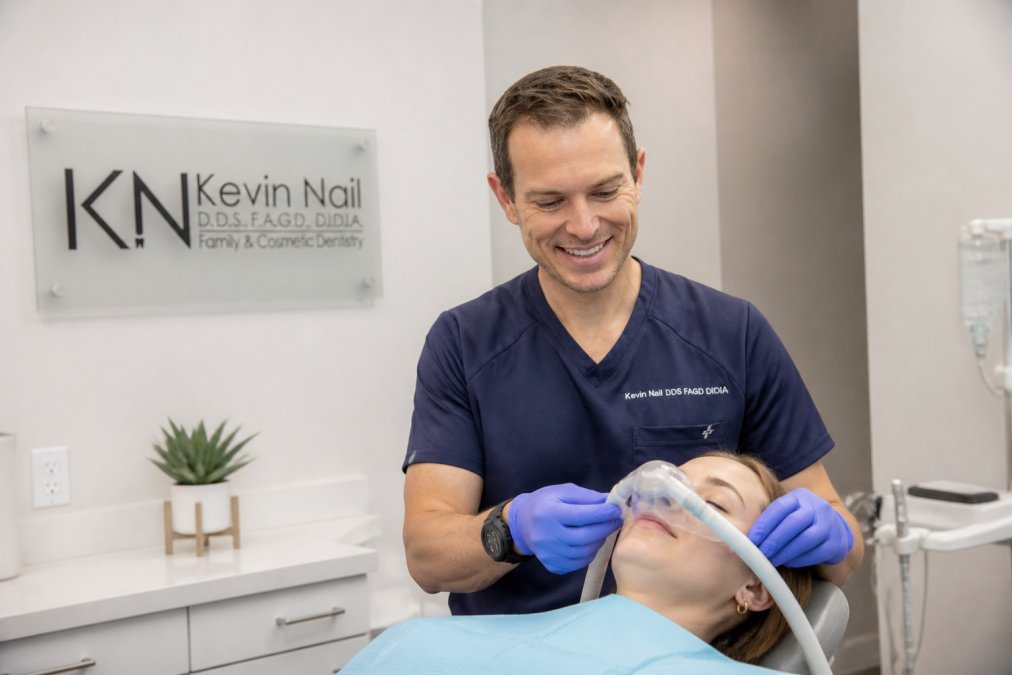
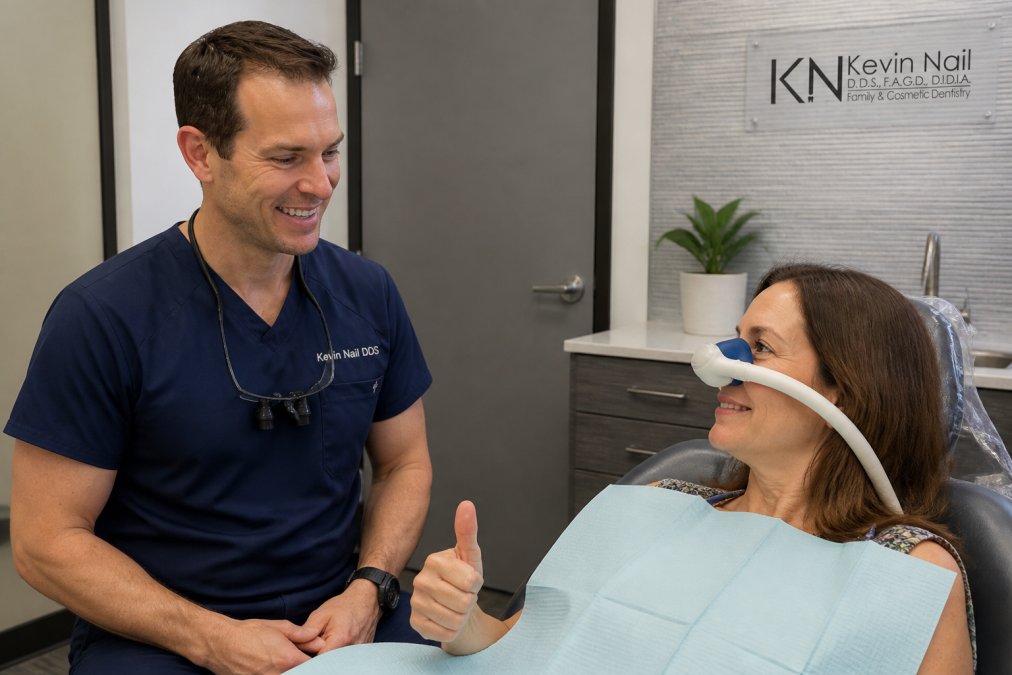
The three main types of dental sedation range from mild to moderate, and the right one depends on your anxiety level, medical history, and procedure length. Nitrous oxide, or laughing gas, is the lightest: you breathe it through a nasal mask, feel calm within minutes, and can drive yourself home. Oral conscious sedation is a pill taken before your appointment that leaves you deeply relaxed with little memory of the visit. IV sedation delivers medication directly into the bloodstream, letting the dentist adjust the level moment by moment; it's the strongest option short of general anesthesia, chosen for complex work or severe dental phobia.
| Sedation Type | How It's Given | Awareness Level | Best For |
|---|---|---|---|
| Nitrous oxide | Inhaled through nasal mask | Fully awake, relaxed | Mild anxiety, short visits |
| Oral conscious sedation | Pill before appointment | Drowsy, may doze | Moderate anxiety, longer procedures |
| IV sedation | Intravenous line | Deeply relaxed, minimal memory | Severe anxiety, complex dental work |
How to Manage Dental Anxiety Before, During, and After Your Visit
Most anxiety advice tells you to "relax" and "communicate with your dentist." That's not useful when your heart is already racing in the parking lot. What helps is knowing the timeline, what happens, in what order, and what you control at each step.
Before the Appointment: The Days You Can Actually Prepare
Anxiety builds in the days before a visit, not the morning of. That's your window to act.
- Write down your specific fears and send them ahead. "I hate the sound of the drill" gives the office something concrete to work around; vague dread is harder to address.
- Ask for a pre-visit tour if it's been years. A five-minute walk-through of the treatment room removes a surprising amount of anticipatory fear.
- Agree on a stop signal in advance. Raising your left hand is the standard, and knowing you can pause at any moment is often more calming than the sedative itself.
- Confirm your logistics. Arrange your ride home, clear your calendar, and decide what you'll eat afterward.
- Skip caffeine on appointment day. It amplifies the racing heart and jitteriness that make you feel worse than you actually are.
During the Appointment: What Happens, Step by Step
Here's the sequence most sedation appointments follow:
- Arrival and check-in. You'll confirm your medical history and any changes since your consultation. If you're having oral or IV sedation, your escort should be with you.
- Monitoring setup. The team places a pulse oximeter on your finger and, depending on sedation level, a blood pressure cuff, before any sedative is given.
- Sedative administration. Nitrous oxide takes effect within minutes through a nasal mask. Oral sedatives peak 30-60 minutes after you swallow the pill. IV sedation works almost immediately and can be adjusted moment to moment.
- Treatment. The dentist narrates each step if you've asked. Vital signs are checked throughout, and most patients remember very little of the visit.
- Wind-down. Nitrous oxide is turned off and you breathe room air for a few minutes; oral and IV sedation wear off more gradually.
- Recovery and discharge. You rest in the office until your vitals are stable and you can walk steadily. Your escort drives you home.
A useful question to ask before booking: "What monitoring do you use during the procedure?" A practice that checks oxygen saturation and heart rate continuously is set up for safety, not just comfort.
After the Appointment: The Hours That Matter Most
Recovery is where nervous patients often underestimate what their body needs.
- Don't drive yourself home after oral or IV sedation, even if you feel alert. Reaction times stay impaired longer than the drowsiness lasts.
- Plan a low-key rest of the day. No work deadlines, no driving, no important decisions; grogginess can linger for hours.
- Eat and drink gently. Start with water and something light once you're fully alert, since nausea is more likely on an empty stomach.
- Expect some memory gaps. Forgetting parts of the appointment is normal with deeper sedation.
- Follow up if something feels off. Persistent nausea, difficulty breathing, or unusual swelling warrants a call to the office.
The Unique Angle: Anxiety Doesn't End When the Sedative Wears Off
What most articles skip is the next appointment. Nervous patients often feel relief after a successful sedation visit, then dread the follow-up just as much as the first. Break that cycle by treating the first appointment as a template: note what worked (the stop signal, the music, the specific sedative, the time of day) and share those notes before your next visit so the plan improves instead of resetting. Over time, many patients need less sedation, not more, because the fear was never really about the dentistry, but about not knowing what came next.
Is Sedation Dentistry Safe? What You Need to Know
Sedation dentistry has a strong safety record when three things line up: a thorough pre-screening, the right sedative at the right dose, and continuous monitoring. Remove any one and the risk profile changes. The safety question isn't "is sedation safe?", it's "is sedation safe for me, with this provider, at this sedation level?"
The American Society of Anesthesiologists' standards for sedation and the American Dental Association's guidance on anxiety and pain control both frame safety around the same building blocks: patient selection, drug selection, monitoring, and rescue capability. Here's what each one actually looks like in a dental office.
The Pre-Screening That Determines Your Risk
Before any sedative is prescribed, your dentist should walk through a medical history covering far more than "any allergies?"
- Every medication you take, including over-the-counter drugs, supplements, and anything prescribed by another provider.
How Monitoring Works During the Appointment
Realistic Side Effects and Risks
Most side effects are mild and short-lived:
Who Should Avoid Sedation and Why
Financial Planning and Insurance Coverage for Sedation Dentistry
What to Expect: A Step-by-Step Patient Journey
Sedation for Children vs. Adults: Key Differences
Frequently Asked Questions
How do dentists help patients manage dental anxiety?
Dentists use a combination of communication, environment, and sedation options. They start by discussing your fears during a consultation, then may recommend techniques like deep breathing, numbing gel before injections, or sedation dentistry. For nervous patients, options range from nitrous oxide for mild anxiety to oral conscious sedation or IV sedation for moderate to severe phobia. The goal is to match the sedation level to your comfort needs and medical history.
Is sedation dentistry safe for nervous patients?
Sedation dentistry is generally safe when administered by a trained professional who reviews your medical history and monitors your vital signs throughout the procedure. The most common form, nitrous oxide, has been used for decades with few side effects. Oral and IV sedation carry slightly higher risks, but your dentist will screen for drug interactions and underlying conditions. Always disclose all medications and health issues during your consultation to ensure a safe experience.
Does insurance typically cover sedation dentistry?
Insurance coverage for sedation dentistry varies by plan. Some PPO plans may cover sedation if it is medically necessary, such as for complex surgical procedures or documented dental phobia. However, nitrous oxide and elective sedation are often considered non-covered or may require pre-authorization. Check with your insurance provider about your specific benefits and ask your dental office for a pre-treatment estimate before scheduling.
What should I expect during a sedation dentistry appointment?
On the day of your appointment, you will be asked to have a responsible adult drive you home. Your dentist will review your medical history, attach monitoring equipment, and administer the sedative. You may feel relaxed or drowsy, and some patients remember little of the procedure. Afterward, you will rest in a recovery area until the effects wear off. Most people can return to normal activities the next day, though you should avoid driving or operating machinery for 24 hours.