 blog
How to Judge the 7 Factors Affecting Dental Implant Cost
Last Updated: November 3, 2026
Quick Summary
The dental implant cost is built from several separate pieces rather than one fixed number. The main factors are the number of teeth replaced, any bone grafting, diagnostic imaging, materials and crown type, surgical approach, sedation, and insurance coverage. Ask for an itemized written estimate to compare providers fairly.
- Replacing several teeth or a full arch requires more implants, abutments, and crowns.
- Bone grafts or sinus lifts may be needed first and can add cost and healing time.
- A 3D cone beam CT scan is usually billed separately from the implant placement itself.
- Lower upfront prices may not mean lower costs if restorations wear out early.
- Request a written pre-authorization to learn what your insurance will actually cover.
Table of Contents
- What Makes Up the Total Price of a Dental Implant
- Factor 1: Number of Teeth Being Replaced
- Factor 2: Bone Graft Cost for Dental Implants
- Factor 3: Diagnostic Imaging and Preliminary Procedures
- Factor 4: Materials, Crown Type, and Long-Term Value
- Factor 5: Surgical Approach and Minimally Invasive Flapless Implant Surgery
- Factor 6: Anesthesia, Sedation, and Surgical Team Experience
- Factor 7: Dental Implant Insurance Coverage and Out-of-Pocket Costs
- Frequently Asked Questions
What Makes Up the Total Price of a Dental Implant
When patients ask about dental implant cost, they usually want one number. In practice, the final bill is built from several separate pieces, and each one can move the total up or down. Knowing those pieces makes the estimate easier to read. The factors below are the ones to discuss with your dental provider before any treatment begins.
A dental implant is more than a tooth-shaped part. It usually includes a titanium post placed in the jawbone, an abutment that connects the post to the crown, and the crown itself. Each part carries its own cost.
Here is a simple way to think about the main factors that shape the total dental implant cost:
- Surgical placement: the cost of placing the implant post
- Restoration: the abutment and crown that sit on top
- Diagnostics: imaging and exams before surgery
- Added procedures: bone grafting or sinus work, when needed
- Anesthesia: the level of comfort care chosen for the visit
The sections below break down each factor in more detail.
Factor 1: Number of Teeth Being Replaced
The number of teeth being replaced is one of the biggest drivers of total cost. A single implant replacing one missing tooth is the simplest case. Replacing several teeth, or a full arch, requires more implants, more abutments, and more crowns.
Some patients choose a single implant with one crown. Others choose an implant-supported bridge that spans several missing teeth. A full-arch option can use fewer implants than you might expect, but it still involves a larger restoration. This is why two patients can ask about the same procedure and receive very different estimates.
Ask your provider to explain the cost of each tooth or arch in writing. That makes it easier to compare options fairly.
Factor 2: Bone Graft Cost for Dental Implants
Implants need enough healthy jawbone to hold them in place. When the bone has shrunk after a tooth was lost, a bone graft may be needed first. A graft adds material to rebuild the area so the implant has a stable base.
Bone grafting is one of the most common add-on costs. It may also add healing time before the implant can be placed. Some patients need a sinus lift, which is a related procedure in the upper jaw. Your provider can use imaging to decide whether a graft is needed and how extensive it must be.
Not every patient needs a graft. Still, it helps to ask early so there are no surprises later in the treatment plan.
Factor 3: Diagnostic Imaging and Preliminary Procedures
Before any implant is placed, the dentist needs a clear view of the teeth, gums, and bone. Diagnostics are not a formality, they are the stage where the surgical plan is either confirmed or changed, and they are one of the most commonly itemized line items on an implant estimate.
A common diagnostic for implant planning is a 3D cone beam CT (CBCT) scan (the FDA). Unlike a standard 2D X-ray, a CBCT shows bone width and height in three dimensions, the exact position of the inferior alveolar nerve in the lower jaw, the floor of the maxillary sinus in the upper jaw, and bone density at the proposed site.
Other preliminary steps may include:
- Dental exam and periodontal evaluation, active gum disease must be treated before implant surgery, because peri-implantitis risk rises sharply when gum inflammation is not controlled
- Digital impressions or intraoral scans, replace physical impression trays and are often required for the crown or bridge that sits on the implant
- Treatment planning consultation, the visit where the surgeon reviews the CBCT and presents the plan
- Treatment of decay or failing teeth, any tooth that cannot be saved must be extracted and the site allowed to heal before placement
These steps are frequently billed separately from the surgical fee. A CBCT scan, for example, is usually a distinct charge from the implant placement itself, and a periodontal evaluation may be billed under a separate code.
How digital dentistry changes the cost picture. Guided surgery, placing the implant through a surgical guide fabricated from the CBCT data, is one of the clearest cost-shifting developments in implant dentistry. The guide itself is an added expense, but it typically reduces chair time, lowers the risk of placing an implant at the wrong angle, and can reduce the need for a second surgical visit.
Watch out: a low-cost quote that omits diagnostic imaging should be reviewed carefully, since planning without a complete view of the bone can affect surgical planning.
The article lists the common pre-surgery diagnostic and preparatory steps, and notes which are often billed separately.
| Step | Purpose | Billing note |
|---|---|---|
| 3D cone beam CT (CBCT) scan | Shows bone width, height and nerve position | Usually a separate charge |
| Dental exam and periodontal evaluation | Gum disease must be treated first | May be billed under a separate code |
| Digital impressions or intraoral scans | Used for the crown or bridge | Often required for restoration |
| Treatment planning consultation | Surgeon reviews CBCT and presents plan | Part of planning |
| Treatment of decay or failing teeth | Teeth that cannot be saved are extracted and healed | Billed as a prior step |
Factor 4: Materials, Crown Type, and Long-Term Value
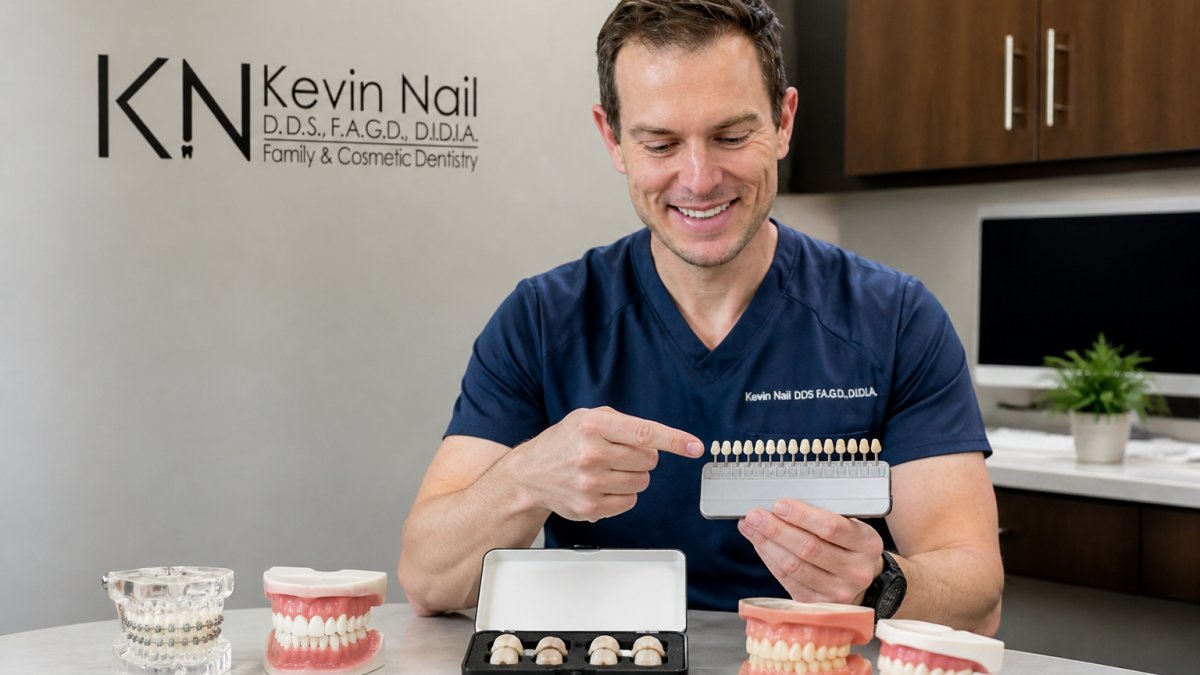
The materials used for the implant and crown affect both the upfront price and how long the restoration lasts. Implant posts are commonly made from titanium. Abutments and crowns may be made from several materials, and your provider can explain which options are available at their practice.
Lower upfront prices do not always mean lower long-term costs. A restoration that wears out early can require repair or replacement. Many patients find that paying more for durable materials and a well-planned restoration reduces future expenses. This is the long-term ROI question: what will this cost over ten or twenty years, not just today?
Ask your provider how long each material is expected to last and what maintenance it needs.
Factor 5: Surgical Approach and Minimally Invasive Flapless Implant Surgery
The surgical method can change both cost and recovery. Traditional implant surgery often involves cutting the gum to expose the bone, then stitching it closed. Minimally invasive flapless surgery places the implant through a small opening without a full gum flap. Minimally invasive flapless surgery is one approach that may reduce post-operative swelling, bleeding, and recovery time for some patients.

Pricing for surgical approaches depends on the individual case. Ask your provider for a written estimate. Patients who want to return to normal activity quickly often ask about this option.
Because surgical methods vary, ask your provider which approach they recommend for your case and why.
Factor 6: Anesthesia, Sedation, and Surgical Team Experience
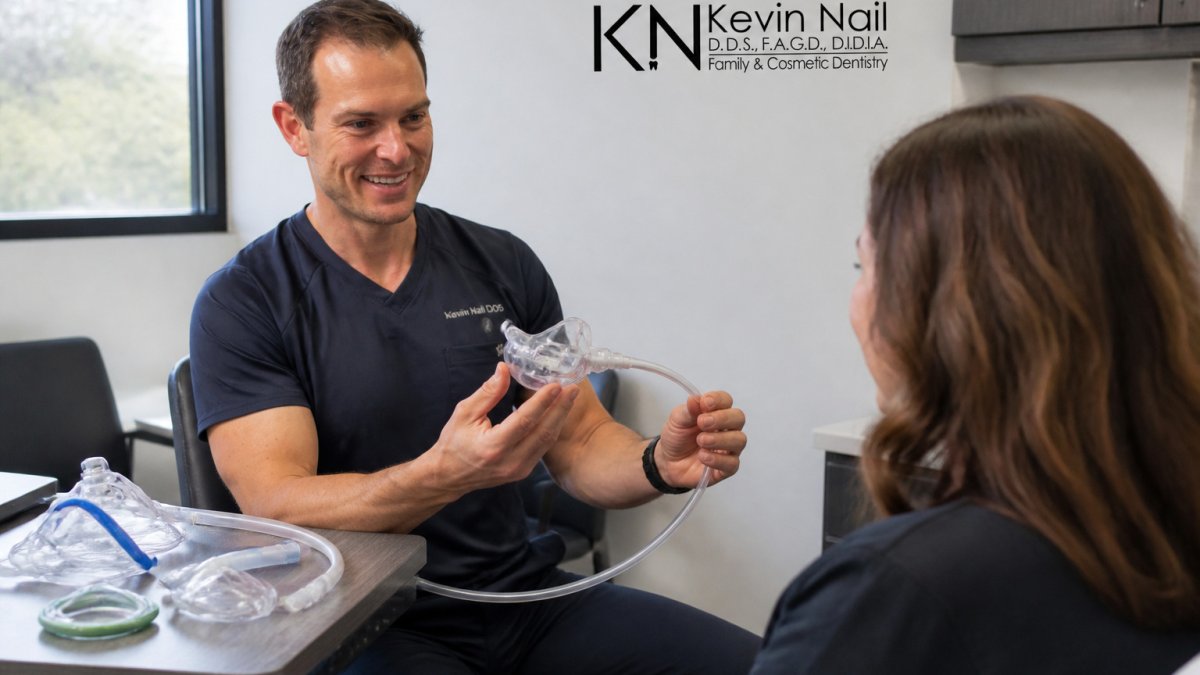
Comfort during surgery affects cost. Anesthesia and sedation options vary, and your provider can explain what is included in your estimate. Some patients who feel anxious about dental work ask their provider about sedation options.
Experience also matters. A surgeon's training, the team's routine, and the facility's equipment all shape the result. Lower fees are not always the best value when the outcome depends on skill and planning.
When you compare estimates, ask who will perform the surgery, what sedation is included, and what monitoring is provided.
Factor 7: Dental Implant Insurance Coverage and Out-of-Pocket Costs
Insurance is often the final question, and it is also where implant estimates diverge most from what patients expect. Dental plans often treat implants differently from other procedures. For a deeper look at how insurance changes the final price, read our complete guide to dental implant cost with insurance.
Reading a dental estimate. A well-built implant estimate is itemized by procedure code, not by a single lump sum. The codes most commonly associated with implant treatment include:
- D6010, surgical placement of the implant body
- D6056 / D6057, prefabricated or custom abutment
- D6058-D6061, implant-supported crown or bridge
- D6100, implant removal (relevant if a complication occurs)
- D7953, bone replacement graft for ridge preservation
- D4263 / D4264, bone replacement graft and guided tissue regeneration
- D4275, sinus augmentation
You do not need to memorize these, but you should be able to match each line on your estimate to a code and a fee.
How the plan mechanics interact. Three plan features drive most of the out-of-pocket difference:
- Annual maximum: the most the plan will pay in a plan year. A single implant and crown can approach or exceed a common annual maximum, which means the second implant in a multi-tooth case may fall entirely to the patient.
- Waiting period: many plans impose a waiting period before major services, including implants, are covered. Scheduling surgery before the period ends can shift the entire cost to the patient.
- Pre-authorization: a request submitted to the insurer before treatment begins. It is the single most useful document a patient can obtain, because it converts an unknown into a written coverage decision.
Watch out: a pre-authorization is not a guarantee of payment. If the surgeon changes the plan mid-treatment, adding a graft, switching to a custom abutment, or placing an extra implant, the insurer may deny the added codes even though the original request was approved. Ask how the practice handles mid-treatment plan changes and who absorbs the difference.
Financing and tax-advantaged accounts. Beyond insurance, many patients use a health savings account (HSA) or flexible spending account (FSA) to pay for eligible dental care with pre-tax dollars. Third-party financing plans spread the balance over time, but the interest rate and origination fees should be compared against the cost of delaying treatment.
For a clear picture, ask your provider to submit a pre-authorization request, provide the itemized estimate with codes, and review both documents with you before scheduling surgery. You can also contact the team at Kevin Nail DDS to ask about pricing and payment options.
Frequently Asked Questions
Is it worth getting dental implants at 70 years old?
Age alone rarely rules out dental implants. The decision depends on overall health, bone density, gum health, and how well the patient can maintain daily oral hygiene. Older adults with stable health often do well with implants, while those with uncontrolled conditions or significant bone loss may need additional preparation. A consultation with a dentist who can review imaging and medical history is the most reliable way to decide whether implants make sense for a specific situation.
What is the most expensive part of a dental implant?
The implant itself is only one component. The restoration, meaning the abutment and crown, and any bone graft or sinus lift needed beforehand often add significant cost. Diagnostic imaging, extraction if needed, and sedation also contribute. Because pricing depends on the individual treatment plan, the most useful step is requesting an itemized written estimate that separates each component so you can see where the money goes.
Are dental implants covered by standard dental insurance plans?
Many dental insurance plans treat implants as a major service with a lower annual maximum or a waiting period, and some exclude them entirely. Coverage varies by plan, so review your plan's summary of benefits and ask whether implant placement, the abutment, and the crown are covered separately. Your dental office can submit a pre-treatment estimate to your insurer so you know your expected share before work begins. Health savings accounts and flexible spending accounts may also help with out-of-pocket costs.
Why do some patients need bone grafts before implant surgery?
An implant needs enough healthy jawbone to integrate with the bone through osseointegration and stay stable under chewing forces. If bone has thinned after a tooth extraction or periodontal disease, a bone graft can rebuild the site. The graft adds cost and healing time, which is why the need for one is one of the most common reasons a treatment estimate changes. Imaging such as a CBCT scan helps determine whether a graft is necessary.
Every implant plan is different, and your dentist can give you a clear estimate after a proper exam and imaging. To discuss your options with Dr. Nail and the team at Kevin Nail DDS, call 281-550-9054.