 blog
How to Choose Sedation for Dental Phobia: 5 Types Compared
Quick Summary
Dental phobia sedation is medication that helps an anxious patient relax during treatment, and the right option depends on anxiety level, procedure length and health history. Nitrous oxide suits mild anxiety, oral sedation suits moderate anxiety, and IV sedation suits severe fear or long procedures. Your dental team matches the choice to you.
- Nitrous oxide, or laughing gas, is the mildest option and lets you drive yourself home.
- Oral sedation is taken as a pill about 30 to 60 minutes before treatment.
- IV sedation allows the dental team to adjust relaxation levels during longer procedures.
- Always disclose medications, supplements and medical conditions before any sedation.
- Arrange a responsible adult to take you home after oral or IV sedation.
Table of Contents
- Why Dental Phobia Calls for Sedation Options
- Nitrous Oxide (Laughing Gas): The Lightest Option
- Types of Oral Sedation and How They Work
- Dental IV Sedation: Deeper Relaxation Without Full Unconsciousness
- Midazolam for Dental Sedation: What Patients Should Know
- Is Dental Sedation Dangerous? Safety, Monitoring and Who Should Avoid It
- Choosing Your Sedation Plan with Our Team at Kevin Nail DDS
- Frequently Asked Questions
Why Dental Phobia Calls for Sedation Options
Last Updated: November 2, 2026
Dental phobia keeps many people away from the chair for years, and dental phobia sedation is often the first step back.
Dental sedation is the use of medication to help a patient relax during treatment.
The right dental phobia sedation option depends on how anxious you are, how long the work will take, and your health history.
- Mild anxiety often responds to the lightest options
- Long or complex visits may call for deeper relaxation
- Medical history shapes which options are safe
Here is the key point: sedation is a tool for matching the treatment to the patient.
Nitrous Oxide (Laughing Gas): The Lightest Option
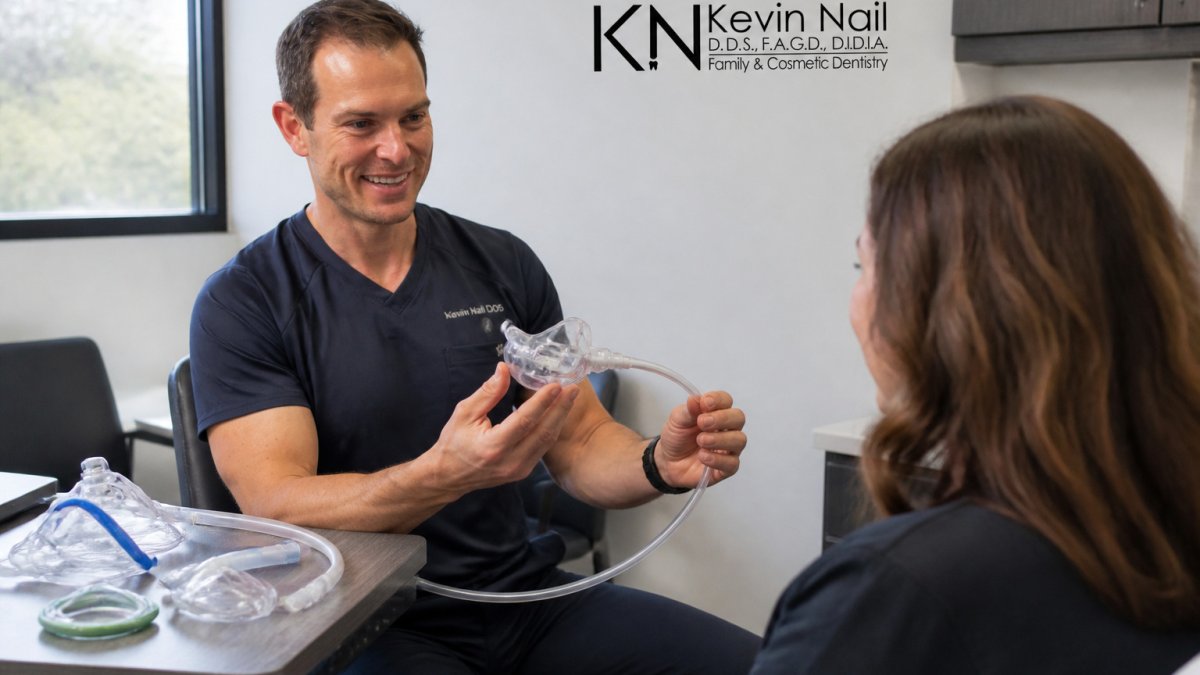
Nitrous oxide, often called laughing gas, is the mildest form of dental sedation. A small nasal hood delivers a mix of nitrous oxide and oxygen.
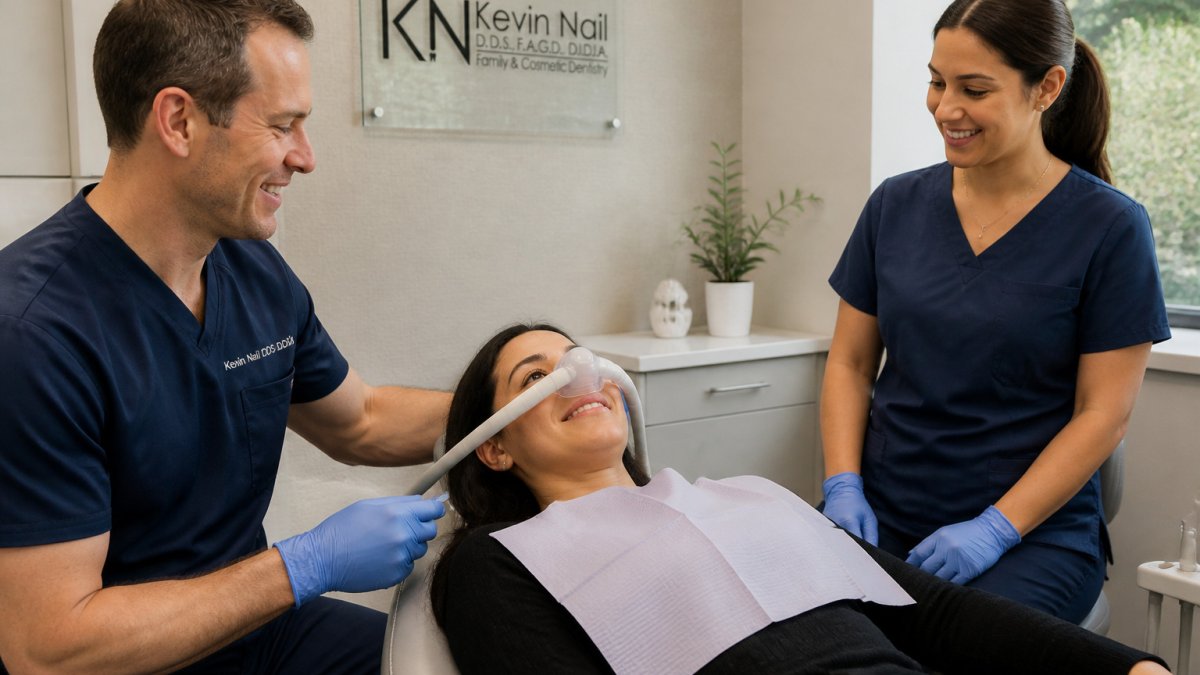
Most patients feel relaxed and a little lightheaded within a few minutes.
Nitrous oxide works well for:
- Mild to moderate dental anxiety
- Routine cleanings and fillings
- Patients who want a fast recovery
- People who dislike needles but can handle a short procedure
Its limits matter too. Nitrous oxide provides less deep relaxation than oral or IV options, so it may not be enough for very long procedures or severe fear.
Types of Oral Sedation and How They Work
Oral sedation is the middle ground of dental sedation: stronger than nitrous oxide, lighter than IV, and taken as a pill before your appointment. It is the most common choice for adults with moderate anxiety who need a routine filling, a crown, or a couple of extractions but do not want to be fully out.
The medications you are likely to be offered
Oral sedation in dentistry commonly uses medications from the benzodiazepine family. Your dentist will explain which medication, if any, is appropriate for you.
Your dentist chooses the drug and dose based on your weight, age, health history, other medications, and the length of the procedure.
How the appointment usually runs
A typical oral sedation visit generally involves the following steps:
- You take the pill at home or in the office, usually about 30 to 60 minutes before treatment, exactly as instructed.
- You arrive with a responsible adult who will drive you home.
- The team checks your vital signs and confirms you are stable before starting.
- You remain drowsy but responsive; most patients can answer questions and follow simple instructions.
- Monitoring continues through the procedure, and you rest in the office until the team confirms you are stable to leave.
- Your escort takes you home, and you should not drive, work, or make important decisions for the rest of the day.
Effects can last several hours, and residual sleepiness the next day is possible, especially with longer-acting medications. Plan a light schedule for the following morning.
What oral sedation is good for, and where it falls short
Oral sedation works well for:
- Moderate dental anxiety that nitrous oxide does not fully settle
- Routine to moderately complex procedures in adults
- Patients who prefer to avoid a needle for the sedative itself
- Appointments where a calm, cooperative patient makes the work faster and safer
Its limits matter. The dose is fixed once you swallow the pill, so the team cannot easily dial the relaxation up or down mid-procedure the way they can with IV sedation.
Watch out: timing is the most common failure point. Taking the pill too early can leave you too drowsy before the work starts; taking it too late means it has not fully kicked in.
Cost and insurance realities
Costs and insurance coverage for sedation vary by plan and by method. Before your appointment, ask the office for a written estimate that separates the sedation fee from the procedure fee, and check with your insurer about coverage.
The steps below show how a typical oral sedation visit runs, with timing and what to expect at each stage.
| Step | What to do | Timing |
|---|---|---|
| Take the pill | Take exactly as instructed | About 30 to 60 minutes before treatment |
| Arrive with escort | Bring a responsible adult to drive you home | Before the appointment |
| Vital sign check | Team confirms you are stable before starting | Before treatment begins |
| Procedure | Stay drowsy but responsive during treatment | Throughout the procedure |
| Recovery | Rest in the office until team confirms you are stable | Before leaving |
| Going home | Escort takes you home; avoid driving or big decisions | Rest of the day |
Dental IV Sedation: Deeper Relaxation Without Full Unconsciousness
IV sedation delivers medication directly into a vein.
Many patients remember little of the procedure afterward. They are relaxed and drowsy, yet they can still breathe on their own and respond when spoken to.
IV sedation generally requires careful monitoring, a trained provider, a responsible adult to take you home, and a recovery period before you leave.
IV sedation suits patients with severe dental fear or those having extensive procedures.
Midazolam for Dental Sedation: What Patients Should Know
Midazolam is a short-acting medication commonly used in dentistry. It can be given orally or intravenously, and it belongs to the benzodiazepine family.
Midazolam is not appropriate for every patient. Your dental team will review current medications, past reactions to sedatives, pregnancy status, and conditions affecting breathing or the liver. Certain other medications can interact with midazolam and increase its effects, so full disclosure matters.
Questions worth asking before treatment:
- Will I receive midazolam orally, intravenously, or both?
- How long will the effects last?
- Who will monitor me during and after the procedure?
- What should I avoid eating or drinking beforehand?
Clear answers to these questions help you feel more in control of the experience.
Is Dental Sedation Dangerous? Safety, Monitoring and Who Should Avoid It
Dental sedation is safe for most healthy patients when it is delivered by a trained provider with the right monitoring, but "safe" is not the same as "risk-free." The honest answer is that risk depends on three things: the type of sedation, the patient's health, and the training and equipment of the team in the room.
Sedation guidelines and drug labeling from national dental and regulatory bodies describe these risks, and you can review them through their official sources. Our complete safety guide to dental sedation covers monitoring, risk factors, and who should avoid it. Our article on the specific real risks of IV sedation dentistry walks through what to weigh before deciding.
What monitoring should look like
For moderate sedation and deeper, a properly equipped office generally monitors:
- Oxygen saturation with a pulse oximeter, continuously
- Blood pressure and heart rate at intervals throughout the visit
- Breathing rate and depth by direct observation
- Level of alertness and ability to respond
- A documented recovery period before discharge, with someone confirming you are stable to leave
If you are considering IV sedation or anything deeper, ask who will be dedicated to monitoring you during the procedure before you book.
Medical conditions that call for extra caution
Some conditions do not automatically disqualify you, but they change the plan. A common pattern is that the dentist consults with your physician or refers you to an oral and maxillofacial surgeon or an anesthesiologist for deeper sedation. Conditions that routinely trigger that conversation include:
- Obstructive sleep apnea or a history of loud snoring and daytime sleepiness
- Severe asthma, COPD, or other chronic lung disease
- Heart conditions such as arrhythmias, recent heart attack, or poorly controlled heart failure
- Liver or kidney disease that affects how drugs are cleared
- Pregnancy, especially in the first trimester
- A prior bad reaction to sedation or anesthesia, including malignant hyperthermia in the family
- Current heavy alcohol use or recreational drug use, which can change tolerance and risk
Medications and interactions worth disclosing
Full disclosure is not optional. Several common medications interact with sedatives in ways that raise risk:
- Opioid pain relievers, which compound breathing depression when combined with benzodiazepines
- Other benzodiazepines or sleep aids, which can stack effects
- Antidepressants, some of which interact with sedatives
- Blood thinners, which matter more for surgical procedures than for the sedative itself but belong on the list
- Certain antifungal and antibiotic drugs, which can slow the breakdown of midazolam and similar medications
- Grapefruit juice and some herbal supplements, which can affect drug metabolism
Bring a written list, including over-the-counter products and supplements. "I take a few things" is not enough for a safe plan.
Practical precautions that lower risk
- Follow fasting instructions exactly; a full stomach raises the risk of aspiration if you become deeply relaxed
- Arrange a sober adult to drive you home and stay with you for several hours after deeper sedation
- Do not sign up to drive, operate machinery, or make important decisions for the rest of the day
- Report unusual symptoms afterward, including prolonged drowsiness, difficulty breathing, or a rash
Watch out: the most common serious problem with sedation is not the drug itself but an unrecognized interaction or an empty stomach instruction that was ignored. Tell your dentist everything, and follow the fasting and escort rules even if they feel inconvenient.
Sedation is safest when the provider has the right training, the right equipment, a complete picture of your health, and a plan for the recovery period. Ask about all four before your appointment.
Choosing Your Sedation Plan with Our Team at Kevin Nail DDS
Choosing a sedation option is easier when you have a clear plan. Kevin Nail DDS offers sedation dentistry services in Copperfield, Houston, with payment plans available, so you can see what each option involves. Patients who want a broader overview can read our sedation dentistry guide for anxious patients before that conversation.
Here is a simple way to think it through:
- Mild anxiety and a short visit may suit nitrous oxide
- Moderate anxiety and a routine procedure may suit oral sedation
- Severe anxiety or a long procedure may call for IV sedation
- Any option should be matched to your health and medications
If you are still searching for a provider, our guide on finding a dentist for phobic patients lists practical questions to ask.
Our team at Kevin Nail DDS is ready to talk through your options.
Frequently Asked Questions
Is nitrous oxide safe for adults? Nitrous oxide is widely used in dentistry and is generally well tolerated.
How long does oral sedation last? Effects vary by medication and dose, often lasting several hours.
Can I eat before dental sedation? Fasting instructions depend on the type of sedation.
Frequently Asked Questions
What is the safest dental sedation?
No single method is safest for everyone. Nitrous oxide is generally considered the lightest form because it wears off quickly and patients stay responsive, while IV and general anesthesia require closer monitoring. Safety depends on your health history, medications, the procedure length and the provider's training and monitoring equipment. A consultation that reviews your medical history is the right place to decide which option fits you.
Is dental sedation dangerous?
Dental sedation carries real risks, but they are manageable when the provider screens patients carefully, reviews medications and allergies, and monitors vital signs throughout the procedure. Deeper sedation levels need more monitoring than lighter ones. Patients with certain respiratory conditions, sleep apnea or interactions with other medications may be poor candidates for some methods. Ask any provider how they monitor patients and what emergency equipment is on site.
Will I be awake during dental sedation?
It depends on the method and depth. With nitrous oxide and oral sedation, most patients stay awake and can respond to instructions, though they may feel drowsy or lightly disconnected. IV sedation often produces a deeper relaxed state where many patients remember little of the procedure. General anesthesia renders you unconscious. Your provider will explain the expected level before your appointment.
How should I prepare for dental sedation?
Preparation usually includes arranging a ride home, since most sedation methods prevent safe driving for several hours. Follow fasting instructions on eating and drinking, tell your provider about all medications and supplements, and wear comfortable clothing. Plan to rest the rest of the day. Your provider can give you post-operative instructions covering recovery time and when to call the office.