 ultimate-guide
Sedation Dentistry for Anxious Patients: 2026 Guide
Table of Contents
- Understanding Sedation Dentistry for Anxious Patients
- Types of Dental Sedation: Nitrous Oxide, Oral Conscious, and IV Sedation
- Managing Dental Anxiety: Psychological Tools That Work
- Is Sedation Dentistry Safe? Monitoring, Side Effects, and Candidacy
- Cost and Insurance Coverage for Sedation Dentistry
- What to Expect During a Sedation Dentistry Appointment
- Conclusion
- Frequently Asked Questions
Last Updated: September 16, 2026
Understanding Sedation Dentistry for Anxious Patients
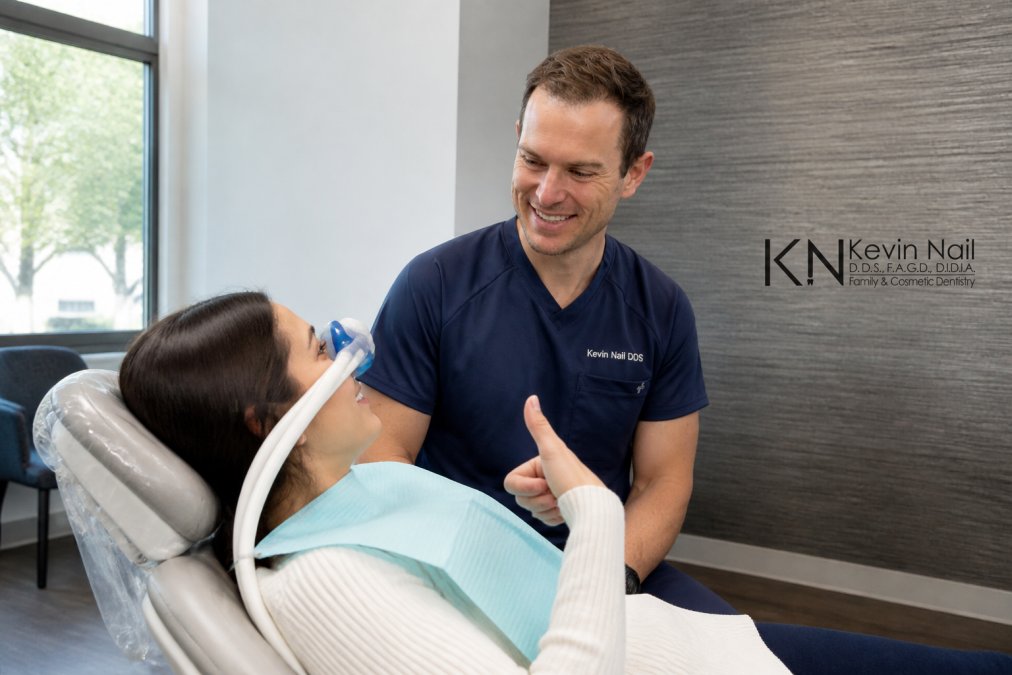
Sedation dentistry for anxious patients is the use of calming medications during dental treatment to help people who feel intense fear or stress complete necessary care comfortably. At Kevin Nail DDS, we see this fear regularly, and it is far more common than most patients realize.
Types of Dental Sedation: Nitrous Oxide, Oral Conscious, and IV Sedation
Dental sedation is not a single treatment. It is a spectrum defined by how deeply the medication affects your consciousness, and the American Dental Association and the American Society of Anesthesiologists both describe it in four recognized levels: minimal sedation (anxiolysis), moderate sedation (what most people mean by "conscious sedation"), deep sedation, and general anesthesia. The three options below cover the levels used most often for routine and moderately complex dental care.
Nitrous Oxide (Laughing Gas), Minimal Sedation
Nitrous oxide is a gas you breathe through a small mask placed over your nose, and it produces a relaxed, floaty feeling within a few minutes. It is the only sedation option that is titrated breath by breath: the clinician can increase or decrease the effect almost instantly, and the effects wear off within minutes once the mask comes off and you breathe room air.
Oral Conscious Sedation, Moderate Sedation
Oral conscious sedation uses a pill taken before your appointment, typically about an hour ahead. You stay awake and responsive but feel deeply relaxed, and many patients remember little of the appointment afterward. Because the dose is fixed once swallowed, the level cannot be adjusted mid-appointment the way nitrous or IV can.
IV Sedation, Moderate to Deep Sedation
IV sedation delivers medication directly into a vein, which makes it the most controllable option. The clinical team can adjust the level minute to minute as the appointment progresses, and onset is near-immediate. It is the standard choice for high anxiety, longer appointments, complex surgical procedures, or patients with a strong gag reflex.
Side-by-Side Comparison: Depth, Onset, Recovery, and Common Side Effects
| Feature | Nitrous Oxide | Oral Conscious | IV Sedation |
|---|---|---|---|
| Sedation level | Minimal | Moderate | Moderate to deep |
| Delivery | Inhaled through nose mask | Pill taken ~1 hour before | Medication through a vein |
| Onset | 2-5 minutes | 30-60 minutes | Near-immediate |
| Adjustable mid-visit? | Yes, breath by breath | No | Yes, minute to minute |
| Fasting required? | No | Usually yes | Yes |
| Escort home required? | No | Yes | Yes |
| Typical recovery | Minutes | Several hours | Rest of the day |
| Common side effects | Lightheadedness, tingling, mild nausea | Drowsiness, dry mouth, lingering grogginess, occasional nausea | Drowsiness, headache, nausea, grogginess, rare injection-site soreness |
| Best for | Mild to moderate anxiety, shorter visits | Moderate anxiety, shorter visits | High anxiety, longer or complex procedures |
Pediatric vs. Adult Sedation Differences
Children respond differently to sedative medication, and dosing is weight-based rather than fixed. Pediatric sedation also leans more heavily on behavioral preparation, tell-show-do, a parent present, a familiar object in the chair, because a child who understands what is happening often needs less medication. Nitrous oxide is frequently the first choice for children precisely because it is reversible within minutes if a child becomes over-sedated.
Managing Dental Anxiety: Psychological Tools That Work
Medication is only half the answer. Psychological coping tools build the skills that make dental visits tolerable long term, and they work alongside sedation rather than replacing it.
- Agree on a stop signal. Raise your hand and treatment pauses. Knowing you have control reduces panic.
- Practice paced breathing. Slow exhales for a count of six calm the nervous system before the mask or IV goes on.
- Schedule early appointments. Anxiety tends to build through the day, so a morning slot often feels easier.
- Bring headphones. Familiar audio gives your attention somewhere to land besides the sounds of the room.
- Visit before treatment. A short meet-and-greet with no instruments involved removes the unknown.
Is Sedation Dentistry Safe? Monitoring, Side Effects, and Candidacy
Sedation dentistry is generally considered safe when a qualified provider performs a pre-sedation assessment, monitors vital signs throughout, and matches the sedation level to the patient's health history. Safety comes from the protocol, not the drug alone. The American Dental Association and the American Society of Anesthesiologists both publish guidelines that define what that protocol should include, and a practice that follows them will be able to describe each step to you before treatment begins.
What a Pre-Sedation Assessment Covers
A thorough pre-sedation assessment is not bureaucracy. It is where the provider learns the details that change the plan. Expect to be asked about:
- Every medication and supplement, including over-the-counter drugs, because interactions with sedatives are common.
- Sleep apnea or snoring, which raises the risk of airway compromise under moderate or deep sedation.
- Heart, lung, kidney, and liver conditions, since these affect how quickly the body clears sedative medication.
- Prior reactions to anesthesia, in you or in a close relative.
- Pregnancy status, because some sedatives are avoided during pregnancy.
- Alcohol and recreational drug use, which can change tolerance and dosing.
Monitoring During the Appointment
For moderate sedation and deeper, the standard setup includes a blood pressure cuff, a pulse oximeter on your finger to track oxygen saturation, and continuous visual observation of your breathing and responsiveness. Many practices also use capnography to monitor exhaled carbon dioxide, which can detect airway problems earlier than pulse oximetry alone. A trained team member, sometimes a second person whose only job is monitoring, stays with you for the entire appointment.
Common Side Effects and How Long They Last
Most side effects are mild and resolve as the medication clears. The most frequently reported are drowsiness, dry mouth, headache, and nausea. Nitrous oxide effects fade within minutes. Oral sedation can leave you groggy for several hours. IV sedation typically requires the rest of the day before you feel fully yourself. Serious complications are rare and are most often associated with unrecognized medical conditions, which is exactly why the assessment matters.
Who Is a Candidate for Sedation Dentistry?
Candidacy depends on your medical history, current medications, and the procedure planned. Patients with certain heart, lung, or airway conditions may need medical clearance first, and some may be better served by a specific sedation level, often a lighter one. Patients who are pregnant, who have uncontrolled sleep apnea, or who take medications with significant sedative interactions may be steered toward nitrous oxide or toward a non-sedation anxiety strategy.
Pediatric vs. Adult Sedation Differences
Children are not small adults when it comes to sedation. Dosing is weight-based, the margin between moderate and deep sedation is narrower, and the airway anatomy differs in ways that change monitoring needs. Pediatric sedation also leans more heavily on behavioral preparation, since a child who understands what is happening often needs less medication. Parents should expect to be asked about the child's weight, recent illnesses, and any breathing issues, and should expect the provider to require an escort and a fasting period for anything beyond nitrous oxide.
Cost and Insurance Coverage for Sedation Dentistry
Cost is the question patients ask last and worry about first. Sedation is frequently billed separately from the dental procedure itself, and coverage varies by plan and by medical necessity.
Here is how the pieces typically break down:
- The dental procedure (filling, extraction, implant) is billed under your dental plan.
- Nitrous oxide is often the least expensive sedation option and is sometimes bundled into the visit.
- Oral and IV sedation are usually billed as separate line items, and many dental plans cover them only when documented as medically necessary.
- Medical insurance occasionally contributes when sedation is tied to a diagnosed condition, though this is uncommon and requires documentation.
What to Expect During a Sedation Dentistry Appointment
Preparation is simple but specific. Follow these steps in order, and the appointment itself becomes the easy part.
- Complete the pre-sedation assessment. Disclose every medication, supplement, and health condition.
- Arrange transportation. For oral or IV sedation, you cannot drive yourself home.
- Follow fasting instructions. If your provider gives them, treat them as non-negotiable.
- Wear comfortable clothing with short or loose sleeves for easy monitoring access.
- Expect a monitoring setup. Blood pressure cuff, pulse oximeter, and vital signs checks throughout.
- Plan a quiet recovery. Rest for the remainder of the day, and skip driving, work, and major decisions.
- Follow post-operative instructions. Written guidance on eating, medication, and when to call covers the hours after you leave.
Conclusion
Dental anxiety is a real barrier, and avoiding treatment only makes the eventual appointment bigger. Sedation dentistry exists precisely for that gap, and the right level of sedation, paired with a provider who takes your fear seriously, turns a dreaded visit into a manageable one.
Frequently Asked Questions
I'm so scared to go to the dentist. What can I do to cope with this fear?
Start by telling your dentist about your fear. They can offer coping strategies like deep breathing, listening to music, or taking breaks during the appointment. For stronger anxiety, sedation dentistry for anxious patients provides options such as nitrous oxide or oral conscious sedation. Many practices also allow you to bring a support person. Combining psychological tools with sedation often makes dental visits manageable and comfortable.
Can you be sedated at the dentist for dental anxiety?
Yes. Sedation dentistry is specifically designed for anxious patients. Depending on your health history and anxiety level, your dentist may recommend nitrous oxide (laughing gas), oral conscious sedation, or IV sedation. These methods help you relax during treatment. A qualified provider will review your medical history and monitor your vital signs throughout the procedure to keep you safe and comfortable.
Is sedation dentistry safe for patients with high dental anxiety?
Sedation dentistry is generally safe when administered by a trained professional. Your dentist will conduct a pre-sedation assessment, including a review of your medical history and medications, to choose the safest option for you. During the appointment, vital signs are monitored continuously. Side effects are usually mild and temporary, such as drowsiness or dry mouth. Serious complications are rare but possible, so always discuss risks with your provider.
Does dental insurance typically cover sedation dentistry for anxiety?
Coverage varies by plan. Some PPO insurance plans may cover sedation if it is medically necessary, but many consider it an elective add-on. Before scheduling, ask your dentist's office to verify your benefits. They can provide a breakdown of estimated costs. If insurance doesn't cover it, ask about payment plans or financing options to manage out-of-pocket expenses.