 ultimate-guide
How Long Advanced Dental Veneers Last With Proper Care
Last Updated: October 29, 2026
Quick Summary
Dental veneers last a range of years rather than a guarantee, and their lifespan depends on the material, bite forces, enamel preparation, and daily habits. Well-cared-for dental veneers often remain stable for many years, but they are not permanent. Regular checkups help catch chips, debonding, and staining early.
- Porcelain and composite veneers age differently, with porcelain holding color better.
- Night guards are the standard recommendation for patients who grind their teeth during sleep.
- Brush twice daily, floss daily, and schedule professional cleanings about every six months.
- Gum disease can loosen the seal around a veneer, so healthy gums are part of long-term care.
- Minor chips can often be repaired, and a debonded veneer may be rebonded if the tooth is healthy.
Table of Contents
- How Long Dental Veneers Typically Last
- Porcelain vs Composite Veneer Lifespan
- What Makes a Veneer 'Advanced' and How It Affects Durability
- Factors That Shorten or Extend Veneer Life
- Best Oral Hygiene Routine for Cosmetic Dentistry
- Signs It Is Time to Replace Dental Veneers
- Scheduling Your Veneer Check-Up and Next Steps
- Frequently Asked Questions
How Long Dental Veneers Typically Last
The lifespan of dental veneers depends on the material, the bite, and the daily habits of the person wearing them. Dental veneers are thin shells, usually porcelain or composite, bonded to the front surface of teeth to change their shape, color, or alignment.
Lifespan is best understood as a range rather than a guarantee. Factors such as enamel preparation, bite forces, and oral hygiene all affect how long a veneer stays intact.
Dental veneers that are well cared for often remain stable for many years, but they are not permanent. Chips, debonding, and staining can appear over time, which is why regular checkups matter. American Dental Association guidance on dental restorations
Porcelain vs Composite Veneer Lifespan
Porcelain and composite veneers age differently, and the gap shows up in both lifespan and maintenance cost. Porcelain and composite veneers have different typical lifespans, and individual results vary. You can compare natural looking veneer options for teeth before deciding which material suits you. A dentist can give a more specific estimate after an examination.
Those ranges are not guarantees. They describe typical outcomes, not exceptional ones, and they depend heavily on bite forces, enamel preparation, and daily habits. It also helps to separate two ideas that get blurred together: survival and replacement-free lifespan. A veneer can survive, meaning it stays bonded and functional, while still needing repair, polishing, or rebonding along the way. When you read a claim that veneers last 20 years, ask whether that means no intervention at all or simply that the restoration was still in place.
Porcelain veneers
- Glass-ceramic material, typically lithium disilicate or feldspathic porcelain
- Hard, stain-resistant surface that holds color well over time
- Bonded to enamel, which supports a strong, durable seal
- Less prone to surface wear, but can chip or fracture under heavy point loads
- Repairs are possible but often require laboratory work, so a chip can mean a temporary removal and re-bond
Composite veneers
- Layered directly from resin, often in a single visit
- Softer surface that wears and stains faster, especially with coffee, tea, or tobacco
- Easier and less expensive to repair or add to chairside
- More likely to need periodic polishing or refinishing to keep the surface smooth
- A reasonable choice when budget or a short-term change is the priority
National Institute of Dental and Craniofacial Research overview of dental materials
The choice between materials involves trade-offs in durability, upfront cost, and maintenance. Discuss these options with your dentist during a consultation.
The two veneer materials age differently, and the main differences are summarised below.
| Feature | Porcelain veneers | Composite veneers |
|---|---|---|
| Material | Glass-ceramic | Layered resin |
| Stain resistance | Holds color well | Stains faster |
| Surface wear | Less prone to wear | Softer, wears faster |
| Chip repair | Often needs lab work | Easier to repair chairside |
| Upkeep | Fewer touch-ups | May need periodic polishing |
What Makes a Veneer 'Advanced' and How It Affects Durability
The term "advanced" is used loosely in cosmetic dentistry, so it helps to define it. In practical terms, an advanced veneer approach involves precise planning, minimal tooth preparation when possible, and careful bonding that protects the underlying tooth.
Minimal preparation matters because it preserves more natural enamel, which supports the bond.
Durability depends less on the label and more on execution and maintenance. A well-planned veneer with a sound bite can outlast a poorly fitted one, even if the materials are similar.
Factors That Shorten or Extend Veneer Life
Most lifespan estimates assume an average patient. Your own expected lifespan depends on a handful of variables you can actually assess. A practical way to think about it is to score yourself on five factors: bite, enamel, gum health, oral habits, and existing dental work.
Bite and bite forces. Heavy clenching or grinding, bruxism, loads veneers far beyond normal chewing. Porcelain can crack under repeated point loads, and the bond at the margin can fatigue. A night guard is the standard recommendation for patients who grind during sleep. American Academy of Orofacial Pain on bruxism An uneven bite or a single high spot can also concentrate force on one veneer, which is why occlusal adjustment at placement matters.
Enamel condition and preparation. More preserved enamel generally means a stronger bond. Minimal-preparation and no-preparation approaches leave more natural tooth structure, which supports the seal. Heavily prepared teeth with little enamel left are more dependent on the bonding system and more vulnerable to debonding over time.
Gum health. The margin where the veneer meets the gum is the weak point. Gum disease or recession can expose that margin, trap plaque, and loosen the seal. Healthy gums and routine periodontal care are part of long-term veneer maintenance, not a separate concern.
Oral habits. Ice chewing, hard foods, and using teeth to open packaging create impact loads that veneers are not designed for. Staining habits, heavy coffee, tea, red wine, or tobacco, discolor composite faster than porcelain. Nail biting and pen chewing add repeated stress at the incisal edge.
Existing dental work and tooth condition. Prior restorations, cracks, or a history of root canal treatment on a veneered tooth change the risk profile. A tooth with compromised structure may need a different restoration strategy than a healthy one.
What happens when a veneer fails. Not every failure means replacement. A small chip in composite can often be repaired chairside. A debonded veneer may be rebonded if the tooth and veneer are intact. Staining at the margin can sometimes be polished away. Replacement becomes more likely when the veneer is cracked through, the underlying tooth is damaged, or the color no longer matches the adjacent teeth. Knowing which category a problem falls into helps you avoid replacing a veneer that could have been saved.
Best Oral Hygiene Routine for Cosmetic Dentistry
Good hygiene protects both the veneer and the natural tooth beneath it. Brush at least twice a day with a soft-bristled toothbrush and a non-abrasive toothpaste. Floss daily or use an interdental cleaner to clean the margins where the veneer meets the gum.
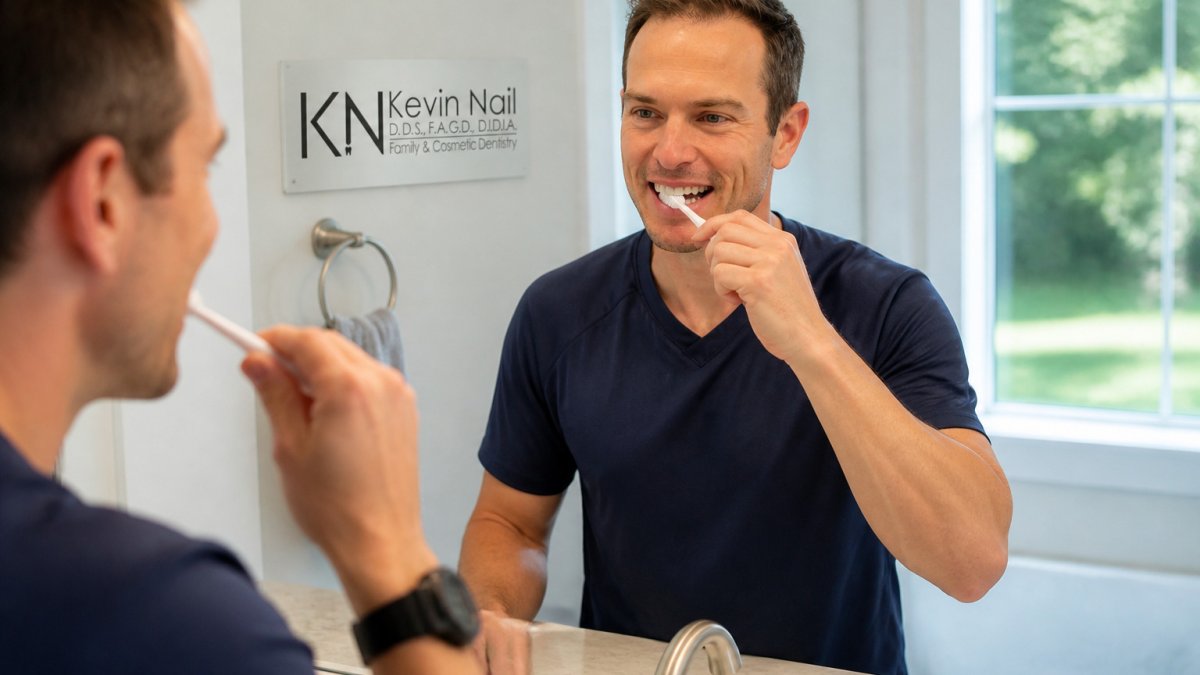
Routine professional cleanings every six months help remove plaque that a home routine may miss. For more on protecting your results after a smile makeover, see our guide. Gum disease can loosen the seal around a veneer, so healthy gums are part of long-term veneer care.
Avoid using your teeth as tools and be cautious with whitening products unless your dentist approves them, since some products can affect composite materials.
Signs It Is Time to Replace Dental Veneers
Veneers usually need attention when they chip, crack, or lift at the edges. A dedicated guide covers the specific warning signs of failing veneers. Discoloration around the margin, sensitivity to temperature, or a rough feel along the gum line can also signal a problem.
Replacement is not always necessary. Minor chips in composite veneers can often be repaired, and a debonded veneer may be rebonded if the tooth is healthy. Replacement becomes more likely when the veneer is cracked through, the underlying tooth is damaged, or the color no longer matches. A tooth under a veneer may also need a crown after root canal therapy.
Only a dental examination can determine which option is appropriate for an individual. If you notice any of these signs, contact a dentist promptly rather than waiting for the problem to worsen.
Scheduling Your Veneer Check-Up and Next Steps
A routine veneer check-up allows your dentist to examine the margins, bite, and surrounding gums before small issues become costly repairs. If you are considering new veneers, a consultation helps determine which material and approach suit your teeth and goals.
Kevin Nail DDS is a privately owned dental practice in Copperfield, Houston, where Dr. Kevin Nail personally performs every procedure. To schedule a veneer evaluation or discuss your options, call Kevin Nail DDS at 281-550-9054. You can also explore cosmetic dentistry services for porcelain veneers and smile makeovers.
Frequently Asked Questions
What type of veneers last the longest?
Porcelain veneers generally last longer than composite veneers because porcelain is more stain-resistant and holds its surface better over time. Porcelain veneers are generally more durable than composite veneers, and many last a long time with consistent care. Composite veneers are typically replaced sooner. Actual lifespan depends on bite habits, oral hygiene and how the veneers were placed, so a dentist can give a more specific estimate after an exam.
Can veneers last 20 years or more?
Some veneers do last 20 years or longer, particularly porcelain veneers placed on healthy teeth with good hygiene and no heavy grinding. However, lasting that long is not guaranteed. Chips, debonding, gum changes and decay at the margins can all lead to repair or replacement before then. Regular dental checkups allow your dentist to catch small problems early, which can extend the life of the veneers already in place.
How does oral hygiene affect how long veneers last?
Brushing twice daily with a soft-bristle toothbrush, flossing daily and seeing your dentist for routine cleanings help protect the natural tooth and gum tissue that support each veneer. Plaque and gum disease can compromise the bond at the edges of a veneer, which is a common reason for failure. Good hygiene does not make a veneer last forever, but it removes one of the most controllable risks to its lifespan.
Do I need a night guard if I have veneers?
If you grind or clench your teeth, a night guard may help reduce stress on veneers and the teeth beneath them. Bruxism can cause chipping and cracking over time. Whether a night guard is appropriate for you depends on an individual evaluation of your bite and habits, so ask your dentist during a consultation whether one is recommended in your case.