 ultimate-guide
Natural Looking Veneers for Teeth: A 2026 Guide
Table of Contents
- What Makes Natural Looking Veneers for Teeth Actually Look Real
- Porcelain vs Composite Veneers: Which Looks More Natural?
- Avoiding the Fake Look: Smile Design and Customization
- Veneer Procedure Steps: From Consultation to Final Placement
- How Long Do Veneers Last, and How Do They Age?
- How to Communicate Your Goals and Get Natural Looking Veneers
- Conclusion
Last Updated: August 25, 2026
What Makes Natural Looking Veneers for Teeth Actually Look Real
Natural looking veneers depend on far more than whiteness. Poorly designed veneers are immediately obvious. The difference between veneers that fool even a dentist and ones that read as artificial comes down to three interconnected factors: translucency, surface texture, and shade matching.
Natural teeth are not uniformly white. They have depth. Light passes through the enamel, reflects off the dentin beneath, and creates a layered, three-dimensional appearance. A veneer that blocks all light transmission looks flat and plastic, the telltale sign of cosmetic work done without attention to optical properties.
Translucency and Surface Texture
Translucency is the degree to which light passes through a material rather than bouncing off its surface. Natural tooth enamel is semi-translucent, which gives teeth their characteristic glow rather than a chalky, opaque appearance. Feldspathic porcelain closely mimics this optical behavior, allowing light to enter, scatter internally, and exit in a way that resembles natural enamel.
Surface texture matters equally. Real teeth have subtle ridges, micro-grooves, and surface variation that interact with light to create natural highlights and shadows. A skilled dental laboratory will build these features into each custom-made veneer. When texture is absent, teeth look monochromatic and flat, regardless of how well the color was matched.
The combination of translucency and surface texture is what separates a veneer that looks like a tooth from one that looks like a tile.
Shade Matching and Color Science
Most patients focus on how white they want their veneers. The right question is: what shade integrates with the surrounding teeth, skin tone, and facial proportions?
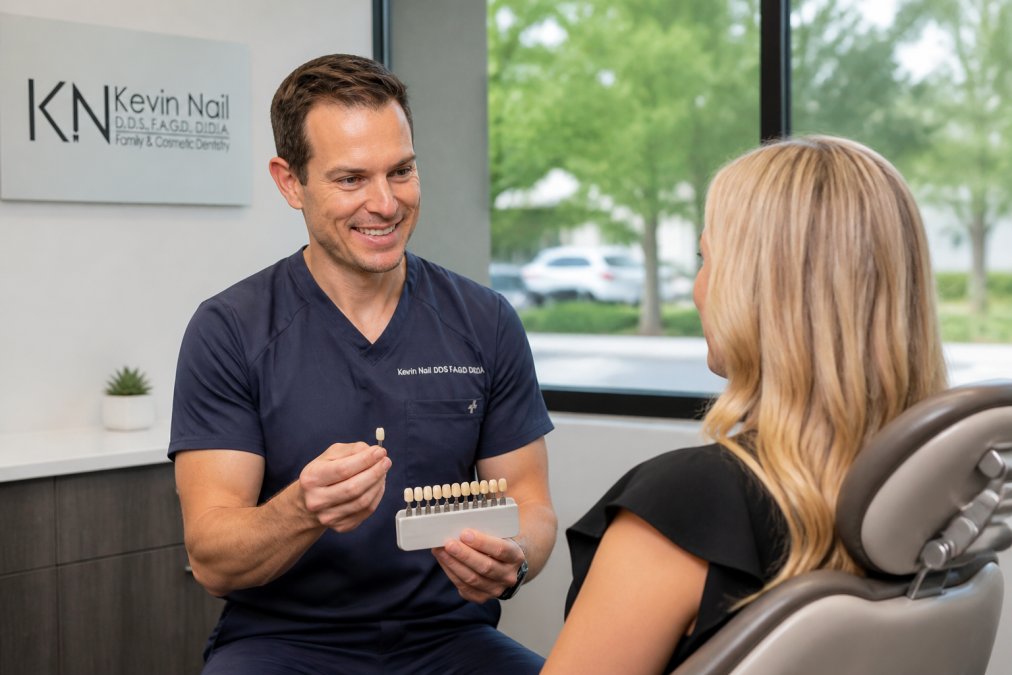
Shade matching involves selecting not just a base color but also the undertone (warm, cool, or neutral), the chroma (saturation), and the value (brightness). Teeth naturally vary in shade from the gumline to the incisal edge, darker at the gingival margin and lighter toward the tip. Veneers that replicate this gradient look real. Veneers that apply a single uniform color look fabricated.
A good cosmetic dentist will take photographs in natural and artificial light, use a calibrated shade guide, and communicate detailed instructions to the dental laboratory. Some practices now use spectrophotometers, devices that measure color with far greater precision than the human eye.
Porcelain vs Composite Veneers: Which Looks More Natural?
Porcelain veneers look more natural than composite resin veneers in most clinical situations, primarily due to optical properties. That said, composite has a legitimate role in specific cases.
Comparing Aesthetics, Durability, and Maintenance
Porcelain veneers are fabricated in a dental laboratory from ceramic materials. The layering process allows for depth, translucency, and surface texture that closely mimics natural enamel. Porcelain is stain-resistant, so color remains stable over years of coffee, tea, and red wine consumption. According to American Academy of Cosmetic Dentistry guidance on porcelain veneers, porcelain restorations are among the most aesthetically predictable options in cosmetic dentistry when placed by an experienced clinician.
Composite resin veneers are applied directly to the tooth surface in layers and sculpted by the dentist chairside. The aesthetic outcome depends heavily on the dentist's artistic skill. Composite lacks the inherent translucency of porcelain and is more prone to staining and surface wear. However, composite veneers require minimal or no tooth preparation in many cases, making them reversible. For minor imperfections, composite dental bonding can deliver a natural result at lower cost.
| Feature | Porcelain Veneers | Composite Resin Veneers |
|---|---|---|
| Aesthetic realism | High, layered translucency | Moderate, skill-dependent |
| Stain resistance | Excellent | Fair, stains over time |
| Tooth preparation required | Usually yes (minimal enamel removal) | Minimal to none |
| Durability | 10-20 years with good care | 5-7 years typically |
| Reversibility | Generally not reversible | Often reversible |
| Best for | Multiple teeth, full smile makeover | Single teeth, minor corrections |
For a full smile makeover involving multiple teeth, porcelain is the superior choice for natural-looking results. For a single chipped tooth or minor alignment issue, composite resin is worth a serious conversation.
Avoiding the Fake Look: Smile Design and Customization
The "fake" veneer look has a name in cosmetic dentistry: the chiclet effect, uniform, rectangular, overly white teeth that look like they belong in a toothpaste commercial rather than a human mouth. Avoiding it requires intentional smile design.
Digital Smile Design Technology
Digital smile design is a planning methodology that uses photographs, video, and digital software to preview the proposed veneer outcome before any tooth preparation occurs. The dentist maps the proposed veneers onto the patient's actual face, accounting for lip line, facial symmetry, gum contour, and tooth proportions. The patient sees a realistic preview and can request adjustments.
This technology matters because the most common source of patient dissatisfaction with veneers is a mismatch between expectation and result. When a patient sees a digital preview and approves it, both parties are aligned before any irreversible steps are taken. According to Journal of Esthetic and Restorative Dentistry, digital planning tools have meaningfully improved patient satisfaction outcomes in cosmetic cases.
Some practices create a "trial smile," a temporary mock-up placed over the teeth so the patient can evaluate the look in real life before committing. This is the gold standard for avoiding surprises.
The Psychological Impact of Uncanny Valley Teeth
The uncanny valley is a concept from robotics: when something looks almost human but not quite, it triggers discomfort rather than acceptance. The same phenomenon applies to teeth. Veneers that are slightly too perfect, too symmetrical, too white, or too uniform read as wrong to observers even when they cannot articulate why.
Experienced cosmetic dentists intentionally build in subtle imperfections: slight size variation between teeth, minor incisal edge irregularity, and shade gradients that mirror natural aging. The most convincing cosmetic results include controlled asymmetry.
Veneer Procedure Steps: From Consultation to Final Placement
The veneer procedure typically spans two to three appointments over several weeks.
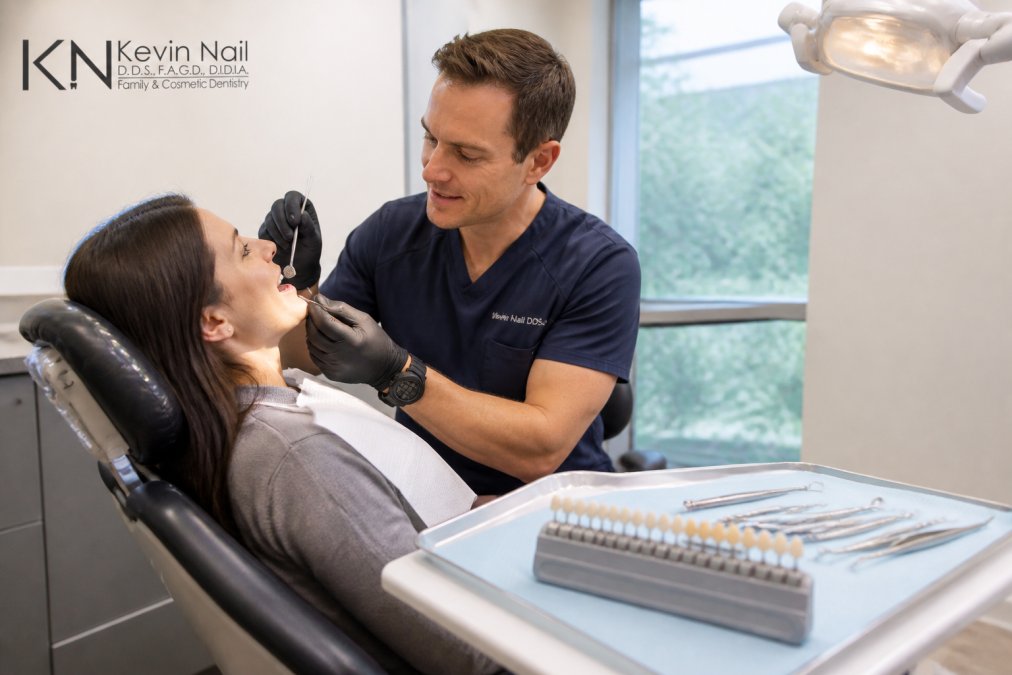
Step 1: Consultation and Smile Assessment The dentist evaluates the teeth, gum tissue, bite, and overall oral health. Photographs and impressions or digital scans are taken. This is where aesthetic goals are discussed and documented.
Step 2: Treatment Planning and Digital Preview Using photographs and digital tools, the dentist maps the proposed outcome. Some practices create a wax mock-up or digital simulation for patient approval.
Step 3: Tooth Preparation For porcelain veneers, a thin layer of enamel is removed from the front surface of each tooth, typically less than a millimeter. Local anesthetic is used. Temporary veneers are placed while the permanent ones are fabricated.
Step 4: Laboratory Fabrication The dental laboratory receives the impressions or digital scans and fabricates the custom-made veneers. This process takes one to two weeks for most cases.
Step 5: Trial Fitting and Bonding The permanent veneers are placed without adhesive first so the patient can evaluate the color, shape, and fit. Once approved, dental bonding cement is applied and the veneers are light-cured into place. Occlusion is checked and refined.
According to American Dental Association patient resources on veneers, patients should expect some sensitivity in the days following preparation, which typically resolves once the permanent veneers are placed.
How Long Do Veneers Last, and How Do They Age?
Porcelain veneers are durable but not permanent. With proper care, many patients see their veneers last well over a decade. How they age matters as much as how long they last.
Porcelain itself does not stain or degrade significantly over time. What changes is the surrounding tooth structure. Natural teeth adjacent to veneers may shift in shade as they age, creating a color mismatch. The gum tissue can also recede slightly over years, exposing the margin where the veneer meets the tooth. This is why the gingival margin fit at placement is so important.
Composite resin veneers age less gracefully. The material absorbs staining agents, dulls with surface wear, and may require polishing or replacement sooner than porcelain. Patients who choose composite should factor in the likelihood of earlier replacement when weighing the initial cost difference.
Maintenance for both types includes regular professional cleaning, avoiding habits that stress the veneers (ice chewing, nail biting, using teeth as tools), and wearing a night guard if bruxism is present. Grinding is one of the most common causes of premature veneer failure. As documented in National Institutes of Health research on dental restoration longevity, occlusal forces from grinding significantly reduce the lifespan of ceramic restorations.
How to Communicate Your Goals and Get Natural Looking Veneers
The biggest failure point in veneer cases is not the materials or the technique. It is the conversation that did not happen before treatment began.
Most patients describe what they want in vague terms: "whiter," "straighter," "more even." A patient who says "I want a natural look" and a dentist who interprets that as "not too white" may still end up with veneers that look artificial if the shape, size, or texture was not addressed.
Here is a practical checklist for communicating your goals effectively:
- Bring photographs of smiles you find attractive, including people with a similar complexion to yours
- Bring photographs of smiles you want to avoid
- Ask specifically how the veneer shade will relate to your existing teeth and whether adjacent teeth will be treated
- Ask to see the shade selection in natural light, not just under operatory lighting
- Request a digital preview or wax mock-up before any tooth preparation begins
- Ask the dentist to describe the surface texture and translucency approach they plan to use
- Discuss the long-term aging plan and what happens to the match as your natural teeth change over time
- Confirm that the dental laboratory is experienced in aesthetic cases, not just functional restorations
Patients who come prepared with specific visual references and targeted questions get better outcomes. The dentist's job is to translate your aesthetic vision into clinical specifications for the laboratory. The clearer that vision, the more precisely it can be executed.
At Kevin Nail DDS, Dr. Nail personally handles every step of the cosmetic process, from the initial smile design conversation through final placement. There is no handoff to another provider mid-treatment, which means the aesthetic intent established at consultation is carried through to the finished result.
The goal of great cosmetic dentistry is invisibility, veneers that make people notice your smile, not your dental work. Achieving that requires the right materials, skilled laboratory work, and a dentist who takes the planning conversation seriously.
Kevin Nail DDS offers comprehensive cosmetic smile design, including veneer consultations with digital planning and personally performed procedures by Dr. Nail. If you are ready to explore what natural looking veneers can do for your smile, call us at 281-550-9054 to schedule a consultation.
Frequently Asked Questions
What is the most natural looking veneer material?
Feldspathic porcelain and layered ceramic veneers are widely regarded as the most natural looking options because they replicate the translucency and light-scattering properties of natural enamel. They allow light to pass through the surface rather than reflecting it flatly, which is what gives natural teeth their depth. The final result depends heavily on the skill of both the cosmetic dentist and the dental laboratory crafting the custom-made shells.
Can I get veneers that mimic the translucency of natural teeth?
Yes. Porcelain veneers, particularly those made from feldspathic or layered ceramic materials, are specifically designed to replicate enamel translucency. A skilled dentist will match not just shade but also the degree of translucency at the incisal edges, where natural teeth tend to appear slightly see-through. Composite resin veneers can also achieve this effect but typically require more artistic technique and may not hold the appearance as long.
How can I make sure my veneers don't look fake or bulky?
The most effective step is choosing a dentist who uses digital smile design tools and works closely with a skilled dental laboratory. Ask to see before-and-after photos of actual patients, not stock images. Communicate that you want veneers that blend with your existing teeth rather than a uniformly bright, monochromatic result. Proper tooth preparation, accurate shade matching, and attention to gingival margin placement all reduce the risk of a bulky or unnatural appearance.
How long do natural looking veneers typically last?
Porcelain veneers generally last 10 to 20 years with proper care, while composite resin veneers typically last 5 to 7 years before needing replacement or touch-ups. Longevity depends on oral hygiene habits, whether you grind your teeth, and how well the veneers were bonded during placement. Regular dental check-ups and avoiding habits like biting hard objects help preserve both the appearance and the structural integrity of your veneers over time.
This article was written using GrandRanker