 ultimate-guide
Comfortable, Familiar Dental Experience for General Dentistry
Table of Contents
- Why a Comfortable, Familiar Dental Experience Matters
- How to Overcome Dental Anxiety Through Familiarity
- What to Expect at a General Dentistry Appointment
- The Importance of Continuity of Care in Dentistry
- Comprehensive Care for Your Entire Family Under One Roof
- How Dental History Shapes Personalized Treatment Plans
- Building Trust With Your Dental Team
- Conclusion
- Frequently Asked Questions
Last Updated: October 3, 2026
Why a Comfortable, Familiar Dental Experience Matters
A comfortable, familiar dental experience is foundational to long-term oral health. When you work with the same dentist over time, that continuity creates a clinical environment where your provider understands your unique dental history, your anxiety triggers, and your specific treatment needs. This isn't just about feeling relaxed in the chair, it's about receiving better care.
Many patients avoid dental visits because of anxiety or past negative experiences. That avoidance compounds over time. Routine problems become emergencies. Small cavities become root canals. A familiar dental experience removes that barrier. You know what to expect. Your dental team knows you. That foundation changes everything about how you approach your oral health.
At Kevin Nail DDS, we've built our practice on this principle: your comfort and continuity matter as much as clinical skill. Dr. Nail personally performs every procedure, which means you're not shuffled between different providers. Your dental history stays consistent. Your treatment approach builds logically over time rather than starting from scratch with each visit.
How to Overcome Dental Anxiety Through Familiarity
The traditional advice, "just relax" or "switch dentists", misses the neurobiology of why familiarity actually works to reduce anxiety.
When you encounter an unfamiliar environment, your amygdala (the brain's threat-detection center) enters a heightened state. Uncertainty triggers a stress response: elevated cortisol, increased heart rate, heightened pain sensitivity. This isn't weakness or irrationality, it's a hardwired survival mechanism.
Familiarity breaks this cycle through a process called habituation. When you return to the same practice with the same team, your brain gradually learns that the environment is safe. The dental chair becomes predictable. The sounds of the instruments become familiar.
This is why switching dentists repeatedly backfires. Each new practice resets your habituation progress. You're starting from zero with a different layout, different staff voices, different procedural rhythms.
Beyond habituation, a familiar dental team can identify and address your specific anxiety triggers.
Sedation dentistry, nitrous oxide, oral sedation, or IV sedation, can be appropriate for patients with severe phobia, but it's a short-term tool, not a long-term solution. Once sedation wears off, the anxiety remains.
What to Expect at a General Dentistry Appointment
Understanding what happens during a dental visit removes much of the mystery that fuels anxiety. General dentistry appointments follow a consistent structure, and knowing that pattern in advance, including what comfort technologies your practice uses, significantly reduces stress.
Your First Visit: Building the Foundation
Your first appointment is longer than routine visits because your dental team needs to establish your baseline and assess your comfort needs. Expect a comprehensive diagnostic evaluation that includes a full-mouth assessment, digital X-rays, and a detailed discussion of your dental history and anxiety level.
Modern practices use digital radiography instead of traditional film X-rays. This technology delivers less radiation exposure while producing sharper, more detailed images. Digital images can be instantly displayed on a monitor so your dentist can show you exactly what they're seeing, a transparency that builds trust. If your practice uses 3D cone beam CT scans (advanced imaging for complex cases like implant planning), you'll understand why: these scans provide sub-millimeter accuracy for treatment planning, which means fewer surprises during actual procedures.
During your first visit, your dentist will ask directly about your anxiety level and past negative experiences. This isn't casual conversation; they're gathering information to customize your comfort approach.
You'll leave your first visit with a clear understanding of your current oral health status and a recommended treatment plan. This clarity is essential for building trust and reducing anticipatory anxiety about future procedures.
Routine Check-ups and Preventative Care
After your foundation visit, routine appointments become predictable and efficient. Most check-ups take 30-45 minutes and follow the same sequence each time, predictability itself is a comfort tool.
Your hygienist performs a professional cleaning using ultrasonic scalers (vibrating instruments that remove tartar more gently than manual scaling) or hand instruments, depending on your gum health and comfort level. If you have sensitive teeth or gums, your familiar hygienist knows to use slower, gentler motions or to apply desensitizing gel beforehand.
Then your dentist performs a thorough examination, checking for cavities, gum disease, and other concerns. In a familiar practice, this examination is comparative: your dentist isn't just looking at your teeth in isolation, they're comparing them to how they looked six months or a year ago.
Preventative dentistry is the cornerstone of long-term oral health. Regular check-ups catch small problems before they become expensive ones. The consistency of seeing the same team means they remember what they found last time and can track patterns over years. If a particular area of your mouth is prone to cavities, they'll focus extra attention there.
What Modern Comfort Technology Means for Your Experience
Beyond digital imaging, many practices now use intraoral cameras, tiny cameras that show you exactly what your dentist is seeing inside your mouth on a chairside monitor. This transparency reduces anxiety because you're not wondering what they found; you can see it yourself.
Minimally invasive techniques, like flapless implant surgery, reduce post-operative swelling, bleeding, and recovery time (pubmed.ncbi.nlm.nih.gov). These aren't just marketing terms; they're evidence-based approaches that make the experience more comfortable and the healing faster. A familiar dentist will explain which techniques apply to your specific situation and why they chose them for you.
The Importance of Continuity of Care in Dentistry
Continuity of care is one of the most underrated aspects of quality dentistry. When you see the same dentist over years, that provider develops a detailed understanding of your mouth that no new dentist can replicate from records alone.
Your dental history includes not just what procedures you've had, but how your mouth responded to those procedures. Did a filling last ten years or three? How does your body typically heal? Are you prone to gum recession? Do you respond well to certain types of anesthesia?
This becomes especially important for complex cases. If you need restorative work like implants or bridges, your dentist's knowledge of your bone density, your healing patterns, and your aesthetic preferences shapes the entire treatment plan. A new dentist would have to guess at some of these factors.
Long-term health outcomes improve with continuity. Patients who work with the same dentist over time have better compliance with treatment recommendations because they trust their provider's judgment. They're more likely to catch problems early because they attend regular appointments. They're more likely to invest in preventative care because they understand the value their familiar team provides.
Comprehensive Care for Your Entire Family Under One Roof
Many families end up seeing multiple dentists because they believe different providers specialize in different needs, one for children, one for cosmetic work, one for complex restorative cases. This fragmentation creates problems. Your dental records are scattered. Different providers might recommend different approaches. Your family's oral health becomes disconnected.
A comprehensive dental practice that handles all ages and all treatment types changes this dynamic. One dentist understands your entire family's dental genetics, habits, and health patterns. Your children see the same provider from their first visit through adulthood. Your spouse's cosmetic goals are understood in the context of your family's overall dental health.
Kevin Nail DDS provides this comprehensive approach. Dr. Nail personally performs every procedure, from children's cleanings to complex implant cases to cosmetic smile enhancements. Your family doesn't need to navigate multiple practices or build relationships with multiple dentists. That simplification matters more than many patients realize.
How Dental History Shapes Personalized Treatment Plans
Your complete dental history is the foundation of personalized care. It includes not just what procedures you've had, but how your mouth has responded to treatment over time.
A dentist who knows your history understands your specific risk factors. If you've had multiple cavities in certain areas, your team can implement targeted preventative strategies in those zones. If you've had gum recession, your provider adjusts how they approach scaling and root planing. If you've had implants before at another practice and experienced significant post-operative swelling, your new provider can implement techniques specifically designed to minimize that response.
Your dental history also includes your preferences and communication style. Some patients want detailed explanations before procedures. Others prefer a straightforward approach. A familiar dental team knows how to communicate with you in a way that reduces anxiety and builds confidence.
When treatment plans are personalized rather than generic, outcomes improve. Your dentist isn't following a standard protocol, they're adapting their approach to your unique mouth, your unique healing patterns, and your unique goals. That customization is what separates good dentistry from excellent dentistry.
Building Trust With Your Dental Team
Trust is the foundation of a comfortable, familiar dental experience. It develops over time through consistent, transparent communication and excellent clinical outcomes.
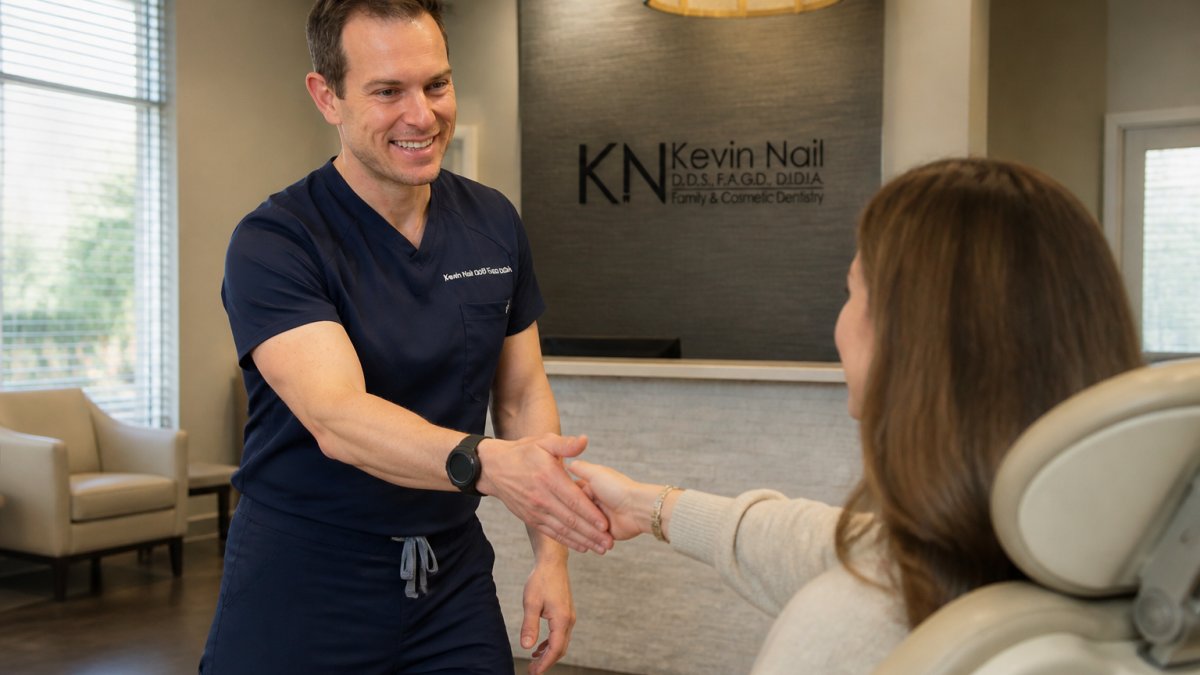
A dentist builds trust by explaining what they're doing and why. Before any procedure, you should understand the clinical reason for that procedure and what the expected outcome is. You should feel comfortable asking questions.
Long-term staff members who know you by name contribute significantly to this trust-building. When you return for your appointment and your hygienist remembers details about your life, your work, your family, your hobbies, that personal connection matters.
Trust also builds through consistent clinical excellence. When Dr. Nail personally performs every procedure, you know you're getting his full expertise and attention. You're not wondering if a procedure was delegated to someone less experienced.
The relationship between you and your dental team should feel collaborative rather than hierarchical. You're partners in your oral health.
Conclusion
A comfortable, familiar dental experience isn't a luxury, it's the foundation of better oral health outcomes. When you work with the same dental team over time, that continuity creates a clinical environment where your provider understands your unique needs, your anxiety triggers, and your specific health goals. The predictability of a familiar practice removes barriers to regular care, which means you're more likely to catch problems early and prevent costly complications.
At Kevin Nail DDS, we've built our entire practice around this principle. Dr. Nail personally performs every procedure, using advanced minimally invasive techniques like flapless implant surgery that reduce post-operative swelling, bleeding, and recovery time. Your family receives comprehensive care under one roof, from routine check-ups to cosmetic smile enhancements to complex restorative work. We're committed to delivering personalized dental solutions where you're known by name, your dental history shapes every treatment decision, and your comfort is as important as clinical excellence.
Ready to experience the difference a familiar dental home makes? Call 281-550-9054 to schedule your first appointment with Kevin Nail DDS.
Frequently Asked Questions
What are the primary benefits of seeing the same general dentist for years?
Continuity of care allows your dentist to track changes in your oral health, catch problems early, and tailor treatment to your specific needs. A familiar dental team reduces anxiety, remembers your preferences, and builds a trust-based relationship that improves your long-term health outcomes. You avoid repeating your dental history with different providers and receive consistent, personalized care across routine cleanings, restorative procedures, and emergency situations.
How does a familiar dental environment reduce patient anxiety?
Dental phobia often stems from fear of the unknown. When you see the same dentist and team repeatedly, the clinical environment becomes familiar rather than threatening. You know what to expect, recognize faces, and develop confidence in your provider's expertise. This familiarity, combined with a patient-centered approach and consistent communication, significantly lowers stress during visits. Many patients find that anxiety diminishes after just a few appointments with a welcoming practice.
Why is continuity of care important in general dentistry?
Continuity of care ensures your dentist understands your complete dental history, current medications, and personal preferences. This comprehensive knowledge allows for better diagnostic evaluation, more accurate treatment planning, and proactive monitoring of your oral wellness. Your dentist can spot patterns, prevent problems before they start, and coordinate care across multiple procedures. For families, having one trusted provider simplifies scheduling and ensures all members receive consistent, high-quality care tailored to their individual needs.
How do I know if a dental practice truly offers personalized care and long-term relationships?
Ask whether the same dentist will perform your procedures or if you'll see different providers each visit. Inquire about staff tenure, long-term team members who know patients by name signal stability and genuine patient relationships. Request a consultation to assess the welcoming atmosphere and patient communication style. Ask how the practice handles your dental records and uses them to inform treatment decisions. A practice committed to patient-centered care will be transparent about their approach and happy to answer these questions before you become a patient.