 blog
blog
Best Cosmetic Dentistry in Houston: Complete Guide
Table of Contents
- What Makes the Best Cosmetic Dentistry in Houston Stand Out
- Types of Cosmetic Dentistry Procedures Available
- Understanding Porcelain Veneers Cost and Considerations
- What to Expect During a Smile Makeover Consultation
- Cosmetic Dentistry Recovery Time and Aftercare
- How to Choose the Right Cosmetic Dentist
- Insurance and Financing Your Cosmetic Dental Work
- Frequently Asked Questions
Last Updated: September 18, 2026
What Makes the Best Cosmetic Dentistry in Houston Stand Out
The best cosmetic dentistry in Houston combines advanced technology with genuine artistry, understanding what makes your smile uniquely yours and enhancing it naturally.
At Kevin Nail DDS, every procedure is personally performed by Dr. Nail, who has advanced training in minimally invasive implant dentistry. The practice uses 3D cone beam CT scans for sub-millimeter accuracy, ensuring every implant, veneer, and restoration is guided by imaging that catches details other practices miss.
The best cosmetic dentistry in Houston also prioritizes comfort and continuity: long-term staff, same-day emergency care, and comprehensive services under one roof eliminate coordination frustration.
Types of Cosmetic Dentistry Procedures Available
Cosmetic dentistry encompasses far more than just whitening. The field includes restorative solutions that address missing teeth, damaged enamel, and alignment issues. Understanding your options helps you make an informed decision about what's right for your smile.
Porcelain Veneers and Bonding
Porcelain veneers are thin shells that address discoloration, chips, gaps, and shape irregularities. Unlike whitening, veneers resist staining.
Composite bonding is a conservative alternative: the dentist applies tooth-colored resin directly to your tooth. It costs less and requires minimal preparation.
Teeth Whitening and Smile Design
Professional teeth whitening removes stains that at-home treatments can't address. In-office whitening produces results in one session; take-home trays offer flexibility over weeks. Professional-grade bleaching agents are significantly stronger than over-the-counter options.
Smile design is a personalized consultation where the dentist evaluates facial proportions, tooth shape, color, and alignment. Digital imaging lets you preview proposed changes before work begins, considering how teeth relate to lips, face shape, and overall appearance.
Dental Implants and Restorative Solutions
Dental implants replace missing teeth with a titanium post and custom crown. Unlike bridges or dentures, implants function like natural teeth and preserve jawbone. The best cosmetic dentistry in Houston includes implant expertise because missing teeth affect your entire smile and confidence.
Minimally invasive flapless implant surgery reduces swelling, bleeding, and recovery time, letting you return to normal activity faster, a benefit of advanced training like Dr. Nail's fellowship in minimally invasive techniques.
Understanding Porcelain Veneers Cost and Considerations
Porcelain veneers vary in cost based on the number of teeth, case complexity, and materials. A consultation provides accurate figures specific to your situation.
Quality veneers require precision fabrication by skilled technicians. The dentist's ability to match shade, shape, and translucency affects how natural your result looks. The best cosmetic dentistry in Houston prioritizes this aesthetic match.
Insurance typically doesn't cover cosmetic veneers. However, if a veneer restores a damaged tooth, some plans may cover a portion. Financing options and payment plans help spread costs.
With proper care, veneers can have a long lifespan.
What to Expect During a Smile Makeover Consultation
A smile makeover consultation evaluates your teeth, gums, bite, and facial aesthetics. The dentist discusses what you want to change, what's realistic, and addresses concerns about pain, cost, and natural appearance.
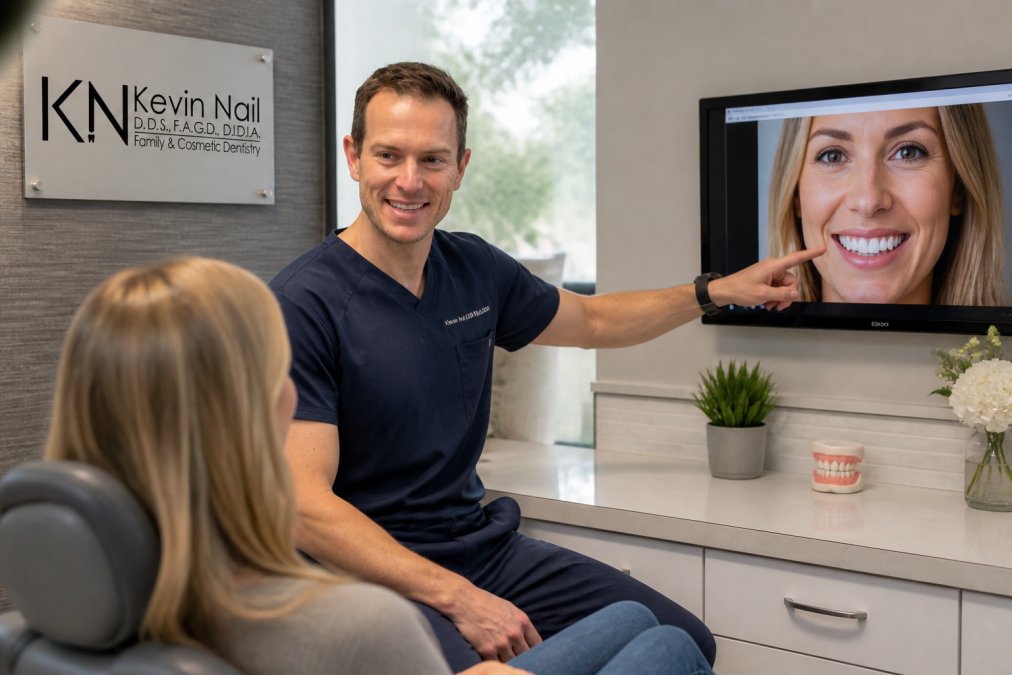
Digital imaging shows before-and-after simulations of proposed changes, removing guesswork. 3D cone beam CT scans plan implant placement with precision for optimal results.
The consultation includes assessment of existing issues, cavities, gum disease, bite problems, addressed first. Cosmetic work must sit on a foundation of solid oral health.
Cosmetic Dentistry Recovery Time and Aftercare
Recovery time varies by procedure: whitening has zero downtime, bonding is one appointment, veneers require two visits with no recovery period.
Dental implants require several months for osseointegration (implant fusion with jawbone). You wear a temporary restoration during this time; the permanent crown is placed once integration is complete. Minimally invasive flapless technique reduces swelling and recovery time.
Immediate Aftercare Guidelines
Avoid hard or sticky foods for one week after veneers, bonding, or implant placement. After implant surgery, avoid strenuous exercise and heavy lifting for 3-5 days to prevent bleeding or swelling.
Maintain excellent oral hygiene with a soft-bristled toothbrush, daily flossing, and antimicrobial rinse if prescribed. Attend all follow-up appointments to monitor healing.
Long-Term Maintenance for Veneers
Veneers require intentional care to reach their 10-15 year lifespan.
Dietary considerations: Limit acidic drinks (citrus juices, wine, soda) or use a straw. Acidic foods like vinegar and tomato sauce soften veneer cement. Rinse with water after consuming acidic items.
Grinding and clenching: Wear a custom night guard if you grind your teeth. Grinding stresses veneers and causes cracks or chips. A night guard prevents costly replacement.
Avoid trauma: Don't bite hard objects. Minor chips compromise appearance and longevity. Use a custom mouthguard for contact sports.
Professional cleaning: Schedule cleanings every six months with non-abrasive polishing around veneer margins. Manual scaling is gentler than ultrasonic scalers.
Long-Term Maintenance for Dental Implants
Dental implants are a durable restoration option, but only with proper care.
Daily hygiene: Brush around the implant crown twice daily with a soft toothbrush and floss daily. The crown-gum junction is vulnerable to bacterial buildup.
Avoid smoking: Smoking increases implant failure risk by reducing blood flow and compromising osseointegration. Quitting before placement and staying quit dramatically improves success.
Regular professional monitoring: See your dentist every six months for implant-specific checks: crown fit, gum recession, and implant stability. Early detection prevents costly complications.
Bite force awareness: Excessive force damages implant crowns. A night guard protects your implant investment if you clench or grind.
Long-Term Maintenance for Whitening Results
Avoid staining foods and drinks: Coffee, tea, red wine, and dark berries stain teeth. Use a straw and rinse with water afterward.
Touch-up treatments: Annual touch-ups cost far less than full whitening and maintain results.
Maintain oral hygiene: Regular brushing and flossing prevent stain accumulation. Electric toothbrushes are slightly more effective than manual brushes.
When to Seek Professional Help
Contact your dentist immediately if you notice veneer or crown chipping, implant crown looseness, gum recession, persistent pain or swelling, unresponsive discoloration, or new sensitivity.
Early intervention prevents minor issues from becoming expensive repairs. Most practices offer same-day emergency care for cosmetic concerns, ensuring you're not left waiting weeks if something goes wrong.
How to Choose the Right Cosmetic Dentist
Look for a dentist with advanced training in cosmetic procedures: board certification, fellowship memberships, and continuing education. Dr. Nail's fellowship in the Academy of Minimally Invasive Implant Dentistry and status as the first and only accredited AMII protocol-trained dentist in the state demonstrates this expertise.
Experience with smile design is essential. Ask to see before-and-after photos of actual patients. Consistency and quality of results speak louder than marketing claims.
Patient comfort matters: sedation options, clear communication, and familiar staff indicate whether the practice prioritizes your experience.
| Selection Criteria | What to Look For | Why It Matters |
|---|---|---|
| Training & Credentials | Advanced certifications, fellowship memberships, continuing education | Ensures dentist stays current with best practices |
| Experience | Hundreds of completed cases, consistent before-and-after results | Demonstrates skill and aesthetic judgment |
| Technology | 3D imaging, digital smile design, modern equipment | Improves precision and lets you preview results |
| Patient Comfort | Sedation options, clear communication, familiar staff | Reduces anxiety and builds trust |
| Continuity | Same dentist for multiple procedures | Better understanding of your needs and preferences |
Insurance and Financing Your Cosmetic Dental Work
Cosmetic procedures are elective and typically not covered. Restorative work, implants replacing missing teeth or crowns restoring damaged teeth, may qualify for partial coverage. Ask your insurance company directly about the distinction.
Understanding Insurance Coverage
If your plan includes major restorative coverage, you may have a deductible and percentage copay. For example, a $5,000 implant restoration covered at 50% after a $1,000 deductible leaves you responsible for $3,000 total.
Typical Cost Ranges (Local Market Context)
Pricing for cosmetic dental procedures varies based on the specific treatment, complexity, and materials used.
Financing Options to Make Cosmetic Work Affordable
In-house payment plans: Spread costs over 6-36 months with little or no interest if paid on time. Ask about terms upfront.
Creating a Treatment Plan and Budget
Best practices provide: detailed treatment plan, itemized pricing by procedure, insurance pre-authorization estimate, and financing options with clear terms.
Questions to Ask Before Committing
- What is the total cost of my treatment plan, broken down by procedure?
- Does this price include follow-up appointments and adjustments?
- What happens if I need revisions or repairs within the first year?
- Are there financing options available, and what are the terms?
- Will you submit a pre-authorization to my insurance?
- What is your cancellation or refund policy?
- Are there any hidden costs I should know about (lab fees, materials, etc.)?
Frequently Asked Questions
What should I look for when choosing a cosmetic dentist?
Look for a dentist with advanced training in cosmetic procedures, credentials from recognized dental organizations, and experience with the specific treatments you need. Ask about their approach to patient comfort, whether they personally perform procedures, and request before-and-after photos of their work. A consultation should include a detailed discussion of your goals and a personalized treatment plan that explains how they'll achieve natural-looking results.
How long do porcelain veneers typically last?
Porcelain veneers can have a long lifespan with proper care. Their longevity depends on your oral hygiene habits, diet, and whether you avoid habits like teeth grinding or using teeth as tools. Regular brushing, flossing, and professional cleanings help maintain veneers. Avoid hard foods and sticky candies that could damage them. When veneers eventually need replacement, your dentist can remove and replace them without affecting the underlying tooth structure.
Are cosmetic dental procedures covered by insurance?
Most cosmetic procedures like veneers, bonding for aesthetics, and teeth whitening are not covered by dental insurance because they're considered elective. However, restorative procedures that serve a functional purpose, such as dental implants or crowns replacing damaged teeth, may be partially covered depending on your PPO plan. Contact your insurance provider to understand your specific coverage. Many dental practices offer financing options or payment plans to make cosmetic work more affordable.
How much does a full smile makeover cost?
A full smile makeover cost varies significantly based on the procedures involved, the complexity of your case, and the materials used. Costs depend on whether you need veneers, implants, whitening, orthodontics, or a combination of treatments. Rather than relying on general estimates, schedule a consultation to receive a personalized quote based on your specific goals and dental needs. Your dentist can discuss financing options and help you understand what your insurance may cover.