 ultimate-guide
Choosing a Private Dental Practice: What Matters Most
Table of Contents
- Why Choosing a Private Dental Practice Matters
- Private Dental Practice vs. Dental Chain: Key Differences
- How to Verify a Dentist's Credentials and Qualifications
- Questions to Ask a New Dentist Before Your First Visit
- Evaluating Your Dental Office: What to Look For in Person
- Finding a Quality Dental Office in Your Area
- Making Your Decision: Financial Transparency and Insurance
- Conclusion
- Frequently Asked Questions
Last Updated: September 25, 2026
Why Choosing a Private Dental Practice Matters
Selecting the right dentist shapes your entire oral health experience. When you're choosing a private dental practice, you're choosing continuity of care, personalized attention, and a partner in your family's long-term health.
Private practices offer deeper patient relationships, where the same dentist sees you over years, remembers your history, and tailors treatment to your specific needs, especially valuable for families needing everything from pediatric cleanings to complex restorative work under one roof.
At Kevin Nail DDS, we understand what patients value: a dentist who personally performs every procedure and staff who know you by name. Below, we'll show you how to evaluate a practice, what questions to ask, and which credentials predict quality care.
Private Dental Practice vs. Dental Chain: Key Differences
A private dental practice is owned and operated by the dentist or small group of dentists who maintain clinical autonomy and typically perform most procedures personally. Corporate groups operate multiple locations under one brand, employ associate dentists, and may rotate staff across locations.
What this means in practice:
- Continuity of care: You see the same dentist consistently, who understands your preferences and history. Corporate chains often rotate dentists.
- Treatment philosophy: Private practitioners set their own clinical standards and you can align with that philosophy upfront.
- Appointment flexibility: Private practices typically offer more scheduling flexibility and same-day emergency care.
- Personalized environment: A private practice reflects the dentist's values, whether advanced technology or comfort features like sedation options.
The tradeoff is specialization. A large group may have in-house orthodontists, periodontists, or oral surgeons. A private practice refers out for specialized care, which requires coordinating between providers.
How to Verify a Dentist's Credentials and Qualifications
Start with licensure. Every dentist must hold a valid state dental license. Verify this on your state's dental board website, which maintains public registries where you can confirm the license is current and has no disciplinary actions.
Beyond licensure, look for additional credentials that signal expertise in areas relevant to your needs:
- Board certification: The American Dental Association recognizes specialty certifications (Recognized Certifying Boards). For general dentistry, some pursue Fellowship in the Academy of General Dentistry (FAGD).
- Implant training: If you need implants, verify advanced training from organizations like the International Dental Implant Association.
- Continuing education: Ask how many hours of continuing education they complete annually.
- Professional memberships: Membership in professional organizations indicates commitment to professional standards.
Ask directly: "What are your specific credentials, and where can I verify them?" A confident dentist will provide details. A vague answer is a red flag.
Questions to Ask a New Dentist Before Your First Visit
The questions you ask before scheduling reveal whether a practice aligns with your needs. These conversations also signal whether the practice values patient communication.
About the dentist and clinical approach:
- Will the same dentist see me for all my appointments, or will I see different providers? (This matters for continuity.)
- Do you personally perform all procedures, or do you have associates? (Some practices have multiple dentists; understanding who does what is important.)
- What is your treatment philosophy, do you prefer conservative approaches or more comprehensive treatment plans?
- What advanced training or certifications do you have in areas relevant to my needs (implants, cosmetic work, sedation)?
About appointments and access:
- How far in advance do I need to schedule routine appointments?
- Do you offer same-day emergency appointments?
- What are your office hours, and do you accommodate early morning or evening appointments?
- If I need a specialist referral, who do you refer to, and how is coordination handled?
About financial transparency:
- How do you handle insurance? Are you in-network with my plan?
- If I'm out-of-network, what's your fee schedule, and how do you handle claims?
- Do you discuss treatment costs before starting work?
- What payment plans or financing options are available?
About office operations:
- How long have your staff members been with the practice? (Long-term staff often indicates stability and patient satisfaction.)
- How do you handle patient records if I move or switch dentists?
- What technology do you use (digital X-rays, 3D imaging, intraoral cameras)?
Write these down and call ahead. A practice that takes time to answer shows they value informed patients.
Evaluating Your Dental Office: What to Look For in Person
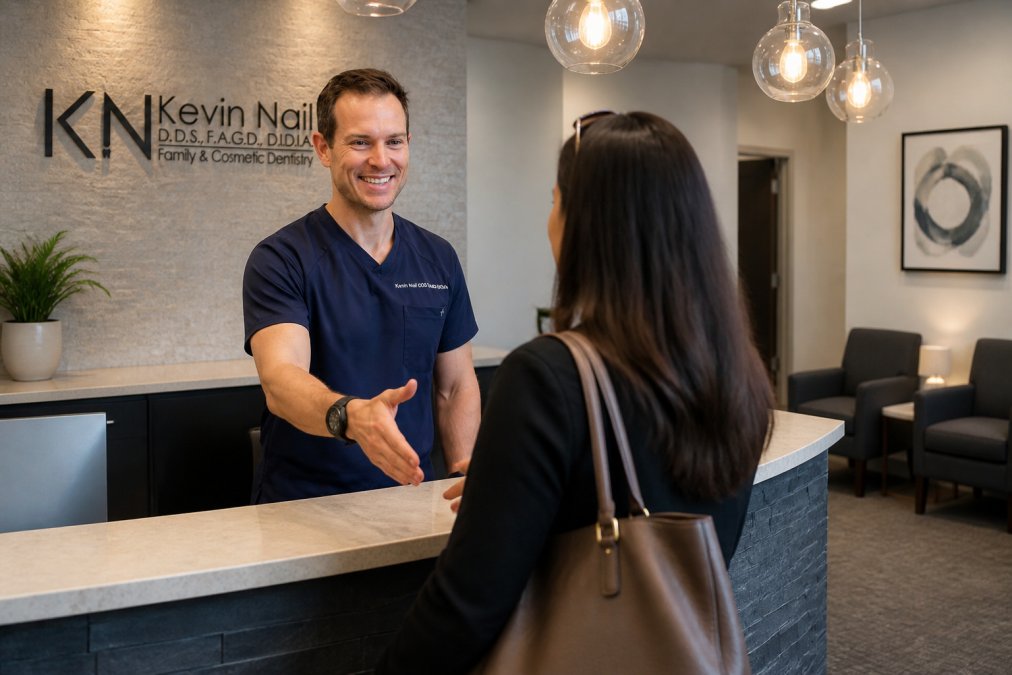
Your first visit to a dental office tells you more than any website. Pay attention to the environment, staff interactions, and how you're treated.
Observe the waiting area. Is it clean and well-maintained? Current magazines and comfortable seating suggest the practice respects your time and invests in patient experience.
Notice the staff. Do they greet you by name? Are they friendly but professional? Ask how long team members have worked there, long-term staff indicate low turnover and patient satisfaction.
Observe the dentist's communication style. Do they explain findings in plain language? Do they ask about your concerns and listen before recommending treatment?
Look at the clinical environment. Modern equipment like digital radiography and 3D imaging signals investment in diagnostic accuracy, though not all practices require it.
Trust your gut. If you feel rushed, dismissed, or uncomfortable, that feeling is valid data. Dental care is intimate and ongoing, you need a practice where you feel respected and heard.
Finding a Quality Dental Office in Your Area
Referrals and Personal Recommendations
Ask your primary care doctor, friends, and family for recommendations. Ask specifically: "Do you see the same dentist every time? Have you ever needed emergency care, and how did they handle it?" A practice's emergency response reveals how they prioritize patient care.
Online Reviews and Reputation Research
Read reviews on Google, Yelp, and the practice's website. Look for patterns about the same dentist, staff friendliness, and appointment availability. Pay attention to recurring themes about emergency care.
Visit practice websites for information about the dentist's credentials, training, and philosophy. Look for clear explanations of patient care and insurance. Check for an emergency or after-hours section.
Vetting Emergency Care Protocols
Call directly and ask about their emergency care system:
- After-hours availability: Do you have an emergency line? Is it answered by the dentist, staff, or an answering service?
- Same-day emergency appointments: Can I get an appointment the same day for severe tooth pain?
- Referral for true emergencies: Which emergency room or oral surgery center do you refer to?
- On-call rotation: Is another dentist on call if the primary dentist is unavailable?
- Prescription authority: Can the practice prescribe antibiotics or pain medication over the phone?
Clear answers signal a well-organized practice. Vague responses suggest poor emergency protocols.
Understanding Emergency Response Models
Private practices typically use one of three emergency models:
-
Owner-dentist on-call: The practice owner personally handles after-hours emergencies. This is common in solo practices and ensures continuity, the dentist who knows your history is the one treating your emergency.
-
Shared on-call rotation: Multiple dentists in the practice rotate emergency duty. You may see a different dentist than usual, but someone is always available.
-
Referral to emergency center: The practice refers all after-hours emergencies to a dedicated emergency dental clinic or hospital. This is common in smaller practices without the infrastructure for after-hours care.
None of these models is inherently better, but you should know which one applies to your practice before you need it.
Calling Practices Directly
Making Your Decision: Financial Transparency and Insurance
Understanding how a practice handles insurance prevents surprises. Use financial transparency as a screening tool to compare practices objectively.
Understanding In-Network vs. Out-of-Network
Requesting and Comparing Fee Schedules
Hidden Fees and What to Ask
Treatment Plans in Writing
Payment Plans and Financing Options
Red Flags in Financial Communication
Be wary of practices that:
- Pressure you to commit to treatment before providing a written plan
Using Financial Transparency as a Screening Tool
Conclusion
Choosing a private dental practice is a decision that affects your oral health for years. Prioritize continuity of care, verified credentials, and a practice environment where you feel respected. Ask the right questions before committing, verify the dentist's qualifications, and trust your instincts about whether you're a good fit.
Frequently Asked Questions
What are the main differences between a private dental practice and a corporate dental chain?
Private dental practices are typically owned and operated by one or more dentists who maintain direct control over patient care, treatment philosophy, and office standards. Corporate dental chains are owned by larger companies or investment firms, often with multiple locations and standardized protocols. Private practices typically allow the dentist to make independent clinical decisions and build continuity of care, while chains prioritize efficiency and standardized procedures. Many patients report stronger relationships with their dentist in a private practice setting.
Why is it important to have the same dentist perform every procedure?
When the same dentist handles your routine cleanings, restorative work, and cosmetic procedures, they develop a complete understanding of your dental history, treatment philosophy, and personal preferences. This continuity of care reduces the risk of miscommunication, ensures consistent clinical outcomes, and allows your dentist to catch early warning signs you might miss. You also avoid repeating diagnostic information and having multiple providers interpret your needs differently.
How do I verify that a dentist's credentials and qualifications are legitimate?
Check your dentist's board certification through the American Dental Association (ADA) website and verify their license status through your state's dental board. Ask about specialized training, fellowships, and continuing education in areas relevant to your needs, such as implant dentistry or cosmetic work. Request to see credentials in their office, and don't hesitate to ask about their experience with specific procedures. Legitimate dentists are transparent about their qualifications and happy to discuss their training.
What questions should I ask before choosing a new dentist?
Ask about their approach to treatment (conservative vs. aggressive), how they handle emergency care, whether they accept your dental insurance, and their experience with specific procedures you need. Inquire about appointment availability, how they manage continuity of care, and whether the same dentist performs every procedure. Ask about their office technology and infection control protocols. These questions reveal whether they prioritize patient-centered care.
Ready to experience personalized, comprehensive dental care? Call Kevin Nail DDS at 281-550-9054 to schedule your consultation. Dr. Nail personally performs every procedure, using advanced minimally invasive techniques to ensure precision and comfort. Whether you need routine family dentistry, same-day emergency care, or complex restorative work, our team delivers the personalized attention you deserve.