 how-to
How Do You Maintain Your Smile Makeover Results?
Last Updated: October 25, 2026
Quick Summary
To maintain smile makeover results, brush twice daily with a soft-bristled toothbrush, floss every day, and use non-abrasive toothpaste while avoiding hard foods and protecting restorations from damage. Porcelain veneers typically last 10-15 years and bonding lasts 5-7 years with proper care and regular dental checkups.
- Brush with soft bristles using gentle circular motions for at least two minutes, angling at 45 degrees toward the gum line.
- Replace your toothbrush every three months or sooner if bristles fray to avoid scratching restorations.
- Avoid biting hard candy, ice, nuts, and using your teeth as tools, which can chip veneers or bonding.
- Schedule professional cleanings every three to six months or as your dentist recommends based on your oral health.
- Contact your dentist immediately if a veneer feels loose, a gap appears at the margin, or bonding chips.
Table of Contents
- Daily Oral Hygiene Routine for Your Smile Makeover
- How to Care for Veneers After Your Smile Makeover
- How to Maintain Dental Bonding and Protect Your Restorations
- Foods to Avoid With Veneers and Other Restorations
- Limiting Stain-Causing Foods and Drinks
- How Long Do Veneers Last and When to Schedule Replacements
- What to Do When a Restoration Chips, Loosens, or Feels Uncomfortable
- Professional Cleanings and Dental Checkups: Your Maintenance Timeline
- Frequently Asked Questions
Daily Oral Hygiene Routine for Your Smile Makeover
Your smile makeover is a significant investment.
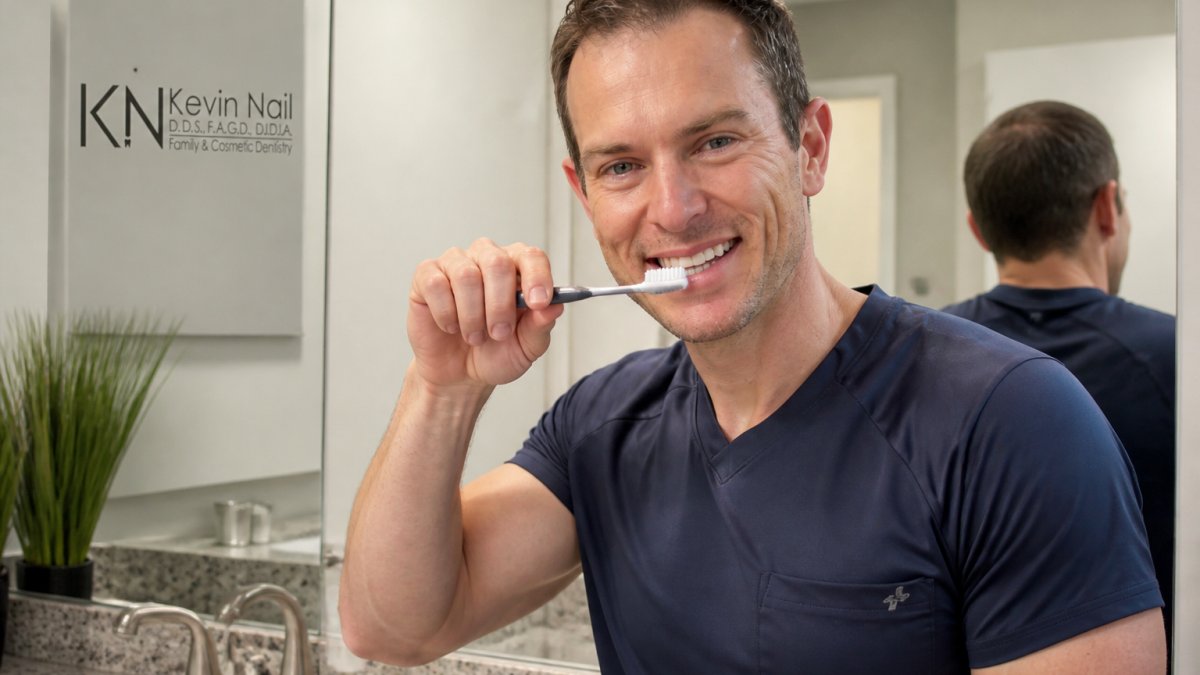
How you brush matters as much as how often. The wrong technique can scratch veneers, wear down bonding, or damage the gum line around restorations.
Brushing Twice Daily With a Soft-Bristled Toothbrush
Brush your teeth twice daily with a soft-bristled toothbrush.
Use gentle circular motions.
Brush for at least two minutes, spending 20 seconds in each of six sections: upper and lower, front, back right, and back left.
Pay special attention to the gum line where restorations meet natural teeth.
Replace your toothbrush every three months or sooner if bristles fray. A frayed brush won't clean effectively and can scratch restorations.
Flossing and Cleaning Between Teeth
Floss every day to remove plaque and food particles your toothbrush can't reach. Skipping floss is one of the most common reasons restorations fail prematurely.
Use gentle sawing motions to guide floss between teeth. Never snap floss down hard into the gum line.
If string floss is difficult, try water flossers, floss picks, or interdental brushes.
Using Non-Abrasive Toothpaste
Choose a toothpaste labeled "non-abrasive" or "low-abrasive," with a low RDA (Relative Dentin Abrasivity) score, ideally below 70. Gritty particles can scratch veneers and bonding.
Many whitening toothpastes are highly abrasive. To maintain brightness in your smile makeover results, ask your dentist for whitening recommendations instead of using over-the-counter whitening toothpaste.
Fluoride toothpaste is fine and actually protective for your natural teeth (the American Dental Association).
How to Care for Veneers After Your Smile Makeover
Porcelain veneers are durable but not indestructible. A veneer is a thin shell bonded to the front of your tooth with dental cement.
What Veneers Need That Natural Teeth Don't
Veneers need the same daily cleaning as natural teeth. The difference is what you avoid and how you protect the margins.
- Do not bite down on hard objects. Ice, hard candy, popcorn kernels, and nut shells can chip porcelain. Cut hard foods into small pieces and chew with your back teeth.
- Do not use your teeth as tools. Opening packages or holding objects with your front teeth puts leverage directly on the veneer edge.
- Wear a nightguard if you grind or clench. Grinding puts repeated force on veneer margins and can loosen the bond.
- Wear a mouthguard during sports. A blow to the mouth can chip or dislodge a veneer, and a mouthguard is far cheaper than replacing one.
The Margin Is the Vulnerable Zone
The edge where the veneer meets your natural tooth is the margin. Plaque collects there, and if it isn't cleaned daily, decay can start underneath.
If a veneer feels loose or you notice a gap between the veneer and your tooth, contact your dentist immediately. A loose veneer can allow bacteria underneath, leading to decay of the tooth underneath.
Veneers vs. Crowns vs. Bonding: Care Differences
Understand the difference between veneers and natural looking veneers for teeth. Veneers are cosmetic, not protective, they're designed to look beautiful, not to protect a damaged tooth. For a cracked or broken tooth, your dentist may recommend a crown instead.
- Veneers cover only the front surface. They are strong against biting forces but vulnerable to edge leverage and grinding. Care focuses on protecting the margin and avoiding hard-object biting.
- Crowns cover the entire tooth and are typically stronger. They still need gentle brushing and flossing at the margin, but they are less likely to chip from normal chewing. Avoid sticky foods that can pull a crown off.
- Bonding is the most fragile. It stains easily, chips easily, and wears faster. Bonding needs the most careful food choices and the most frequent touch-ups.
Whitening and Color Matching With Veneers
Porcelain veneers resist staining better than enamel, but the natural teeth around them can darken over time, and veneers won't change color, leaving a visible mismatch. Ask your dentist about whitening before veneers are placed, and use professional, non-abrasive whitening options rather than over-the-counter abrasive toothpastes.
When to Call Your Dentist
Call your dentist if you notice any of the following:
- A veneer feels loose or moves when you touch it
- A visible gap or dark line appears at the margin
- A chip or crack in the porcelain
- Discomfort when biting or a change in your bite
Most veneer repairs are simpler and less expensive when caught early. A small chip can often be polished or repaired, while a loose veneer that is ignored may require replacement and treatment of the tooth underneath.
How to Maintain Dental Bonding and Protect Your Restorations
Dental bonding is tooth-colored resin applied directly to your natural tooth.
Bonding stains more easily than veneers.
Bonding can chip if you bite hard foods or use your teeth to open packages. Chew with your back teeth and use scissors instead.
If bonding does chip, don't wait. A small chip can grow larger over time.
Bonding repairs are temporary fixes.
Foods to Avoid With Veneers and Other Restorations
Hard foods can chip or crack veneers and bonding. Avoid biting directly into hard candy, ice, nuts, popcorn kernels, hard pretzels, whole apples or carrots, corn on the cob, beef jerky, and sticky candy. Be cautious with taffy, gum, caramel, toffee, and dried fruit, which can pull on restorations. You don't have to give these up, cut hard foods into small pieces, chew with your back teeth, and don't bite into anything hard with your front teeth.
Limiting Stain-Causing Foods and Drinks
Porcelain veneers resist staining better than enamel, but bonding stains easily. Limit coffee, black tea, red wine, dark sodas, tomato-based sauces, beets, soy sauce, berries, curry, and turmeric. You don't need to eliminate them, drink coffee through a straw, rinse with water afterward, and eat staining foods during meals rather than sipping them all day.
How Long Do Veneers Last and When to Schedule Replacements
Porcelain veneers typically last 10-15 years with proper care, sometimes 20 or longer (Clinical Survival Rate and Laboratory Failure of Dental Veneers).
Veneers don't fail on a schedule. They fail when something damages them or when the bond weakens.
If your veneer is damaged, your dentist can replace just that one veneer. You don't need to replace all of them.
What to Do When a Restoration Chips, Loosens, or Feels Uncomfortable
A chipped veneer or bonding doesn't mean your smile is ruined, it means you need a repair. Contact your dentist as soon as you notice damage. A loose veneer can let bacteria underneath and cause decay, so don't ignore it; your dentist can re-cement or replace it. Chipped bonding can be repaired with more resin, though a veneer or crown may be better if it keeps chipping in the same spot.
Professional Cleanings and Dental Checkups: Your Maintenance Timeline
Professional cleanings and checkups are the backbone of long-term smile makeover maintenance. But the common advice to see your dentist every six months is a starting point, not a universal rule. Your ideal recall schedule depends on your oral health, the type of restorations you have, and your dentist's recommendations.
Why Six Months Is a Default, Not a Rule
Many offices recommend cleanings every six months because that works for most healthy adults, but your needs may differ. Patients with gum disease history, multiple restorations, or high decay risk may need visits every three to four months; those with excellent hygiene and no active disease may go slightly longer if their dentist agrees. Ask directly: "Based on my restorations and my gum health, how often should I be seen?"
What Happens During a Cleaning With Restorations
Tell your hygienist about any restorations so they use the right technique. For veneers, crowns, bonding, or implants, they may use plastic or silicone-tipped instruments instead of metal scalers, an ultrasonic scaler carefully around margins, and non-abrasive prophy paste, plus check margins for gaps and take X-rays at your dentist's recommended intervals.
What Your Dentist Checks at Each Visit
Schedule dental checkups at the interval your dentist recommends. At each checkup, your dentist will examine your restorations for signs of wear, damage, or bonding failure. They will also check your gums, your bite, and your natural teeth for decay. Catching problems early means simpler repairs and lower costs.
A Practical Maintenance Timeline
Use this timeline as a guide, then adjust it with your dentist:
- First 24 hours after a restoration: Follow your dentist's instructions on eating and drinking. Avoid staining liquids and hard foods. Do not floss aggressively around a new margin unless your dentist says it is safe.
- First week: Stick to soft foods if your dentist advises it. Watch for sensitivity that does not fade. Call your dentist if the restoration feels high or your bite feels off.
- First month: Establish your daily routine: soft brushing twice daily, daily flossing, non-abrasive toothpaste. Note any areas that feel rough or catch floss.
- Every three to six months (or as recommended): Professional cleaning and checkup. Tell the hygienist about your restorations.
Personalized Recall: What Changes Your Schedule
Your dentist may adjust your recall interval based on gum disease history, restoration type and count, grinding or clenching, dry mouth or medications, tobacco use, and home care quality. A consistent maintenance timeline protects your investment.
Frequently Asked Questions
How often should you see a dentist after a smile makeover?
Most patients benefit from professional cleanings and dental checkups every six months to maintain their smile makeover results. Your dentist can monitor the condition of veneers, bonding, and other restorations, catch early signs of wear or decay, and perform professional cleaning to prevent staining and plaque buildup. If you have gum disease, teeth grinding, or other risk factors, your dentist may recommend more frequent visits to protect your investment.
Can you whiten teeth after getting veneers?
Veneers do not respond to whitening treatments because they are custom-made to match your desired shade. If you want your smile brighter after getting veneers, discuss whitening your natural teeth before the veneer procedure. Once veneers are in place, you can maintain their brightness by avoiding stain-causing foods and drinks, practicing good oral hygiene, and scheduling regular professional cleanings. If veneers become discolored over time, replacement may be necessary.
What should you do if a veneer or bonding chips or breaks?
Contact your dentist as soon as possible if a veneer or bonding chips, cracks, or loosens. Small chips may be smoothed and polished, but larger damage typically requires repair or replacement. Delaying treatment can allow bacteria to enter the gap, leading to decay or infection. Your dentist can assess the damage and recommend the best course of action to restore your smile and protect the underlying tooth.
Can teeth grinding damage a smile makeover?
Yes, teeth grinding (bruxism) can chip, crack, or wear down veneers and bonding over time. If you grind your teeth at night, ask your dentist about a custom night guard to protect your restorations and natural teeth. Stress management, avoiding stimulating foods or drinks before bed, and regular dental checkups help identify grinding early. Your dentist can monitor wear and recommend replacement or reinforcement of restorations if needed.