 how-to
Why Am I Clenching My Jaw in Sleep?
Last Updated: October 24, 2026
Quick Summary
Jaw clenching sleep, or bruxism, is unconscious grinding or clenching of your teeth during sleep driven by stress, sleep apnea, caffeine, alcohol, bite misalignment, and poor sleep quality. When you clench your jaw in sleep, muscles contract with up to three times the force of normal chewing, often dozens of times a night, causing morning soreness, tooth wear, and jaw pain that compounds over time if untreated.
- A custom night guard protects teeth from wear and damage while you address underlying causes like stress or sleep apnea.
- Common triggers include stress, sleep-disordered breathing, caffeine before bed, alcohol within three hours of sleep, and bite misalignment.
- Treatment layers protection with a guard, sleep stabilization, screening for sleep apnea, and bite or jaw-joint evaluation if needed.
- Morning jaw soreness, visible tooth wear, flattened cusps, or waking headaches warrant a dental evaluation to prevent irreversible damage.
- Schedule a dental visit if you notice regular morning jaw soreness, tooth wear, or if a partner reports hearing grinding sounds at night.
Table of Contents
- What Bruxism Is and Why Jaw Clenching Happens in Sleep
- Jaw Clenching at Night Causes: Stress, Sleep Apnea, and Other Triggers
- Bruxism Symptoms: How to Know If You're Grinding or Clenching
- Night Guard for Teeth Grinding: How It Protects Your Teeth
- Treatment for Teeth Grinding: From Self-Care to Professional Options
- When to See a Dentist About Jaw Clenching
- Getting a Dental Evaluation for Sleep-Related Jaw Clenching
- Frequently Asked Questions
What Bruxism Is and Why Jaw Clenching Happens in Sleep
Bruxism is the unconscious grinding or clenching of your teeth, typically during sleep, and jaw clenching sleep is a common condition affecting people of all ages.
Sleep bruxism differs from awake bruxism, which is often stress-related. The nighttime version happens during light sleep stages and is driven by nervous-system arousal patterns, activating a grinding reflex without conscious control, which is why many people don't discover it until a dentist or partner notices the signs.
Why your jaw clenches in sleep comes down to the interplay of stress, sleep quality, and physical triggers. It affects all ages but is particularly common in high-stress adults. We evaluate sleep bruxism as part of comprehensive dental care because the damage it causes, worn teeth, jaw pain, and bite issues, compounds over time if untreated.
Jaw Clenching at Night Causes: Stress, Sleep Apnea, and Other Triggers
The causes of jaw clenching sleep patterns are often multifactorial. Learn how sedation dentistry can help manage stress-related jaw clenching.
Sleep-disordered breathing, including sleep apnea, is another significant contributor. When your airway partially closes during sleep, your body responds with a burst of nervous-system activation.
Caffeine and alcohol, particularly before bed, can increase bruxism episodes: caffeine stimulates the nervous system and disrupts sleep architecture, while alcohol suppresses REM sleep and causes micro-arousals that trigger grinding.
Misalignment of your bite (malocclusion) can predispose you to clenching: if your upper and lower teeth don't meet properly, jaw muscles work harder to achieve stability, increasing tension and grinding during sleep.
Lifestyle factors matter too: poor sleep hygiene, irregular schedules, and sleep deprivation all increase nighttime grinding, as can intense exercise close to bedtime or large late meals.
Sleep bruxism stems from multiple sources, each contributing to nighttime jaw clenching.
| Cause | How It Triggers Clenching | Warning Signs |
|---|---|---|
| Stress and anxiety | Nervous system stays heightened during sleep | Emotional stress carried into sleep environment |
| Sleep apnea | Airway closure triggers nervous-system activation | Gasping awake, unrested despite adequate sleep |
| Caffeine | Stimulates nervous system, disrupts sleep | Consumed before bed |
| Alcohol | Suppresses REM sleep, causes micro-arousals | Consumed within three hours of bed |
| Bite misalignment | Jaw muscles work harder for stability | Upper and lower teeth don't meet properly |
| Poor sleep hygiene | Increases grinding during fragmented sleep | Irregular schedules, sleep deprivation |
| Genetic predisposition | Inherited tendency to brux | Bruxism runs in family |
| Antidepressants and stimulants | Listed as known side effect | Check medication list |
Bruxism Symptoms: How to Know If You're Grinding or Clenching
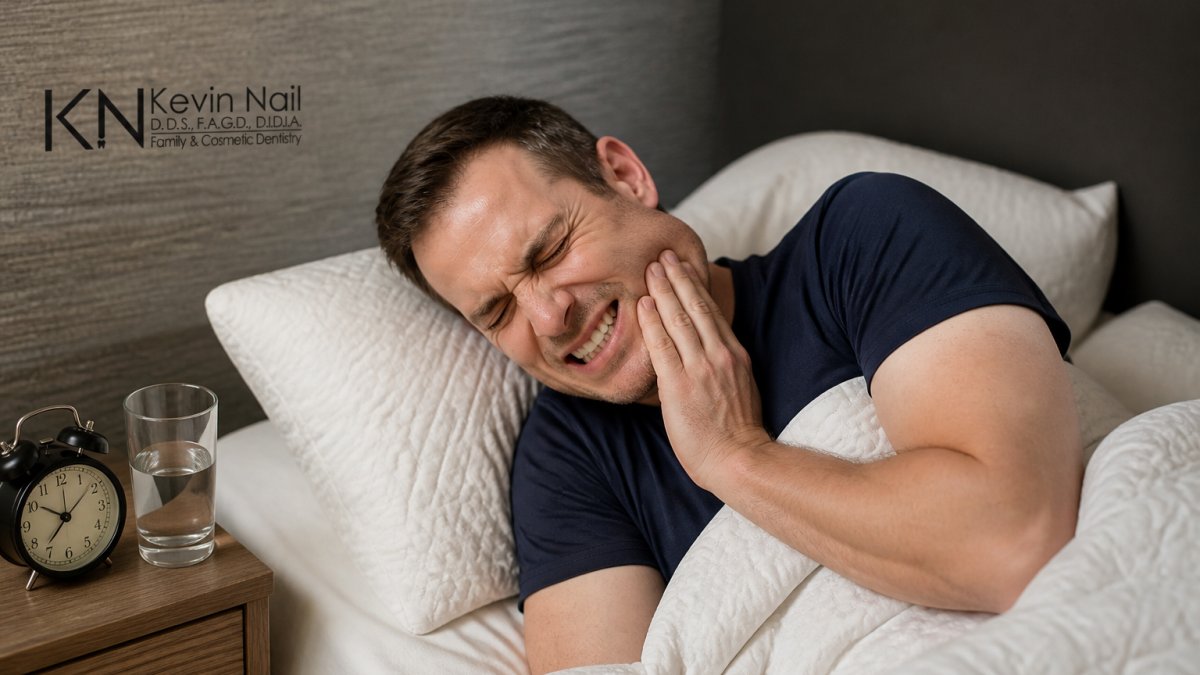
The most common indicator of sleep bruxism is waking with jaw soreness or facial pain. Your jaw may feel stiff, tender, or locked on waking, easing as the day progresses but returning the next morning.
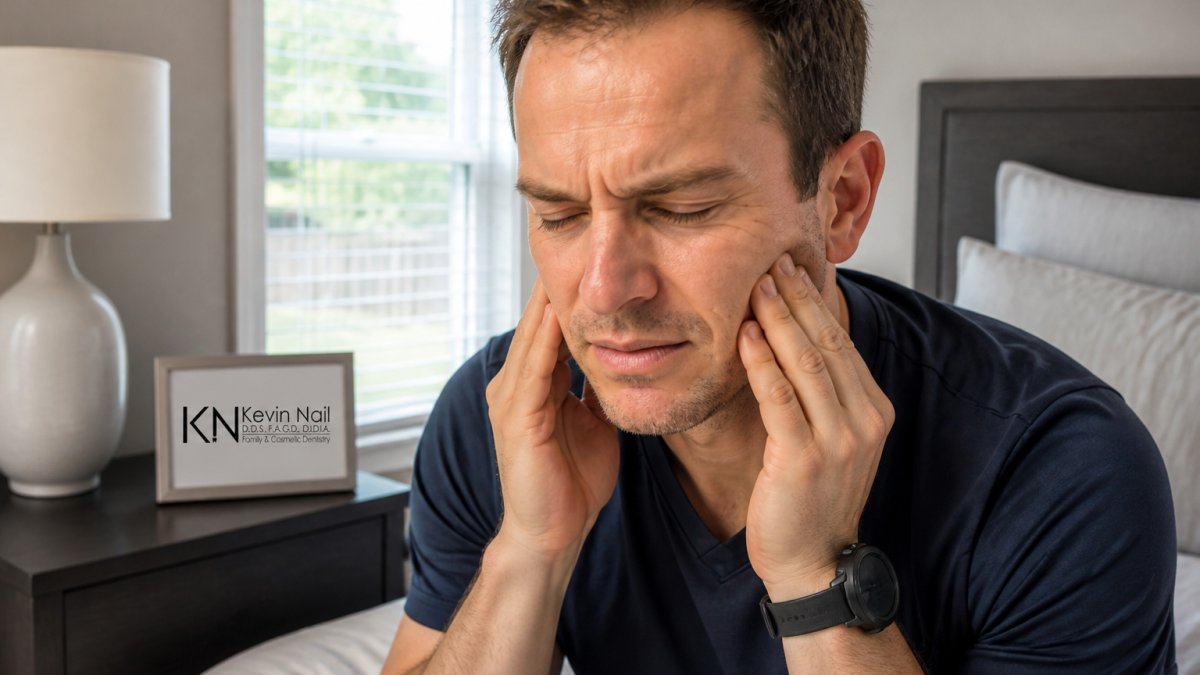
Tooth wear is a telltale sign dentists identify during routine exams. Your teeth may appear flattened or shortened, with the natural cusps worn smooth. This damage is irreversible and accelerates with continued grinding.
Tooth sensitivity often develops as grinding wears away enamel.
Morning headaches, particularly in the temples or at the base of the skull, frequently accompany sleep bruxism, as sustained muscle tension triggers tension-type headaches that persist into the morning.
A partner may notice audible grinding sounds during the night, a grinding or clenching noise that can be quite loud. Some people describe it as a creaking sound.
Night Guard for Teeth Grinding: How It Protects Your Teeth
A night guard (also called a mouth guard or dental guard) is a custom-fitted appliance worn over your teeth during sleep to prevent direct contact between upper and lower teeth.
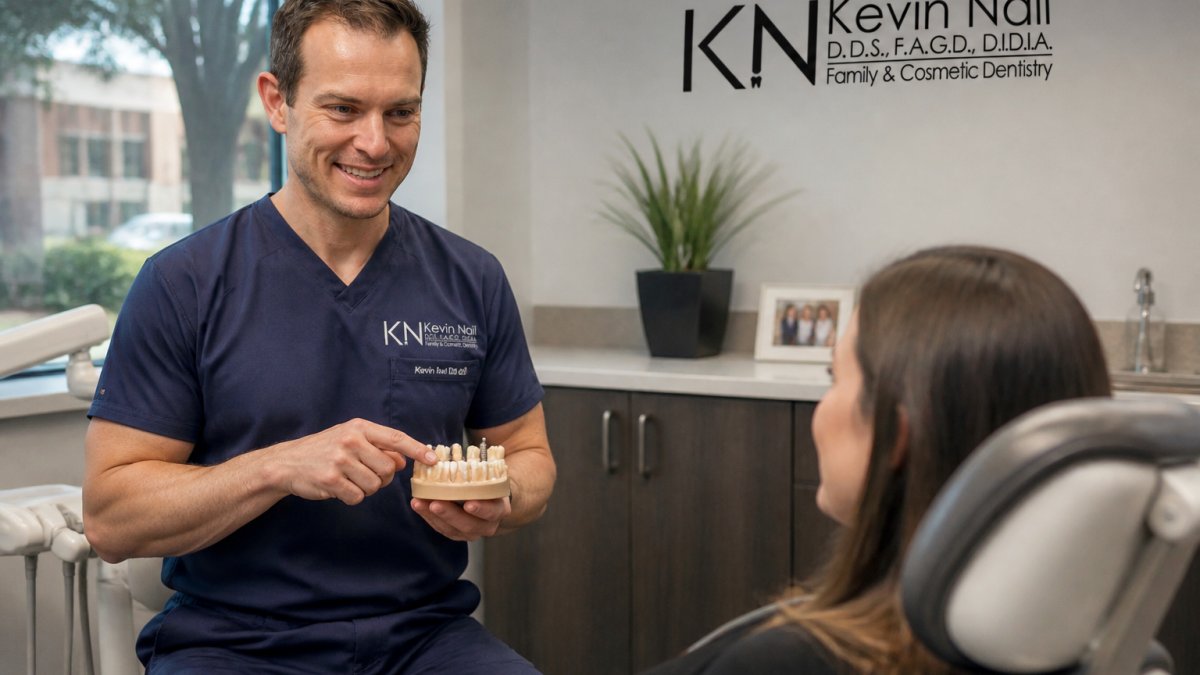
Custom night guards, fabricated by your dentist from impressions of your teeth, protect far better than over-the-counter options. You can schedule a consultation to have a custom night guard made for your specific needs.
A well-fitted night guard also helps relax jaw muscles by reducing the incentive to clench. When your teeth can't make contact, the reflex to grind diminishes over time.
The guard requires maintenance: clean it daily with a soft toothbrush and mild soap, store it in a protective case, and have your dentist inspect it at regular visits.
One limitation: a night guard manages the symptom but doesn't address underlying causes. If stress or sleep apnea drives your bruxism, the guard protects your teeth while you address those root issues.
Treatment for Teeth Grinding: From Self-Care to Professional Options
Treatment for sleep bruxism is rarely a single intervention. Most practitioners layer a protective appliance, habit and sleep changes, and, when indicated, evaluation for an underlying breathing disorder.
Step 1: Protect the teeth immediately. A custom night guard is the fastest way to stop enamel wear while you investigate causes.
Step 2: Stabilize sleep and nervous-system inputs. These measures are modest on their own but compound when combined:
- Keep a consistent sleep and wake time, including weekends, to reduce the micro-arousals that precede clenching episodes.
- Move caffeine to the morning and cut it off by early afternoon; caffeine has a long half-life and keeps the nervous system primed into the night.
- Avoid alcohol within roughly three hours of bed. Alcohol fragments sleep and increases arousals, which is when clenching tends to occur.
- Try a brief evening wind-down: slow breathing, progressive muscle relaxation, or light stretching. A warm compress on the masseter muscles for about 15 minutes before bed can reduce resting tension.
- Avoid intense exercise within about three hours of bedtime, and avoid heavy meals late in the evening.
- Stop chewing gum and avoid hard or chewy foods during flare-ups to reduce daytime jaw overuse that carries into sleep.
These steps rarely eliminate bruxism alone. The common pattern is partial improvement in morning soreness rather than a full stop, which is why they're paired with a guard rather than substituted for one.
Step 3: Screen for sleep-disordered breathing. This step is most often skipped.
Step 4: Address bite and jaw-joint contributors. If the bite is significantly misaligned, orthodontic treatment can reduce the muscular effort needed for a stable closure.
Step 5: Reserve medications and injections for severe, refractory cases. Muscle relaxants are sometimes used short-term under a physician's supervision, but they carry sedation and dependency concerns and aren't a long-term strategy.
When to See a Dentist About Jaw Clenching
Schedule a dental evaluation if you have regular morning jaw soreness, visible tooth wear, or waking headaches. Early intervention prevents irreversible damage and can identify underlying issues like sleep apnea that require broader treatment.
If you've noticed flattened tooth surfaces, chips, or cracks, a dental assessment can determine whether bruxism is responsible and plan protective measures, while ruling out other causes of jaw pain such as TMJ disorders or dental infections.
Waking with facial pain that interferes with your morning routine warrants professional evaluation. Pain that's severe, persistent, or accompanied by difficulty opening your mouth may indicate TMJ involvement requiring specialized care. Contact your dentist in Houston, Texas to schedule an evaluation for sleep-related jaw clenching.
Getting a Dental Evaluation for Sleep-Related Jaw Clenching
Here is what the appointment actually looks like, with the caveat that practices vary.
Before the visit. Write down what you notice on waking: soreness location, headaches, symptom duration, whether a partner has heard grinding, and your sleep habits (snoring, gasping, caffeine and alcohol timing).
At the visit. A typical evaluation includes:
- A tooth-by-tooth exam looking for flattened cusps, wear facets, chips, cracks, and exposed dentin.
- Checking for tooth sensitivity and noting which teeth are affected.
- Bite assessment and observation of how the upper and lower teeth meet.
- Palpation of the jaw joints and masseter and temporalis muscles to check for tenderness or limited opening.
- A review of your symptom history and sleep patterns, including screening questions for sleep-disordered breathing.
- In many offices, intraoral photos or a scan to document wear for comparison at future visits.
A straightforward exam and consultation commonly runs 30 to 60 minutes. If a custom guard is recommended, impressions or a digital scan are taken at the same visit or a follow-up, and the finished appliance is typically ready in about one to two weeks.
What it costs and what to ask. Fees vary widely by practice and are best confirmed directly, but the questions to ask are consistent:
- What is the fee for the exam and consultation, and is it separate from the guard fee?
- Is the night guard billed as a separate appliance, and what is the total including any adjustments?
- Does my dental plan cover bruxism appliances, and is there a waiting period or annual maximum that applies?
- Are follow-up adjustments included, and is there a charge for replacement or repair?
- If sleep apnea is suspected, does my medical coverage handle a sleep study, and will the office provide a referral?
If sleep apnea is suspected. A dentist can screen for warning signs but cannot diagnose sleep apnea. Expect a referral to a sleep medicine specialist for formal testing. Treating an underlying breathing disorder can reduce or resolve clenching in some patients, so this referral is a core part of comprehensive care rather than an afterthought.
What to expect afterward. Most patients get a short follow-up to check guard fit and comfort, and the guard is inspected at routine cleanings.
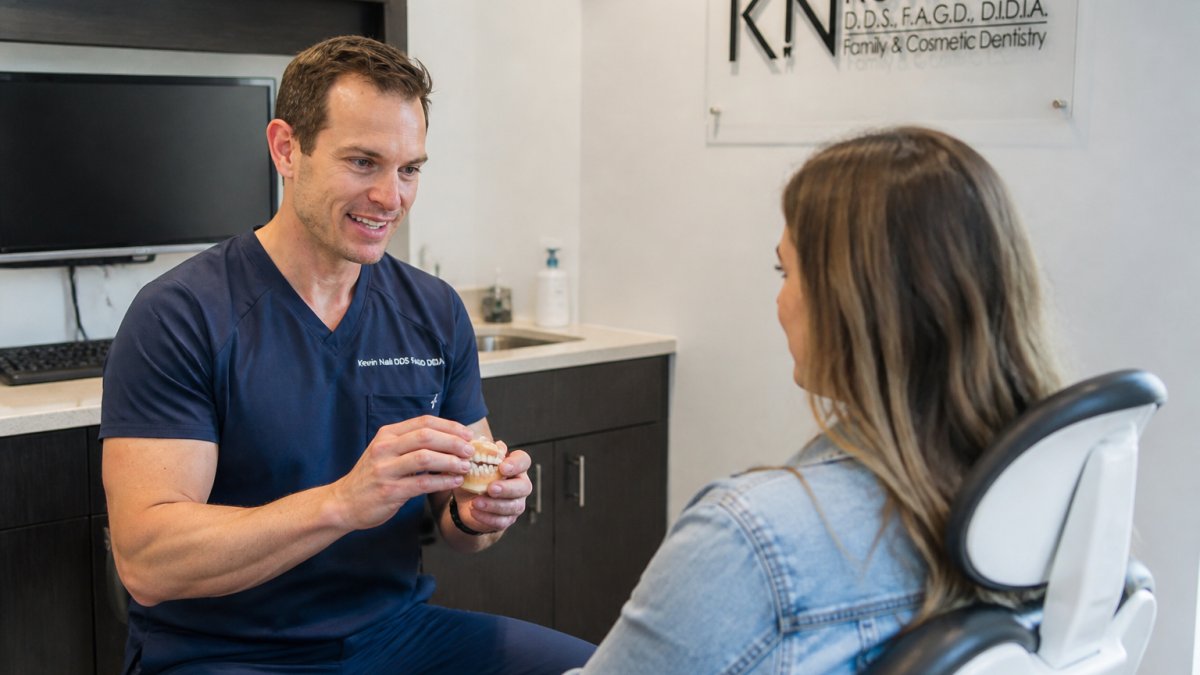
Meet Dr. Kevin Nail to learn about his experience evaluating and managing sleep-related jaw clenching in patients across the Houston area. Dr. Nail's training in minimally invasive dentistry includes expertise in protecting teeth damaged by bruxism and restoring function when grinding has caused significant wear.
Frequently Asked Questions
What causes jaw clenching in sleep all of a sudden?
Sudden jaw clenching often stems from increased stress, major life changes, or new sleep disruptions. Sleep apnea, caffeine or alcohol use before bed, and certain medications can trigger it. If it develops abruptly, consider recent stressors, sleep quality changes, or new medications. A dental evaluation can rule out structural issues and sleep-related breathing problems that may require specialist referral.
Can a night guard help with sleep-related jaw clenching?
Yes. A night guard cushions your teeth and jaw joints, reducing wear and pain from clenching. Custom-fitted guards from a dentist work better than over-the-counter options because they're shaped to your bite. While a guard doesn't stop clenching itself, it protects your teeth from damage and can reduce morning jaw soreness. It's often paired with stress management or sleep apnea treatment for better results.
How do I know if I'm clenching my jaw at night versus having other jaw pain?
Sleep bruxism typically causes morning symptoms: a sore, stiff jaw upon waking, flattened or chipped teeth, and facial pain that improves as the day goes on. Other causes of morning jaw pain include TMJ disorder (which may worsen with activity), poor pillow support, or sleep apnea. A dentist can examine tooth wear patterns and jaw alignment to distinguish clenching from other causes and recommend appropriate treatment.
When should I see a dentist about nighttime jaw clenching?
Schedule a dental visit if you wake with jaw soreness, notice flattened or chipped teeth, experience persistent facial pain, or suspect sleep bruxism. If clenching is severe, causes significant pain, or interferes with sleep quality, prompt evaluation is important. A dentist can assess tooth damage, fit a custom night guard, and determine whether sleep apnea screening or other specialist referral is needed.