 how-to
How Does Dental Sedation Work? A Calm, Clear Guide
Table of Contents
- What Dental Sedation Is and How It Works
- Types of Dental Sedation: From Laughing Gas to IV Sedation
- Levels of Consciousness and What You'll Feel
- How Long Does Dental Sedation Last?
- Dental Sedation Safety: Monitoring and Medical History
- Dental Anxiety Management: Who Benefits and How to Prepare
- Step-by-Step: From Consultation to Recovery
- Conclusion
- Frequently Asked Questions
Last Updated: October 17, 2026
What Dental Sedation Is and How It Works
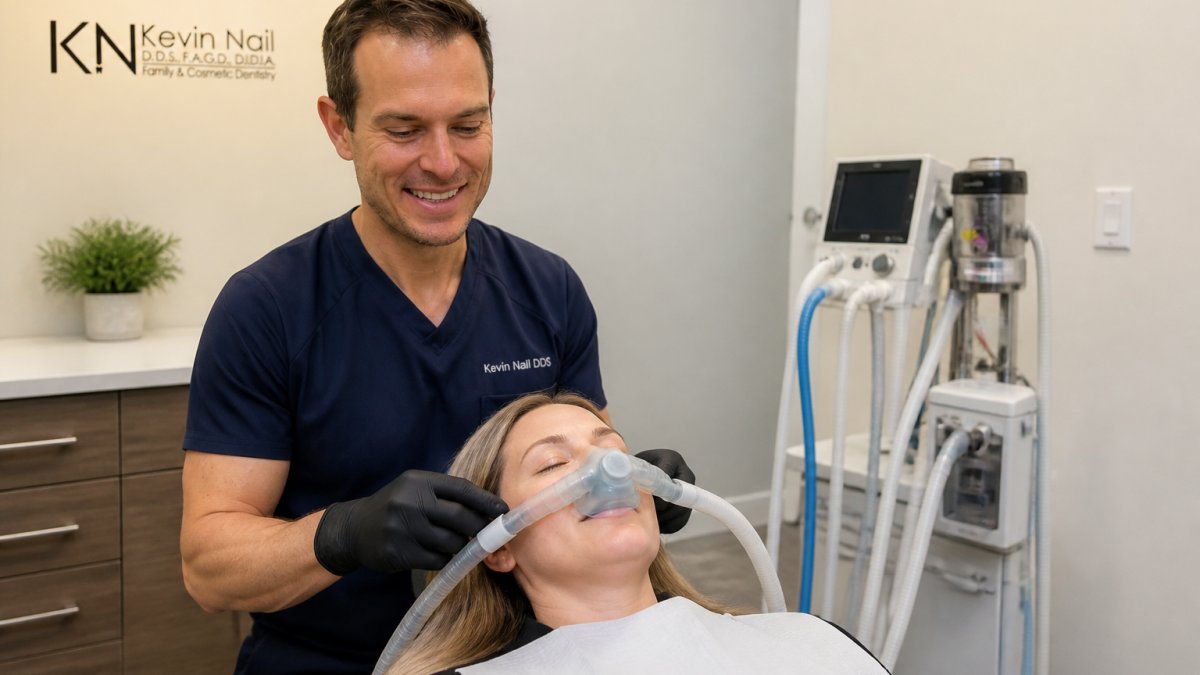
Dental sedation is the use of medication to help you relax during dental treatment. It calms your nervous system so you can sit through a procedure without the racing heart, sweating, or urge to leave. At Kevin Nail DDS, we explain it to anxious patients this way: sedation does not put you to sleep. It lowers your guard.
The drugs work on the central nervous system. They slow brain activity, which reduces fear and quiets the gag reflex. Most forms also create mild drowsiness. You stay responsive enough to answer questions and follow simple requests.
That is the key difference from general anesthesia. With sedation, you keep your airway and your reflexes. With general anesthesia, you do not.
Sedation also pairs with local anesthesia. The numbing shot blocks pain at the site. The sedative handles the fear. Together they let us complete fillings, extractions, and implant work for people who would otherwise avoid care.
How does dental sedation work in practice? A monitored, stepwise process. We assess your health, pick a method, adjust the dose, and watch you the whole time.
Types of Dental Sedation: From Laughing Gas to IV Sedation
Four main methods exist, and they sit on a scale from light to deep. The right one depends on your anxiety level, your health history, and how long the procedure runs.
| Method | How It's Given | Awareness | Best For |
|---|---|---|---|
| Nitrous oxide | Inhaled through a mask | Fully awake, relaxed | Short visits, mild nerves |
| Oral sedation | Pill before the visit | Drowsy, groggy | Moderate anxiety, longer work |
| IV sedation | Into a vein | Deeply relaxed, sleepy | High anxiety, complex cases |
| General anesthesia | Inhaled or IV, controlled | Unconscious | Hospital-level procedures |
Nitrous Oxide (Laughing Gas)
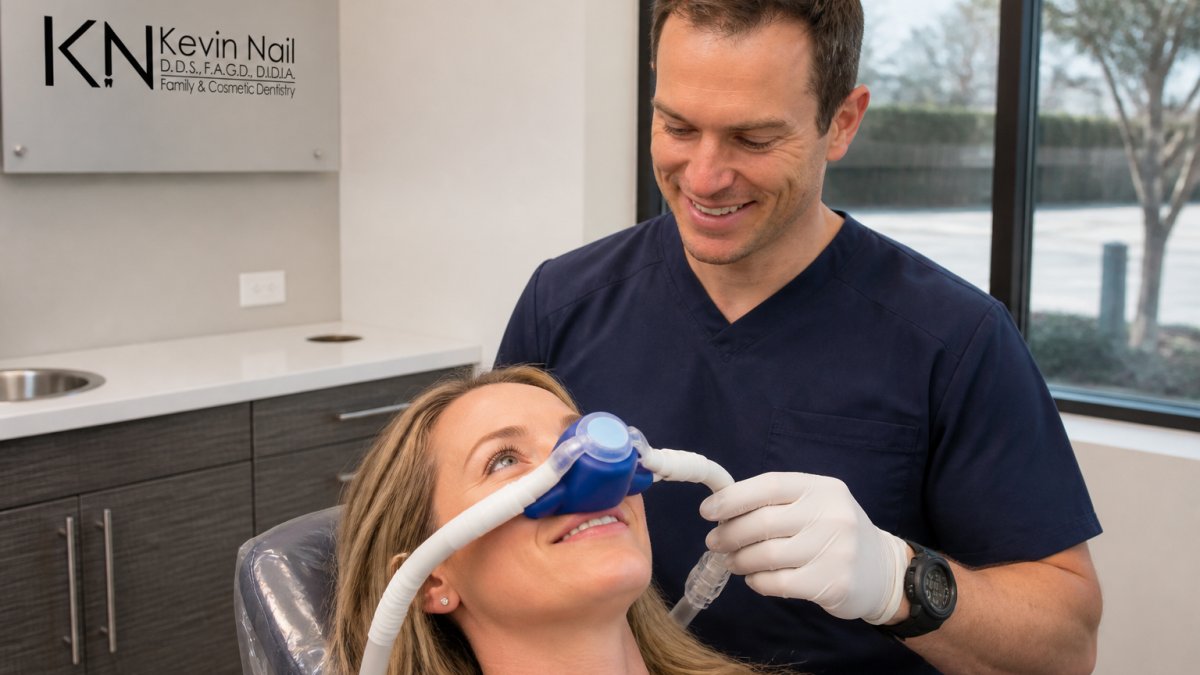
This is the lightest option. You breathe a mix of oxygen and nitrous oxide through a small nosepiece. The calm sets in within minutes.
You stay awake and can talk. The effects wear off fast once the mask comes off. Most people drive themselves home afterward.
Oral Sedation
Oral sedation uses a pill, usually taken about an hour before your appointment. It produces a drowsy, relaxed state. Some patients doze off but wake with a light nudge.
The onset is slower than IV, and the dose is fixed once swallowed. You will need an escort to drive you home.
IV Sedation
IV sedation delivers sedative medication straight into a vein. It works quickly, and the clinician can adjust the level minute by minute.
This is the choice for high dental anxiety or long procedures. You feel deeply relaxed and may not remember much of the visit.
General Anesthesia and Deep Sedation
General anesthesia renders you fully unconscious. It is reserved for complex surgery or patients who cannot cooperate otherwise. It requires a trained anesthesia team and close monitoring.
Levels of Consciousness and What You'll Feel
Sedation dentistry runs along a spectrum, and each level changes what you remember.
- Minimal sedation: Awake and calm. You respond normally and recall the visit.
- Moderate sedation: Drowsy but responsive to voice and touch. Memory gets fuzzy.
- Deep sedation: On the edge of sleep. You respond to repeated or painful stimuli.
- General anesthesia: Unconscious and unresponsive. No memory of the event.
Most patients want moderate sedation. It is enough to erase the fear and blur the memory without the risks of deep sedation.
How Long Does Dental Sedation Last?
How long dental sedation lasts depends on the method. Nitrous oxide fades within minutes of removing the mask. Oral sedation can linger for several hours. IV sedation clears over a few hours, though grogginess may last longer.
Plan the rest of your day around it. Do not drive, work, or make big decisions until the effects fully pass. Most people feel normal by the next day.
Dental Sedation Safety: Monitoring and Medical History
Safety starts before any drug is given. A thorough medical-history review and a medication check are the two highest-yield steps, and they are where most preventable problems are caught.
Medication and medical-history checklist
Bring this list to your consultation and update it if anything changes before the appointment:
- All prescriptions, including blood pressure, heart, seizure, and psychiatric medications
- Over-the-counter drugs, especially pain relievers, antihistamines, and sleep aids
- Supplements and herbal products, St. John's wort, valerian, kava, ginkgo, and high-dose fish oil can affect sedation or bleeding
- Allergies and prior reactions to anesthesia or sedation
- Heart conditions, including arrhythmias and recent cardiac events
- Lung disease, asthma, COPD, and sleep apnea (including CPAP use)
- Kidney or liver disease, which can slow drug clearance
- Pregnancy or possible pregnancy
- Alcohol use, recreational drug use, and smoking or vaping
- Recent illness, especially respiratory infections
A common pattern is that patients omit supplements because they do not consider them drugs. Tell the clinician anyway, interactions are the reason the list exists.
Monitoring during treatment
During sedation, the clinical team watches oxygen saturation with a pulse oximeter, breathing rate and depth, blood pressure, heart rate, and level of responsiveness. For deeper sedation, capnography, which measures exhaled carbon dioxide, can detect breathing problems earlier than oxygen saturation alone (Non-Invasive Capnography Versus Pulse Oximetry for Early Detection of Respiratory...). The dose is adjusted to the patient's response, not fixed in advance for IV sedation.
Recovery expectations by sedation type
| Method | Typical alertness timeline | Driving | Work and decisions | Eating | Supervision |
|---|---|---|---|---|---|
| Nitrous oxide | Minutes after mask removal | Usually permitted if you feel normal | Usually fine the same day | Usually fine after appointment | Not typically required |
| Oral sedation | Several hours; grogginess may linger | No, escort required | No driving, work, or major decisions same day | Follow provider instructions; start with liquids | Responsible adult for several hours |
| IV sedation | A few hours; residual drowsiness possible | No, escort required | No driving, work, or major decisions same day | Follow provider instructions; start with liquids | Responsible adult for several hours |
| General anesthesia | Hours to a day depending on protocol | No, escort required | No driving, work, or major decisions until fully recovered | Follow anesthesia team instructions | Escort and monitoring per anesthesia protocol |
These are typical patterns, not guarantees. Your provider's instructions override any general timeline, especially if you have sleep apnea, take interacting medications, or had a long procedure.
Side effects and when to call
Common side effects include nausea, headache, dizziness, and lingering drowsiness. Seek urgent help for trouble breathing, chest pain, persistent vomiting, fainting, or an inability to stay awake. Do not drive yourself if any effect persists.
Medication safety and drug interaction information
Dental Anxiety Management: Who Benefits and How to Prepare
People with a fear of the dentist benefit most from sedation. So do patients facing long or complex work, those with a strong gag reflex, and children who need extra help.
Preparation makes a difference:
- Share your full medical history and medication list
- Arrange a ride home and a responsible adult escort
- Follow fasting instructions exactly
- Wear loose, comfortable clothing
- Ask questions about the method and recovery
Anxiety management is not just about the drug. A calm, familiar office and a team that knows you by name ease the fear before the appointment starts.
Step-by-Step: From Consultation to Recovery
Most articles explain sedation types but never show the full patient journey in order. Here is the practical sequence, with the decisions and checkpoints that matter at each stage.
1. Consultation and health screening. The first visit is not a sales pitch for sedation. It is a risk assessment. Expect to complete a medical history form and a medication list that includes prescriptions, over-the-counter drugs, supplements, and herbal products. Bring the actual bottles if you are unsure of doses. The clinician reviews heart conditions, lung disease, sleep apnea, kidney or liver disease, allergies, pregnancy status, and prior reactions to anesthesia.
2. Method selection and informed consent. Based on the screening, procedure length, and your preference, the clinician proposes a sedation level. You should hear the trade-offs in plain terms: onset speed, how adjustable the dose is, whether you will need an escort, and how long recovery is likely to take.
3. Pre-appointment preparation. For oral and IV sedation, fasting rules typically apply, often no food for six to eight hours and clear liquids up to about two hours before, though your provider's instructions override any general rule. Arrange a responsible adult escort who can drive you home and stay with you for several hours. Confirm which regular medications to take or skip on the day; do not stop prescribed drugs without direction.
4. Arrival and administration. On the day, vitals are recorded before any drug is given. Nitrous oxide is titrated through a nosepiece while you breathe normally; oral medication is taken at a scheduled time before the appointment; IV sedation is started slowly and adjusted to effect. Monitoring begins before the sedative takes full effect and continues throughout.
5. During the procedure. The dental work proceeds while the clinician tracks oxygen saturation, breathing, blood pressure, and responsiveness. Local anesthesia is still used at the treatment site, sedation manages fear, not pain. If you become too drowsy or uncomfortable, the dose is adjusted or the procedure is paused.
6. Recovery and release. After treatment, you remain monitored until vital signs are stable and you are alert enough to sit, stand, and converse. Release requires your escort to be present. You will receive written aftercare instructions covering eating, medications, activity, and warning signs.
7. Aftercare at home. Rest for the remainder of the day. Do not drive, operate machinery, make legal or financial decisions, or care for dependents alone until the effects have fully worn off. Most people feel normal by the next day, but residual drowsiness can persist longer after oral or IV sedation.
Conclusion
Dental fear keeps too many people out of the chair until a small problem becomes a big one. Sedation changes that. It lets you get the care you need without the panic.
At Kevin Nail DDS, Dr. Nail personally performs every procedure in a comfortable, patient-focused office. Our team offers sedation options, same-day emergency care, and comprehensive treatment for the whole family under one roof. Call 281-550-9054 to schedule a consultation and find the sedation approach that fits you.
Frequently Asked Questions
Are you completely asleep during sedation dentistry?
Most dental sedation does not put you fully asleep. With nitrous oxide or oral sedation, you stay conscious but relaxed and drowsy. IV sedation can make you sleepy enough that you may not remember much, but you can still respond to commands. Only general anesthesia produces true unconsciousness. Your dentist will explain which level is planned for your procedure.
What should you avoid before dental sedation?
Your dentist will give specific instructions, but common steps include fasting for several hours before deeper sedation, avoiding alcohol, and arranging a responsible adult to drive you home. Tell your provider about all medications, supplements, and health conditions. Never skip prescribed medications without asking first. Following preparation rules helps dental sedation safety and supports a smoother recovery.
How long does dental sedation last?
Duration depends on the type. Nitrous oxide wears off within minutes after the mask is removed. Oral sedatives can leave you drowsy for several hours. IV sedation effects typically fade within a few hours, but you may feel groggy longer. Your dentist will monitor you and tell you when it is safe to leave and resume normal activities.
Is dental sedation safe for anxious patients?
Dental sedation is generally safe when provided by a trained professional who reviews your medical history and monitors you throughout. Risks exist but are reduced with proper screening and monitoring. Anxious patients often benefit most because sedation helps them receive needed care. Discuss your fears and health history openly with your dentist so the safest approach can be chosen.