 how-to
7 Real Risks of IV Sedation Dentistry to Know
Last Updated: October 31, 2026
Quick Summary
The risks of IV sedation dentistry include common mild side effects like drowsiness, grogginess, dry mouth, nausea, headache, and bruising at the IV site, plus rare serious complications involving breathing, airway, and heart problems. Most serious events are tied to inadequate assessment or monitoring rather than the drugs alone, so safety depends on a trained monitoring team, proper screening, and emergency preparedness.
- Most IV sedation side effects are mild and fade within a day, with drowsiness and dry mouth the most common complaints.
- Serious complications include respiratory depression, airway obstruction, low blood pressure, heart rhythm changes, and allergic reaction.
- Patients with sleep apnea, heart or lung conditions, pregnancy, or certain medications may need clearance or a modified plan.
- Arrange a ride home, follow fasting instructions exactly, and report all medications, supplements, and recent illness.
- Seek urgent care for breathing trouble, chest pain, fainting, unstoppable vomiting, spreading rash, or bleeding that will not stop.
Table of Contents
- How IV Sedation Dentistry Works and Why Safety Comes Down to Monitoring
- IV Sedation Dentistry Side Effects Most Patients Actually Experience
- Serious But Rare Complications: Breathing, Airway, and Heart Risks
- Who Should Not Have IV Sedation
- Preparing for IV Sedation at the Dentist: What Lowers Your Risk
- IV Sedation Dental Procedure Recovery: What to Expect Hour by Hour
- Warning Signs That Need Urgent Care After Sedation
- Book a Sedation Consultation With Dr. Kevin Nail
- Frequently Asked Questions
How IV Sedation Dentistry Works and Why Safety Comes Down to Monitoring
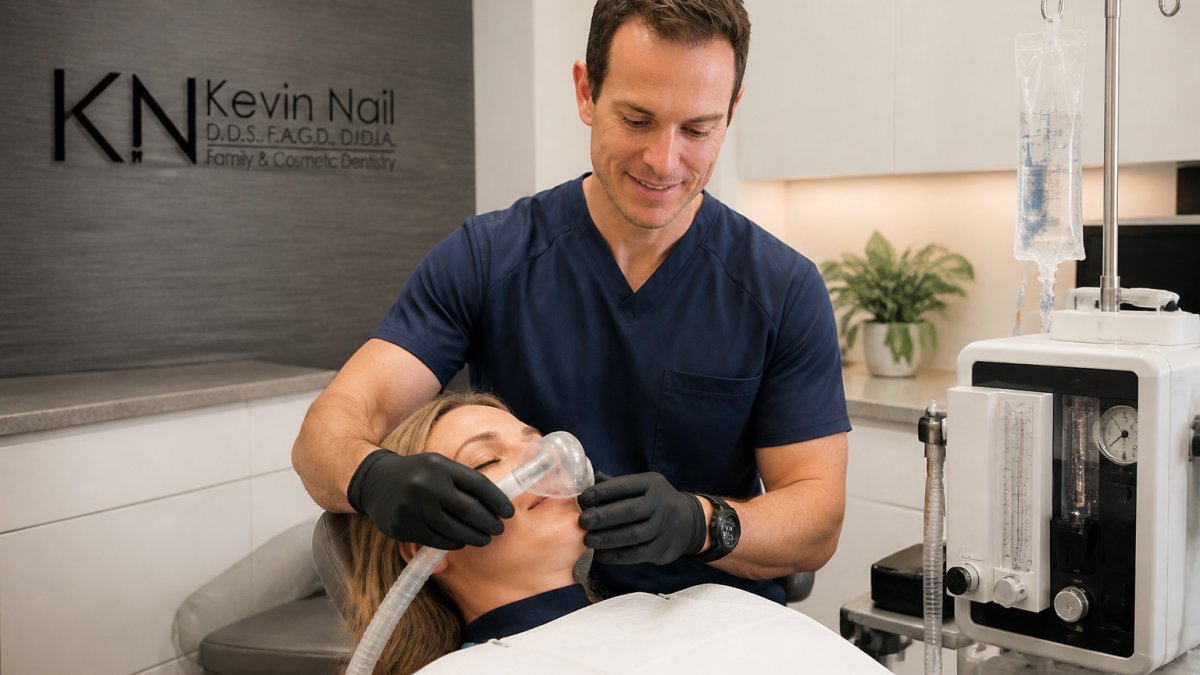
IV sedation dentistry is a technique where medication is delivered directly into your bloodstream to keep you calm and comfortable during dental treatment. The drugs work fast, the sedation level can be adjusted minute by minute, and most patients remember very little of the appointment.
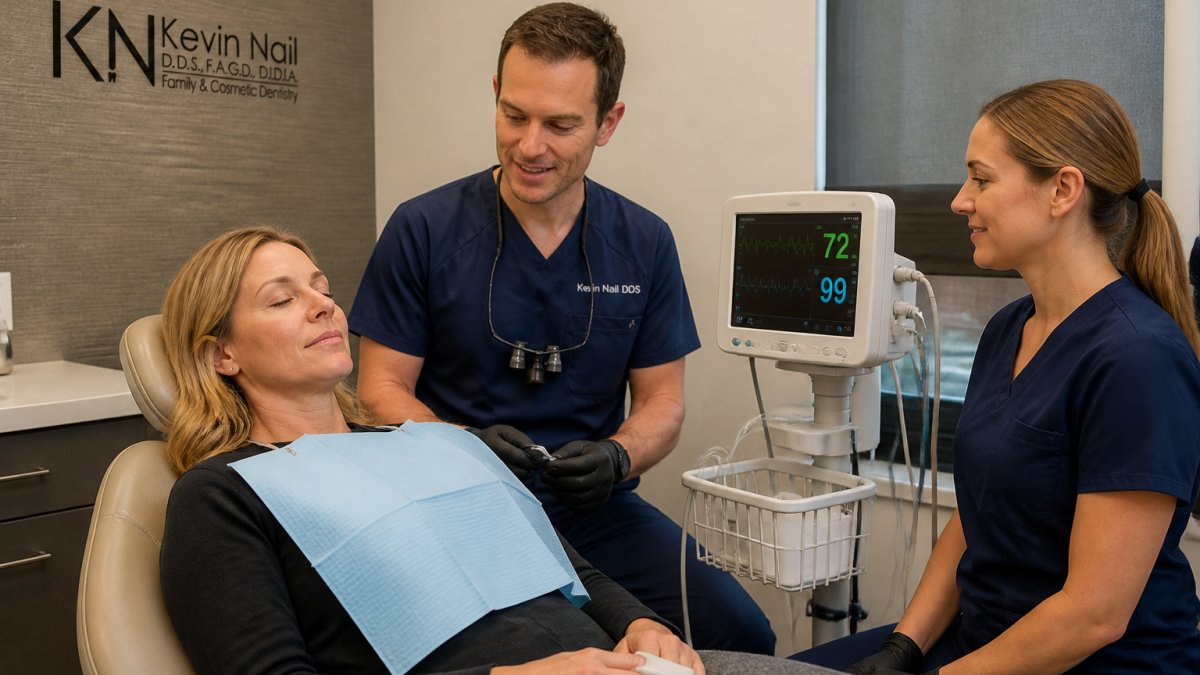
Here is the core truth most guides bury: the biggest safety factor is not the drug itself. It is the monitoring, and the training and equipment behind it.
What Gets Monitored, and Who Is Watching
During IV sedation, your care team watches your breathing, oxygen level, heart rate, and blood pressure. In practical terms, that usually means continuous pulse oximetry (a clip on your finger reading oxygen saturation), blood pressure checks at intervals, heart rhythm monitoring, and close observation of your breathing rate, depth, and airway. The American Dental Association's sedation guidelines stress that proper monitoring and training are what separate routine sedation from a real emergency.
Sedation Is a Continuum, Not a Switch
The American Society of Anesthesiologists' sedation continuum describes four levels, from minimal to general anesthesia. IV sedation usually aims for moderate sedation, where you stay responsive but deeply relaxed. The important point is that patients can slip from one level to the next, a moderate-sedation patient can drift toward deep sedation, where airway reflexes and breathing drive are lost. That is why the team plans for the level above the one intended, not just the one planned. If you want the mechanics explained plainly, our guide on how dental sedation works walks through each stage.
How Training and Credentials Change the Risk
Sedation safety is largely a function of who is providing it and how they were trained. Providers who administer sedation should have specific sedation training and current life-support certification, and should follow the rules that govern their sedation level and equipment. Check your state dental board for the requirements that apply where you live. Ask directly: who will be monitoring me, what is their training, and what is the plan if my breathing slows?
Emergency Preparedness: The Part You Hope Never Matters
Monitoring only helps if the team can act on what it sees. A prepared practice has reversal medications for the sedatives used, oxygen and airway equipment (suction, positioning, and bag-mask ventilation) immediately available, and a written protocol for calling emergency services. The National Institutes of Health overview of procedural sedation notes that most serious events are tied to inadequate assessment or monitoring, not the drugs alone, which is another way of saying the system around the drug is what protects you.
A safe appointment often depends on preparation and vigilance, and you can ask about both in advance.
IV Sedation Dentistry Side Effects Most Patients Actually Experience
Most side effects are mild and fade within a day. That is the honest answer. The dramatic stories you read online describe rare events, not the typical experience.
Here are the common IV sedation dentistry side effects, in plain terms:
- Drowsiness that lingers for several hours after the appointment
- Grogginess that can make you feel foggy or slow
- Dry mouth from the medications
Drowsiness, Grogginess, and Prolonged Sluggishness
Feeling sleepy is expected, not a warning sign. Prolonged drowsiness can last into the next day for some people. Plan for a light schedule and a ride home.
Dry Mouth, Nausea, Headache, and Bruising at the IV Site
Dry mouth and a mild headache are the most common complaints. Nausea is less common but real. Bruising at the IV insertion site is cosmetic and heals on its own.
Watch out: eating a heavy meal right before sedation can increase nausea, and skipping food entirely can make you lightheaded. Follow your provider's fasting instructions exactly.
Serious But Rare Complications: Breathing, Airway, and Heart Risks
Serious complications are uncommon, but they exist, and you deserve to know them. The main ones involve breathing, airway, and the heart.
- Respiratory depression: medication slows your breathing too much
- Airway obstruction: the tongue or soft tissue can block the airway when you are deeply relaxed
- Low blood pressure: sedation can drop your pressure, causing dizziness
These risks are why monitoring matters. The National Institutes of Health overview of procedural sedation notes that most serious events are tied to inadequate assessment or monitoring, not the drugs alone.
The real difference between a safe appointment and a risky one often comes down to preparation and vigilance.
Who Should Not Have IV Sedation
Some people should skip IV sedation or get cleared first. This is not about scaring you. It is about matching the tool to the patient. The reason this section matters more than any side-effect list is that most serious sedation events are tied to patient factors that were knowable before the appointment, a stopped-breathing episode during sleep, an unreported heart medication, a recent respiratory infection.
Health Conditions, Medications, and Age That Change the Risk
Certain factors raise the risk of IV sedation dentistry side effects and complications. What follows is not just a list, it is why each factor matters and what a careful provider does about it.
- Sleep apnea and heavy snoring. Sedatives relax the muscles that hold the airway open, and they blunt the brain's normal urge to wake and reposition when breathing pauses. A patient with diagnosed or suspected obstructive sleep apnea can drift into deeper airway obstruction at a lighter level of sedation than expected. A careful provider screens with a sleep-apnea questionnaire, asks about CPAP use, and may choose a lighter sedation level, adjust positioning, or coordinate with the patient's sleep physician. Undiagnosed apnea is the bigger problem, many patients do not know they have it.
- Heart conditions. Sedation can lower blood pressure and, in some patients, provoke rhythm changes. Patients with known arrhythmias, recent cardiac events, or poorly controlled hypertension often need cardiology clearance and a plan for which medications to continue on the day of treatment. Do not stop a heart medication on your own before an appointment without asking the prescriber.
- Lung conditions such as COPD or asthma. How well you move air and how well you handle sedatives are linked. A recent flare, active wheezing, or a respiratory infection in the days before treatment is a reason to reschedule, not push through.
What 'Get Cleared First' Actually Means
A clearance is not a rubber stamp. It usually means the provider has your relevant records, has spoken with or received a note from the clinician managing the condition, and has a written plan for medications, monitoring level, and what to do if the condition acts up. If you are checking whether sedation is safe for you specifically, our article on whether sedation dentistry is safe for adults covers health conditions and medications in more detail.
The takeaway: the question is rarely 'can I never have sedation?' It is 'what does my specific health picture require?' That answer comes from a real screening conversation, not a checklist you fill out alone.
Preparing for IV Sedation at the Dentist: What Lowers Your Risk
Preparation is the part you control, and it matters more than most people think. Good prep lowers your risk of nausea, breathing problems, and a rough recovery.
Follow this checklist:
- Arrange a ride home and a responsible adult to stay with you
- Follow fasting instructions exactly as given
- List every medication, supplement, and allergy for your provider
Watch out: the most common preparation mistake is treating fasting as optional. An empty stomach reduces nausea and aspiration risk. It is not a suggestion.
IV Sedation Dental Procedure Recovery: What to Expect Hour by Hour
Recovery follows a fairly predictable path. Knowing the timeline helps you plan and spot anything unusual.
| Time After Appointment | What You May Feel | What To Do |
|---|---|---|
| First 1-2 hours | Drowsy, groggy, limited recall | Rest, no driving, no decisions |
| 2-4 hours | Sluggish, dry mouth, mild headache | Sip water, eat something light |
| 4-8 hours | More alert, bruising may show | Take it easy, avoid alcohol |
| Next day | Mostly normal, some fatigue | Resume normal activity if you feel ready |
The IV sedation dental procedure recovery is usually smooth when you rest and hydrate. Limited recall of the appointment is normal and expected. If you want a fuller walkthrough of the appointment and aftermath, see our patient guide to dental sedation.
Warning Signs That Need Urgent Care After Sedation
Most recoveries are uneventful. But some signs mean you should call for help right away, not wait.
Seek urgent care if you notice:
- Breathing trouble or shortness of breath that does not ease
- Chest pain or a racing, irregular heartbeat
- Fainting or difficulty staying awake
The thing nobody tells you: slow reflexes and sluggishness can last longer than you expect. Do not drive, operate machinery, or make important decisions until you feel fully alert. When in doubt, call your provider. If you are worried, call your provider.
Book a Sedation Consultation With Dr. Kevin Nail
Nervous about dental work and unsure whether sedation is right for you? A consultation is a good place to talk it through.
At Kevin Nail DDS, Dr. Nail personally performs every procedure, and our long-term staff know patients by name.
If you want the broader safety evidence first, read is sedation dentistry safe. Ready to talk it through? Book a sedation consultation with our team and discuss your options.
Frequently Asked Questions
What are the most common side effects of IV sedation dentistry?
The most common IV sedation dentistry side effects are drowsiness and grogginess that can last several hours, dry mouth, headache, and mild nausea. Some patients also notice bruising at the IV insertion site. These effects are temporary and usually fade as the medication clears. Prolonged drowsiness is the one to plan around: you will need a responsible adult to drive you home and stay with you, and you should not drive, work, or make important decisions until you feel fully alert again.
Who should not have IV sedation?
IV sedation may not be appropriate for people with certain heart or lung conditions, untreated sleep apnea, severe liver or kidney disease, or an allergy to the sedatives used. Pregnancy, current respiratory infections, and some medication combinations also raise concern. Age matters too: older adults often need lower doses and closer monitoring. This is why a full medical history review before consenting is essential. Tell your dentist every medication, supplement, and health condition, and let them decide whether IV sedation or a lighter option like oral sedation or nitrous oxide is safer for you.
How long does recovery take after IV sedation for a dental procedure?
Most people feel alert enough to return to normal activities within 12 to 24 hours, though grogginess and slow reflexes can linger longer in some cases. Plan the rest of your day around recovery: arrange a ride home, skip driving and heavy machinery, and avoid alcohol. Drink water, eat light food when you feel ready, and rest. If drowsiness, nausea, or a headache worsens instead of easing, call your dental office for guidance.
How does a dental team monitor patients during IV sedation?
During IV sedation, the dental team continuously watches breathing, oxygen saturation, heart rate, and blood pressure, and adjusts the medication to keep you at the intended sedation level. Training and emergency equipment matter as much as the drugs themselves. Before consenting, ask who will monitor you, what monitoring equipment is used, and what the practice does if a complication occurs. A provider who can answer those questions clearly is a good sign you are in prepared hands.
Sedation should feel reassuring, not risky. If you have questions about how we keep you safe, call Kevin Nail DDS at 281-550-9054. We will walk you through the monitoring, the preparation, and the recovery step by step. Get started with Kevin Nail DDS and schedule a visit with a team that treats your safety as the first priority.