 how-to
7 Ways a Better Smile Can Change Your Confidence
Last Updated: October 29, 2026
Quick Summary
Cosmetic dentistry can change how people feel about showing their teeth by correcting visible concerns like stains, chips, gaps, and crooked teeth. Many patients report feeling more relaxed in photos, conversations, and first impressions afterward. Outcomes vary, so a consultation helps set realistic expectations.
- Smiles often shape first impressions in job interviews and dates.
- Stains, chips, gaps, and misalignment are the concerns patients mention most.
- Whitening changes color only; it does not close gaps or repair chips.
- Bonding is often completed in a single visit and is the least invasive option.
- Veneers usually require removing some enamel, which cannot be replaced.
Table of Contents
- Common Smile Concerns That Hold People Back
- Smile Makeover Options and What Each One Changes
- Dental Bonding vs Veneers: Choosing the Right Fit
- What Cosmetic Dentistry Can and Cannot Do for Confidence
- How to Choose a Cosmetic Dentist You Can Trust
- Building a Personalized Smile Makeover Plan With Your Dentist
- Frequently Asked Questions
Many people notice a smile before they notice anything else about a face. Patients often describe hiding their teeth in photos, covering their mouths when they laugh, or avoiding speaking up in meetings. Cosmetic dentistry addresses those habits by changing how the teeth look, and in turn how people feel about showing them. This guide explains how a better smile can change confidence, which concerns matter most, and how to choose a treatment and a dentist you can trust.
A smile is one of the first things others read in a conversation. When someone sees stained, chipped, or uneven teeth, they may form quick judgments that have nothing to do with the person's character. That is not fair, but it is common. For many adults, the teeth they see in the mirror shape how they carry themselves every day.
- Smiles often shape first impressions in job interviews and dates.
- Visible dental concerns can make people hold back their expressions.
- Many patients say they feel more relaxed once a concern is resolved.
Some people feel self-conscious about their teeth even when their dentist sees nothing wrong. Cosmetic dentistry focuses on how the smile looks and functions, which is why patient goals matter as much as clinical findings.
Common Smile Concerns That Hold People Back
The concerns that bother people most tend to be visible ones. Stains, chips, gaps, and crooked teeth are the issues patients mention most often when they describe feeling self-conscious.
- Stains and discoloration: Coffee, tea, and aging can dull teeth over time.
- Chips and small breaks: Even minor damage can catch the eye.
- Gaps between teeth: Spaces can affect how a smile looks in photos.
- Misalignment: Crooked teeth may make some people cover their mouths.
Ignoring these concerns is a common choice. Still, a dentist can often identify which issues are cosmetic and which need care for oral health. That distinction helps set realistic goals before any treatment begins.
Smile Makeover Options and What Each One Changes
A smile makeover is not a single procedure. Cosmetic dentistry includes options such as porcelain veneers, crowns, and dental bonding, and each option changes the smile in a different way.
Professional whitening. In-office whitening uses a concentrated peroxide gel, often activated with a light, to break down stain molecules inside the enamel. Sensitivity during and shortly after treatment is common and usually temporary (the American Dental Association).
Dental bonding. Bonding applies a tooth-colored composite resin directly to the tooth, then shapes and cures it with a light. It is the least invasive option because it usually requires no removal of healthy tooth structure.
Porcelain veneers. Veneers are thin ceramic shells bonded to the front of the teeth. They can address color, shape, and small gaps across several front teeth at once, and porcelain resists staining better than composite.
Crowns. A crown covers the entire visible portion of a tooth. Cosmetic crowns are often chosen when a tooth is heavily worn, cracked, or already has a large filling, so the restoration protects the tooth while improving its appearance.
Clear aligners and orthodontic options. When the main concern is crowding, spacing, or bite, aligners or braces may be the better foundation. Moving teeth into position can sometimes reduce how much cosmetic work is needed afterward.
- Whitening changes color but not shape or spacing.
- Bonding is best for small chips and minor gaps and is the least invasive.
- Veneers cover color, shape, and small gaps across multiple teeth.
- Crowns restore and improve teeth that are worn, cracked, or heavily filled.
- Aligners address the underlying position of the teeth.
A good first step is a consultation. Ask the dentist to explain what each option can and cannot do for your specific smile, how many visits each requires, and how long the result is expected to last with your habits.
The article compares the main options by what each one changes and how many visits it takes.
| Option | Changes | Visits or timing |
|---|---|---|
| Professional whitening | Color only, not shape or spacing | Results fade over months to a couple of years |
| Dental bonding | Small chips and minor gaps | Often completed in a single visit |
| Porcelain veneers | Color, shape, small gaps across several teeth | Typically several visits |
| Crowns | Worn, cracked, or heavily filled teeth | Varies by case |
| Clear aligners or braces | Crowding, spacing, and bite | Varies by case |
Dental Bonding vs Veneers: Choosing the Right Fit
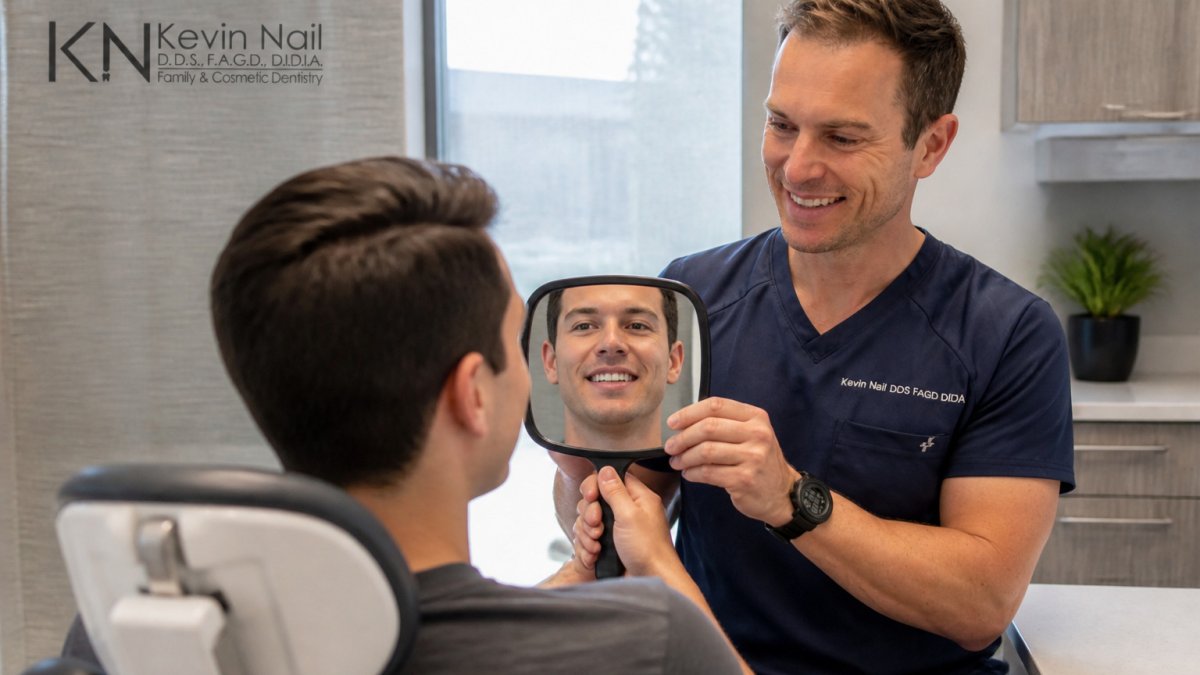
Bonding and veneers are two of the most common options, and people often compare them. Bonding is usually less invasive and can often be completed in a single visit. Veneers typically involve more preparation of the tooth and may last longer for larger changes.
Here is a quick way to think about the choice:
- Choose bonding for small chips, minor gaps, or a limited budget for cosmetic work.
- Choose veneers for broader color or shape concerns across several front teeth.
- Ask your dentist how long each option is expected to last with your habits.
Veneer longevity depends on care, habits such as nail biting or teeth grinding, and regular checkups. Read how long advanced dental veneers last with proper care for more detail on maintenance. For more detail, read our guide on how long advanced dental veneers last with proper care. Cost also varies with the material and the number of teeth involved. Review the cost of high quality porcelain veneers for a deeper look at pricing factors. You can review our guide to the cost of high quality porcelain veneers for a deeper look at pricing factors.
Watch out: bonding can stain over time if it is not polished well, so routine cleanings matter.
What Cosmetic Dentistry Can and Cannot Do for Confidence
Cosmetic dentistry can improve how a smile looks, and many patients report feeling better about speaking, smiling, and laughing afterward. That is a real and commonly reported experience. It is also not the same thing as a proven clinical effect on self-esteem, and the honest answer is more nuanced than most marketing copy suggests.
What the evidence supports. Research on smile appearance and psychosocial outcomes is mixed, and patient-reported satisfaction after cosmetic treatment varies. What is harder to prove is causation: confidence also depends on sleep, relationships, stress, work, and personal goals, and a new smile does not resolve every source of self-doubt. Treat patient-reported improvement as a common and meaningful outcome, not a guaranteed one.
Where cosmetic work helps most. Patients tend to report the biggest lift when a specific, visible concern has been bothering them for years, a chipped front tooth, a gap they cover in photos, or staining they are reminded of every time they look in the mirror. When the concern is concrete and the treatment addresses it directly, the change in how someone feels is often noticeable.
Where it helps less. If the underlying issue is anxiety, depression, or body-image distress that extends beyond the teeth, cosmetic treatment alone is unlikely to resolve it. In those cases, a dentist may suggest slowing down, addressing the health foundation first, or talking with a mental health professional alongside treatment. That is not a reason to avoid care, it is a reason to set expectations honestly.
Risks and limitations to weigh. Cosmetic treatment carries risks and limitations. Common trade-offs include:
- Sensitivity: whitening and veneer preparation can cause temporary sensitivity to hot and cold.
- Irreversibility: veneers usually require removing some enamel, which cannot be replaced.
- Maintenance: bonding stains and chips sooner than porcelain; veneers and crowns need care and eventual replacement.
- Durability: results depend on habits such as grinding, nail biting, and regular checkups.
- Fit: some concerns are better addressed with orthodontics or restorative care than with cosmetic work.
When cosmetic treatment may not be the right first step. If active gum disease, decay, or bite problems are present, those need care first. A healthy foundation protects both the result and the tooth.
If you are anxious about treatment, let your dental team know; they can explain each step and discuss options such as sedation.
How to Choose a Cosmetic Dentist You Can Trust
Finding the right dentist matters as much as choosing the treatment. Read what to know when searching for the best cosmetic dentist to narrow your options. A trustworthy cosmetic dentist explains options clearly, shows realistic before-and-after examples, and encourages questions rather than rushing a decision.
Use this checklist when you compare providers:
- Ask about training and experience with the specific treatment you want.
- Look for a clear explanation of costs, financing, and insurance questions.
- Confirm who will perform your procedures and who your long-term team will be.
- Notice whether the office takes time to listen to your concerns.
At Kevin Nail DDS, Dr. Nail personally performs every procedure. When you visit any practice, ask how they plan treatment and what happens if your needs change. For help evaluating local options, see our Houston dentistry guide on choosing the right practice. For help narrowing your options, read our guide on what to know when searching for the best cosmetic dentist, or see our Houston dentistry guide on choosing the right practice.
Building a Personalized Smile Makeover Plan With Your Dentist
A personalized plan starts with your goals, not a set package. Bring a clear list of what bothers you most, and ask the dentist which concerns are cosmetic and which need care first. Oral health comes first, so a healthy foundation is the priority before any aesthetic work begins.
A patient-focused approach to smile makeovers includes reviewing your teeth and gums, discussing options like veneers or bonding, and outlining timelines and maintenance.
Your next step: Schedule a consultation to talk through your smile goals. Call 281-550-9054 to begin building a plan that fits your needs.
Frequently Asked Questions
How can cosmetic dentistry improve confidence?
Cosmetic dentistry addresses visible concerns such as stained, chipped, gapped or misaligned teeth, which many people think about when they smile, speak or meet new people. When those concerns are corrected, some patients report feeling more comfortable laughing and speaking without hesitation. Confidence is shaped by many factors, so a smile change works best as one part of a broader approach. A consultation with a dentist can help you decide whether a cosmetic change addresses the concern you actually have.
Is dental bonding or veneers better for changing the appearance of teeth?
The better option depends on the problem. Bonding is a resin applied directly to the tooth, often in a single visit, and is commonly used for small chips, minor gaps and small areas of discoloration. Veneers are thin custom shells bonded to the front of the teeth and are often chosen for broader changes in shape, color or alignment. Each has tradeoffs in durability, maintenance and cost, so a dentist should evaluate your teeth before recommending one.
What should I ask a dentist before getting cosmetic dental work?
Ask what problem the treatment is designed to solve, what alternatives exist, and what the realistic risks and limitations are. Find out how many cosmetic cases the dentist performs, whether you can see before-and-after photos of similar work, and how the final result will be planned, such as with a digital smile preview. Ask about the expected lifespan of the treatment, what maintenance it requires, and what the total cost includes. Pricing varies widely, so request a written estimate from the office directly.
What should I expect from a personalized smile makeover?
A personalized smile makeover usually begins with an exam, photographs and a conversation about your goals, followed by a treatment plan that may combine several procedures. Good planning often includes a preview of the expected result before any work begins. Expect a discussion of tradeoffs, timing and the maintenance the result will need. Your dentist should explain options in plain language and give you time to decide, rather than pressing for a single procedure on the first visit.