 ultimate-guide
Cost of High Quality Porcelain Veneers: 2026 Price Guide
Table of Contents
- What Drives the Cost of High Quality Porcelain Veneers
- Average Cost Per Tooth and Full Set Pricing
- Hidden Costs and the Geographic Cost Index
- Dental Veneer Financing Options and Insurance Realities
- How Long Do Porcelain Veneers Last and What Affects Longevity
- Porcelain Veneers vs Composite Bonding: Cost and Value Compared
- Long-Term ROI: Calculating the True Value of High-Quality Veneers
- Frequently Asked Questions
Last Updated: September 14, 2026
What Drives the Cost of High Quality Porcelain Veneers
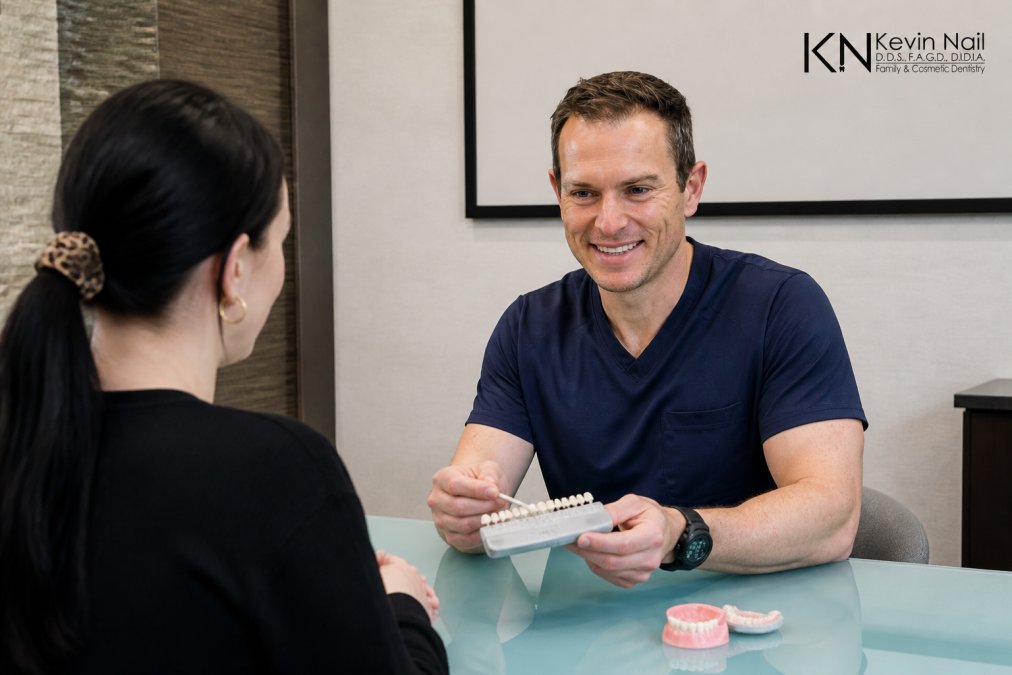
The cost of high quality porcelain veneers reflects a chain of skilled work rather than a single product: material grade, laboratory craftsmanship, bonding technique, and clinical time all land in the final fee. At Kevin Nail DDS in Copperfield, we explain this breakdown to every patient before treatment begins, because the price gap between an entry-level veneer and a premium one is rarely random.
Material grade differentiation is the first cost lever. Porcelain veneers are custom-fabricated ceramic shells bonded to the front of teeth. Feldspathic porcelain, pressed ceramics, and high-translucency zirconia-based ceramics behave differently under light, and the more closely a material mimics natural enamel, the more labor it demands at every stage.
The role of the dental laboratory and bonding agent matters just as much. A skilled ceramist layers porcelain by hand to reproduce the color shifts and translucency of natural teeth, a process that takes hours per unit. The bonding agent and adhesive system used to attach the veneer also affect longevity, and dentists who invest in proven bonding protocols charge accordingly. As the American Dental Association's patient resources on veneers notes, material selection and fit are central to how a restoration performs over time.
Average Cost Per Tooth and Full Set Pricing
Pricing for porcelain veneers depends on the number of teeth treated, the material chosen, and the complexity of your case, so most practices quote after an in-person exam rather than over the phone. A single veneer addresses one chipped, discolored, or misaligned tooth; a full smile makeover typically covers six to ten upper teeth, and sometimes the lower arch as well.
That volume difference is the single biggest driver of your total bill. A full set involves more diagnostic wax-ups, more temporary veneers, and far more chair time than a single unit.
Single Veneer vs. Full Smile Makeover
A single veneer is usually a repair: one chipped tooth, one stubborn stain, one small gap. A full smile makeover is a planned redesign of how your teeth look together, which means the dentist studies your face, bite, and gum line before touching a single tooth.
Because we cannot publish fixed prices for either option without an exam, we recommend requesting a written treatment plan that itemizes each tooth, the material grade, and any lab fees. For current pricing at our practice, call 281-550-9054 or visit our website.
| Treatment Scope | Typical Teeth Treated | Main Cost Drivers |
|---|---|---|
| Single veneer | 1 | Material grade, lab time, bonding |
| Partial set | 2-5 | Shade matching across teeth |
| Full smile makeover | 6-10 | Diagnostic wax-up, temporaries, chair time |
Hidden Costs and the Geographic Cost Index
The fee you are quoted is not always the fee you pay. Diagnostic wax-ups, temporary veneers worn while your permanent ones are fabricated, and follow-up visits to refine the bite often sit outside the headline number. Enamel reduction, when required, may add to the total, and replacement of a failed veneer years later is a cost most patients never plan for.
Geographic cost index is the second hidden variable. Practices in high-overhead metro areas pay more for laboratory work, staffing, and rent, and those costs flow into the fee. Two identical veneers placed in different regions can carry noticeably different price tags, which is why comparing quotes from different areas without accounting for overhead is misleading.
Dental Veneer Financing Options and Insurance Realities
Veneers sit in an awkward coverage zone: they are almost always classified as cosmetic, but the underlying procedure can be medical. Understanding that split is the difference between a $0 reimbursement and a partial one.
Why Insurance Usually Says No
Most dental plans separate procedures into three tiers: preventive (cleanings, exams, usually covered at 100%), basic (fillings, extractions, typically 70-80%), and major (crowns, bridges, typically 50%). Veneers are not on the standard fee schedule at all, because their primary purpose is appearance. A plan will generally only consider payment when the veneer is restoring a tooth damaged by trauma, decay, or a congenital defect, and even then the reimbursement is usually calculated at the crown rate, not the veneer fee. That means a plan might pay 50% of what it would have paid for a crown and nothing toward the cosmetic premium.
Two practical levers exist. First, ask your dentist to submit a pre-treatment estimate (sometimes called a pre-authorization) with the treating diagnosis code and the narrative explaining medical necessity. Second, if the veneer is part of a larger functional treatment, bite correction, post-orthodontic restoration, the claim may be bundled differently. Get the plan's response in writing before you schedule.
Financing Buckets, Ranked by Real Cost
In-house payment plans. Many practices split treatment into 3-12 monthly installments with no interest, because the practice would rather carry the balance than lose the case. This is usually the cheapest option if it is offered. Ask whether there is a down payment and whether the plan auto-debits.
Third-party healthcare financing. Companies like CareCredit and Cherry underwrite dental treatment and pay the practice upfront; you repay the lender. Promotional "no interest if paid in full" windows (commonly 6, 12, 18, or 24 months) are real, but deferred-interest structures mean that if you miss the payoff deadline by even a day, interest is retroactively applied to the original balance, often at an APR in the high 20s. Read the deferred-interest language, not just the promotional headline.
Health savings and flexible spending accounts. If your HSA or FSA plan documents the veneer as medically necessary (same standard as insurance), you can pay with pre-tax dollars, which effectively discounts the cost by your marginal tax rate. This is the most overlooked lever and requires a letter of medical necessity from the dentist.
Credit cards and personal loans. Generally the most expensive path unless you have a genuine 0% introductory offer and can clear the balance inside the window.
The Question to Ask Before You Sign
Ask the front office three things in writing: the all-in treatment fee including temporaries and adjustments, whether the practice offers an in-house plan and at what term, and which third-party lender they use and what the post-promotional APR is. A practice that cannot answer all three in writing is a practice you should slow down with.
How Long Do Porcelain Veneers Last and What Affects Longevity
Porcelain veneers commonly last ten to fifteen years with good care, and some last longer (the American Dental Association). Longevity hinges on three things: the quality of the bond achieved at placement, your oral hygiene and periodontal health, and whether you grind your teeth at night.
Stain resistance is a genuine advantage of glazed porcelain, but the margins where veneer meets tooth are the vulnerable point. Daily brushing, flossing, and regular professional cleanings protect those margins. A night guard protects the porcelain itself if you clench or grind.
Porcelain Veneers vs Composite Bonding: Cost and Value Compared
Most guides stop at "composite is cheaper, porcelain lasts longer." That is true but useless for a decision. The real question is cost per year of service, and the answer flips depending on how long you plan to keep the result.
The Two Procedures Are Not the Same Product
Composite bonding is direct: the dentist sculpts tooth-colored resin onto the tooth in a single visit, cures it with a light, and polishes it. There is no laboratory, no impression sent out, and no temporary. Porcelain veneers are indirect: the tooth is prepared, an impression or digital scan is sent to a laboratory, a ceramist fabricates the shell, and you return for bonding, usually two visits with temporaries in between.
That structural difference drives everything downstream: initial cost, lifespan, stain resistance, and repairability.
Lifespan and Replacement Cycles
Composite bonding is generally expected to last about 4 to 8 years before it needs repair or replacement, and it is more prone to staining, chipping, and color drift because resin is porous and picks up pigment from coffee, tea, and red wine (Composite Fillings | MouthHealthy). It is also repairable, a chipped edge can often be added to and polished in one visit.
Porcelain veneers are commonly expected to last 10 to 15 years, with some lasting longer under good hygiene and a night guard. Porcelain is glazed, so it resists staining far better, and it holds its shape. The trade-off is that porcelain is not easily repaired, a fractured veneer usually means remaking the unit.
The Cost-Per-Year Math
This is the calculation almost no competitor publishes, and it is the one that matters. Take the total treatment cost, divide by the expected years of service, and add the cost of any interim repairs or replacements over the same window.
A composite bonding case replaced every 5 years over a 20-year horizon means roughly four treatment cycles. A porcelain veneer case lasting 15 years means roughly one replacement cycle in the same window, plus the original placement. Even when the porcelain unit costs several times more upfront, the per-year figure often lands close, and the porcelain patient spends far fewer appointments in the chair and far fewer years looking at stained or chipped edges.
When Composite Is the Right Answer
Composite wins in three situations: a single small chip or gap where the surrounding teeth are healthy, a patient who wants to preview a change before committing to porcelain, or a younger patient whose enamel and gum line are still settling. In those cases, paying porcelain prices for one tooth is overkill.
When Porcelain Earns Its Premium
Porcelain wins when the change is across multiple visible teeth, when the patient has intrinsic discoloration that bonding cannot mask, when the bite is stable and the patient is committed to maintenance, and when the patient wants a result that will not need re-doing every few years. For a full smile makeover, the per-year math and the appearance both favor porcelain.
Long-Term ROI: Calculating the True Value of High-Quality Veneers
Long-term value is where high-quality porcelain separates itself. A veneer replaced twice in a decade costs more than one placed well and maintained for fifteen years, even if the initial fee was higher. Factor in the diagnostic work, temporary veneers, and repeat visits, and the cheaper option often loses.
Calculate your own ROI by dividing the total treatment cost by the expected years of service, then adding the cost of any replacement cycles. A veneer that lasts fifteen years at a modest annual cost beats a cheaper one replaced every five. Ask your dentist about material grade, laboratory standards, and biocompatibility before deciding, and get a written estimate for current pricing.
Frequently Asked Questions
What is the average price range for high-quality porcelain veneers?
The cost of high quality porcelain veneers varies based on material grade, laboratory work, and dentist expertise. Pricing depends on your specific aesthetic goals, the number of teeth treated, and the complexity of your case. We recommend scheduling a consultation for a personalized quote. Many practices offer financing plans to break the total investment into manageable monthly payments, making a smile makeover more accessible than the total figure suggests.
Does dental insurance cover the cost of porcelain veneers?
Most dental insurance plans classify porcelain veneers as cosmetic dentistry and do not cover them. However, if a veneer is needed to restore a chipped or damaged tooth, a portion may be covered under restorative benefits. Check your specific policy for details on out-of-pocket expenses. PPO insurance may help with related procedures like tooth preparation or consultation fees, so review your plan carefully before committing.
How long do high-quality porcelain veneers typically last?
High-quality porcelain veneers can last 10 to 15 years or more with proper care. Longevity depends on material quality, the bonding agent used, and your oral hygiene habits. Patients who maintain regular dental checkups and avoid biting hard objects often extend the replacement cycle. Porcelain's stain resistance and durability make it a strong long-term investment compared to composite bonding, which typically needs replacement sooner.
Are there financing options available for cosmetic dental procedures?
Yes, many dental practices offer financing plans through third-party lenders or in-house payment schedules. These options can cover the full cost of porcelain veneers, including consultation fees and temporary veneers. Some plans feature low monthly payments with no interest for a promotional period. Ask your dentist about dental veneer financing options and whether a diagnostic wax-up or smile makeover package can be bundled for better value.
Choosing veneers is a long-term investment in your smile, and the wrong provider can turn that investment into a repeat expense. Kevin Nail DDS offers personalized cosmetic care where Dr. Kevin Nail personally performs every procedure, uses 3D cone beam CT (CBCT) scans for sub-millimeter precision, and provides comprehensive care under one roof for families across the greater Houston area. Call 281-550-9054 to schedule a consultation and get a treatment plan built around your goals.