 how-to
What to Expect During Dental Sedation: A Patient Guide
Table of Contents
- Understanding Dental Sedation and Its Purpose
- Types of Dental Sedation
- Preparing for Sedation Dentistry
- What Happens Before Your Procedure
- During Your Dental Sedation Procedure
- Dental Sedation Recovery Time and Post-Procedure Care
- Common Side Effects and Safety Considerations
- Who Should Consider Sedation Dentistry
Last Updated: August 27, 2026
Understanding Dental Sedation and Its Purpose
Dental sedation is a pharmacological technique that helps patients remain calm and comfortable during dental procedures by reducing anxiety and pain perception. Many people avoid necessary dental care because of fear. Dental sedation bridges that gap, allowing patients to receive treatment they need without psychological burden. At Kevin Nail DDS, we understand that anxiety is a legitimate barrier to oral health, which is why sedation dentistry is a core part of our practice philosophy.
The level of sedation used depends on the procedure's complexity, your medical history, anxiety level, and personal preferences. A simple cleaning might require only nitrous oxide, while a complex implant restoration might warrant IV sedation.
Types of Dental Sedation
Understanding your sedation options helps you make an informed decision about which approach suits your procedure and comfort level.
Nitrous Oxide (Laughing Gas)
Nitrous oxide is the mildest form of sedation dentistry and the most commonly used in routine dental care. You inhale a mixture of nitrous oxide and oxygen through a small mask placed over your nose. Within a few minutes, you'll feel relaxed and mild euphoria.
The beauty of nitrous oxide is that it wears off quickly. Because you're breathing it continuously during your procedure, the sedative effect begins to fade within minutes of the mask being removed. Most patients can drive themselves home after nitrous oxide. You remain fully conscious and responsive, able to communicate with your dentist and maintain control throughout. Nitrous oxide is ideal for patients with mild to moderate anxiety who need minimal sedation for routine cleanings, fillings, and straightforward procedures.
The American Dental Association guidance on nitrous oxide safety
Oral Sedatives
Oral sedation involves taking a sedative medication, typically a benzodiazepine, by mouth 30 to 60 minutes before your procedure. With minimal oral sedation, you'll feel drowsy and deeply relaxed but remain conscious. With moderate oral sedation, you may drift in and out of light sleep, and amnesia (memory loss of the procedure) is common.
Oral sedatives take longer to wear off than nitrous oxide, typically 2 to 4 hours, so you cannot drive. You must arrange transportation and have someone stay with you for the rest of the day. This makes oral sedation better suited for longer procedures like multiple extractions or extensive restorative work.
IV Sedation
IV sedation delivers sedative medication directly into your bloodstream through an intravenous line, giving your dentist precise control over the depth of sedation. You're in a state of profound relaxation but maintain some responsiveness. IV sedation is typically reserved for complex procedures, patients with severe dental phobia, or extensive restorative work.
Recovery from IV sedation is longer than oral sedation. Most patients need 4 to 6 hours before they feel fully alert. Like oral sedation, you cannot drive and must have a responsible adult accompany you home.
Preparing for Sedation Dentistry
Proper preparation is essential for safe, comfortable sedation dentistry.
Pre-Procedure Fasting and Medication Guidelines
Fasting before sedation is critical for your safety. Most practitioners require you to avoid food for 6 to 8 hours before your appointment, and clear liquids for 2 to 4 hours before (the American Dental Association). This precaution reduces the risk of nausea and aspiration during sedation.
Your dentist will ask about all medications you're taking, prescription, over-the-counter, and supplements. Some medications interact with sedative drugs, so full disclosure is essential. Bring a list of your medications to your pre-sedation consultation. Alcohol should be avoided for at least 24 hours before your appointment. If you have any medical conditions, sleep apnea, heart disease, uncontrolled diabetes, or respiratory issues, inform your dentist immediately.
Arranging Transportation and Support
This step is non-negotiable if you're receiving oral or IV sedation. You cannot drive for at least 24 hours after moderate to deep sedation, even if you feel alert. Arrange for a responsible adult to drive you to your appointment and pick you up afterward.
Psychological Preparation
Anxiety before sedation dentistry is normal. Discuss your specific fears with your dentist at your pre-procedure consultation. Knowing exactly what to expect, the sounds you'll hear, the sensations you might feel, the timeline of the procedure, reduces fear significantly. Some patients benefit from arriving early to become familiar with the environment or establishing a hand signal with the dentist that means "I need a break."
What Happens Before Your Procedure
Vital Signs Monitoring Setup
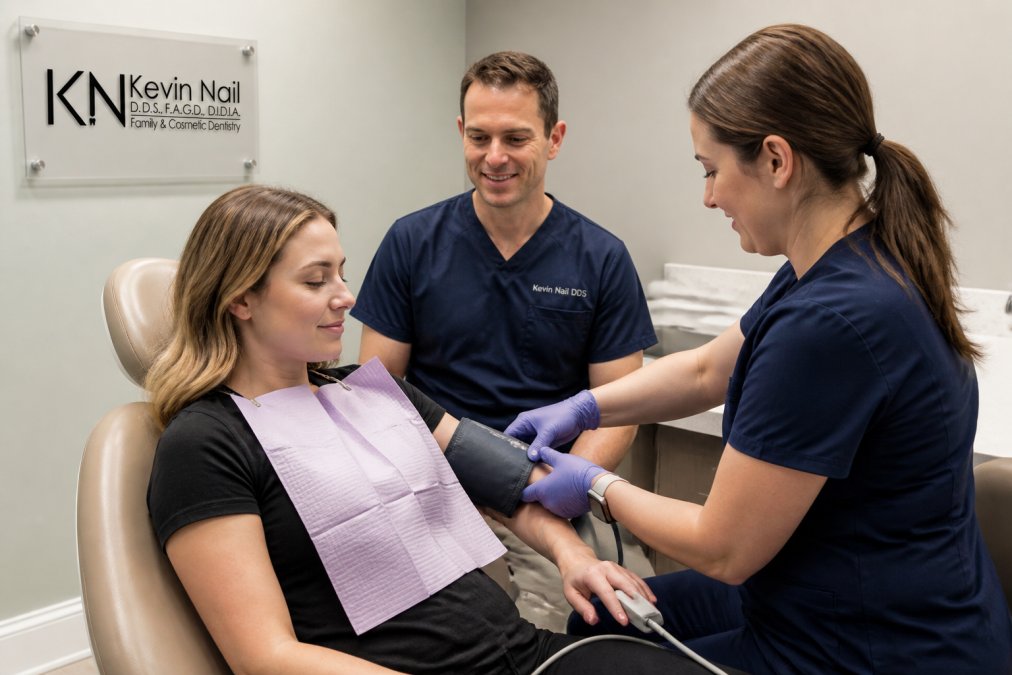
When you arrive, clinical staff will take your baseline vital signs: blood pressure, heart rate, oxygen saturation, and temperature. You'll be positioned in the dental chair, and monitoring equipment will be attached, typically including a blood pressure cuff on your arm and a pulse oximeter on your finger to measure oxygen levels.
Sedative Administration
If you're receiving nitrous oxide, the dental assistant will place a small, comfortable nose mask over your nose. Within a few minutes, you'll feel relaxed. For oral sedation, you've already taken your medication at home before arriving. For IV sedation, the dentist or a trained anesthesia professional will place an IV line in your arm, and sedative medication is administered slowly.
Local anesthesia (numbing medication) is always used in conjunction with sedation. Your dentist will inject local anesthetic into the area being treated.
During Your Dental Sedation Procedure
Conscious Sedation and Responsiveness
Despite the term "sedation," you're not unconscious during most sedation dentistry. With nitrous oxide and minimal to moderate oral or IV sedation, you remain responsive. Your dentist and clinical team continuously monitor your vital signs throughout the procedure. If your blood pressure rises, heart rate increases, or oxygen levels dip, they'll respond immediately.
Amnesia and Memory During Treatment
One of the most valued effects of sedation, particularly with moderate to deep sedation, is anterograde amnesia, the inability to form new memories during the procedure. Many patients report that a 90-minute appointment felt like 15 minutes because they have little or no recollection of it.
Dental Sedation Recovery Time and Post-Procedure Care
Recovery is as important as the procedure itself.
Recovery Room Monitoring
After your procedure is complete, you'll be moved to a recovery area where clinical staff will monitor you as the sedation wears off. Recovery time varies by sedation type. Nitrous oxide patients typically feel alert within 5 to 15 minutes. Oral sedation patients usually need 30 to 60 minutes of recovery time. IV sedation patients may require 1 to 2 hours of recovery before they're ready to leave.

Managing Grogginess and Drowsiness
It's common to feel groggy, drowsy, or slightly disoriented immediately after sedation. This is temporary and expected. Drink water or a clear liquid once you're alert enough to do so safely. Avoid alcohol and heavy meals for the rest of the day. Rest is your best medicine. Plan to spend the afternoon relaxing at home. Avoid strenuous activity, heavy lifting, or exercise for at least 24 hours.
Return to Normal Activities
Most patients feel substantially better by the following day. For 24 hours after sedation, avoid driving or operating machinery, making important decisions or signing documents, consuming alcohol, strenuous exercise or heavy lifting, and caring for young children or dependents without additional support. After 24 hours, you can gradually resume normal activities.
Common Side Effects and Safety Considerations
Sedation dentistry is generally safe when administered by trained professionals using proper monitoring equipment.
Expected Side Effects
Mild side effects are common and temporary, including drowsiness and grogginess, dry mouth, nausea or mild dizziness, headache, sore throat, and bruising at the IV insertion site. These resolve on their own within 24 to 48 hours. More serious side effects are rare. Allergic reactions to sedative medications occur in fewer than 1 in 10,000 cases.
Patient Safety and Monitoring Equipment
Your safety during sedation depends on three critical factors: the dentist's training and experience, proper monitoring equipment, and adherence to established protocols. Monitoring equipment continuously tracks your vital signs and alerts your dentist immediately to any concerning changes. Your dentist should have emergency equipment and medications available in case of complications, including oxygen, reversal agents, and emergency airway management equipment.
At Kevin Nail DDS, patient safety is paramount. Our team is trained in sedation administration, vital signs monitoring, and emergency protocols. We use state-of-the-art monitoring equipment and maintain the highest standards of care.
American Dental Association guidelines on sedation and anesthesia safety
Who Should Consider Sedation Dentistry
Not every patient needs sedation, and not every procedure requires it.
Dental Anxiety and Phobia Management
Dental anxiety exists on a spectrum. Some patients feel mildly nervous before appointments. Others experience genuine phobia, an intense, irrational fear that prevents them from seeking necessary care. If anxiety has caused you to avoid dental treatment, miss appointments, or postpone necessary procedures, you're a candidate for sedation dentistry. Sedation doesn't cure anxiety, but it allows you to receive treatment despite it.
Pediatric vs. Adult Protocols
Children and adults respond differently to sedation, and protocols differ accordingly. For pediatric patients, nitrous oxide is the most commonly used sedation method. Oral sedation is sometimes used for anxious children undergoing longer procedures. Adult sedation protocols are more flexible, with any level of sedation available depending on the procedure and medical history.
Dental sedation transforms the experience of necessary dental care. Whether you're managing anxiety, undergoing complex restorative work, or simply prefer deep relaxation during treatment, sedation dentistry makes that possible. The key is understanding your options, preparing thoroughly, and working with a dentist experienced in sedation protocols.
At Kevin Nail DDS, we're committed to making dental care comfortable and accessible for patients across the greater Houston area. Dr. Kevin Nail personally performs every procedure, ensuring continuity of care and attention to your specific needs. If you're interested in learning more about sedation dentistry or want to discuss whether it's right for you, call 281-550-9054 to schedule a consultation. We're here to help you achieve the oral health you deserve, in comfort and with support every step of the way.
| Sedation Type | Onset Time | Recovery Time | Best For | Responsiveness |
|---|---|---|---|---|
| Nitrous Oxide | 3-5 minutes | 5-15 minutes | Mild anxiety, routine procedures | Fully responsive |
| Oral Sedation | 30-60 minutes | 2-4 hours | Moderate anxiety, longer procedures | Responsive but drowsy |
| IV Sedation | Seconds | 4-6 hours | Severe anxiety, complex procedures | Minimally responsive |
Frequently Asked Questions
Will I feel any pain during dental sedation?
No. Sedation dentistry combines sedative medication with local anesthesia to ensure comfort throughout the procedure. Local anesthesia numbs the treatment area, preventing pain, while sedation promotes deep relaxation and anxiolysis. Most patients report feeling pressure or vibration but no pain. If you experience discomfort, communicate with your dentist immediately, they can adjust sedation levels or anesthesia as needed.
What should I avoid before dental sedation?
Follow pre-procedure fasting guidelines strictly: typically no food for 6-8 hours and clear liquids only for 2 hours before your appointment. Avoid alcohol for 24 hours prior. Do not take certain medications unless your dentist approves, bring a complete medication list to your consultation. Wear comfortable, loose-fitting clothing and avoid heavy makeup. Arrange transportation in advance, as you cannot drive after sedation.
How long does dental sedation recovery take?
Recovery time varies by sedation type. Nitrous oxide wears off within minutes, you may drive after 30 minutes. Oral sedatives and IV sedation require 24-48 hours for full cognitive recovery. You'll feel groggy and drowsy for several hours post-procedure. Most patients return to light activities the next day but should avoid operating machinery, making important decisions, or strenuous exercise for 24 hours. A chaperone should remain with you during this period.
Can I feel my tooth being extracted under conscious sedation?
During conscious sedation with local anesthesia, you remain responsive but deeply relaxed. You may feel pressure, vibration, or movement, but not pain, the local anesthetic blocks pain signals. Many patients experience amnesia and don't remember the procedure, even though they were technically conscious. If you feel pain at any point, alert your dentist immediately; they can adjust anesthesia or sedation levels to ensure your comfort.
This article was written using GrandRanker