 how-to
Coping Strategies for Dental Panic Attacks
Table of Contents
- Understanding Dental Panic Attacks and Anxiety
- Breathing Exercises for Dental Anxiety
- How to Talk to Your Dentist About Anxiety
- In-the-Moment Coping Techniques
- Sedation Dentistry Options for Anxiety Management
- Preparing for Your Appointment to Reduce Pre-Appointment Anxiety
- Recovery After a Panic Attack During Oral Surgery
- Frequently Asked Questions
Last Updated: September 23, 2026
Understanding Dental Panic Attacks and Anxiety
Dental panic attacks are sudden, intense episodes of fear or panic that occur before, during, or after dental procedures. They're different from general nervousness. A panic attack involves physical symptoms like rapid heartbeat, shortness of breath, trembling, and a feeling of losing control.
Breathing Exercises for Dental Anxiety
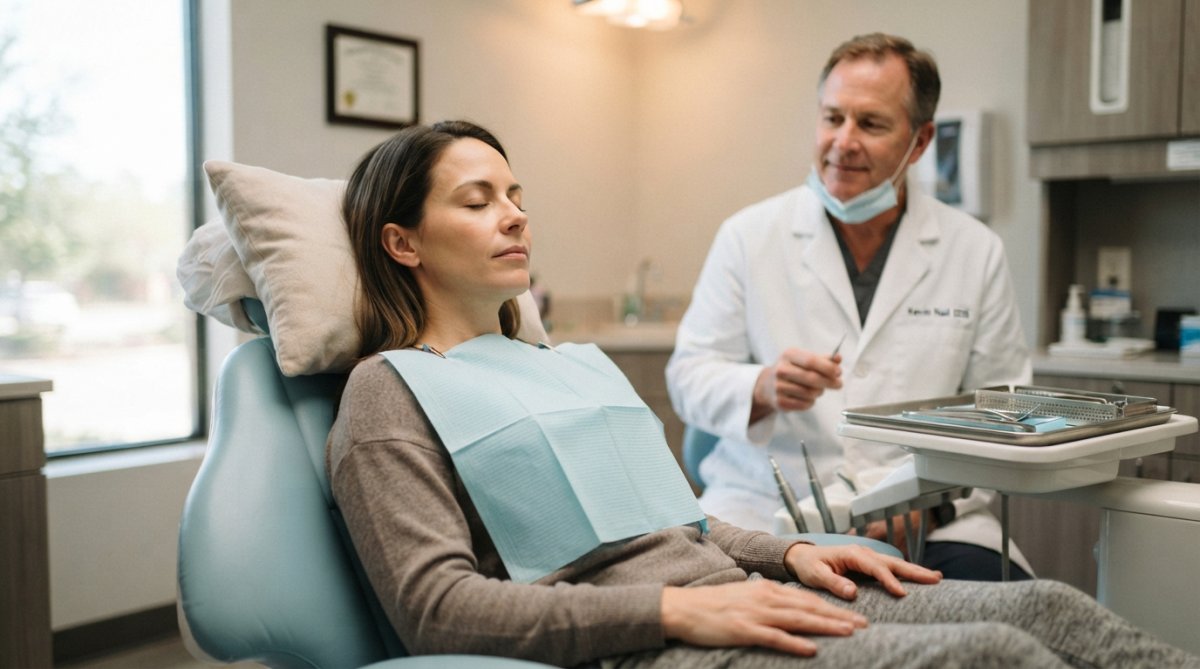
Controlled breathing is your fastest panic tool. Shallow, fast breathing signals danger to your body; controlled breathing reverses this cycle.
The 3-3-3 Grounding Technique
This technique anchors your mind to the present moment, interrupting the panic cycle quickly and working anywhere.
Here's how to do it:
- Name 3 things you can see (the ceiling light, the dentist's hands, your reflection in the overhead mirror)
- Name 3 things you can touch (the chair fabric, your own hands, the armrest)
- Name 3 things you can hear (the suction sound, background music, your own breathing)
Box Breathing During the Procedure
Box breathing works during procedures because it's subtle and keeps your nervous system calm without interfering with your dentist's work.
The pattern is simple:
- Breathe in slowly through your nose for 4 counts
- Hold for 4 counts
- Breathe out slowly through your mouth for 4 counts
- Hold for 4 counts
- Repeat 5-10 times
How to Talk to Your Dentist About Anxiety
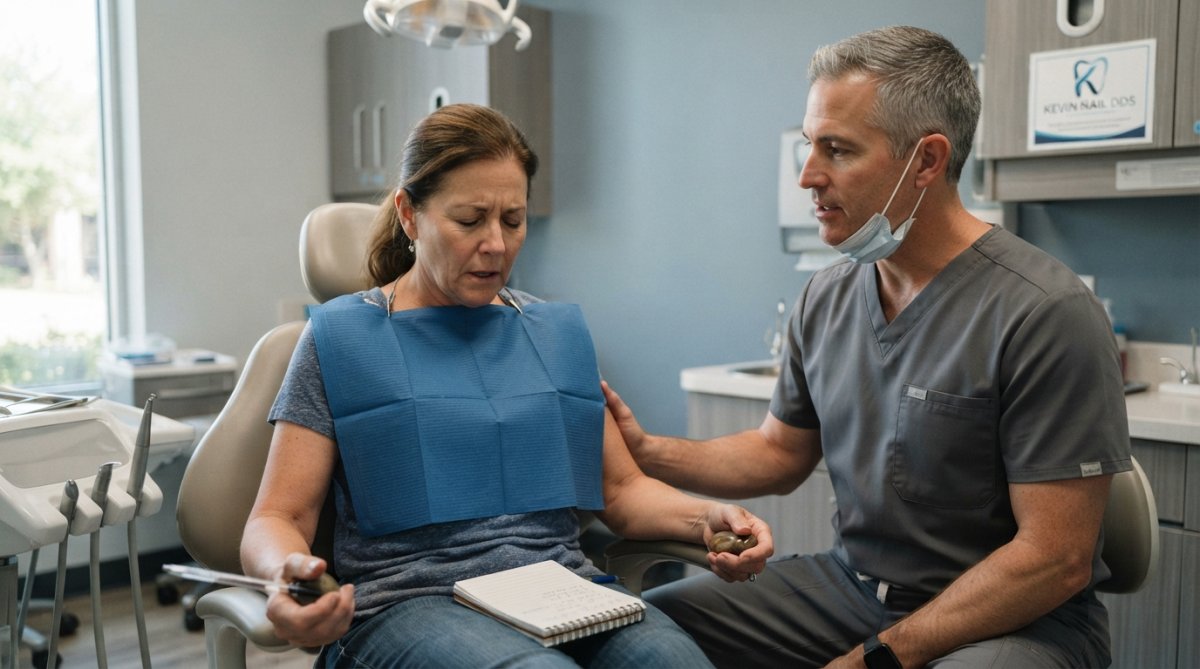
Tell your dentist you experience dental panic attacks, it's information that helps them adjust their approach, slow down, or pause when needed.
In-the-Moment Coping Techniques
In-the-moment tools restore a sense of control, which panic thrives without. These techniques reverse powerlessness.
Distraction and Guided Imagery
Distraction works because your brain has limited attention bandwidth; panic has less space to escalate when your mind is engaged elsewhere.
Practical distraction methods:
- Music or podcasts: Bring a pre-made playlist of familiar, calming content. Familiar material is more grounding than new content requiring active thinking.
- Mental counting: Count backward from 100 by threes (100, 97, 94...). This occupies your prefrontal cortex with a task that's just challenging enough to distract but not so hard it causes frustration.
- Guided imagery: Visualize a specific calm place with sensory details, the exact shade of sand, sun temperature, wave sounds, salt smell, sand texture. Spend 30 seconds anchoring each sense.
- Focal point: Ask your dentist if you can focus on a specific object in the room (a picture on the ceiling, a plant in the corner). Staring at a fixed point can interrupt the panic cycle.
Signal Systems: Establishing Real Control
A signal system works because knowing you can stop removes the sense of being trapped, often the core of dental panic, even if you never use it.
How to establish a signal system:
- Call or arrive early and ask your dentist: "I'd like to establish a signal so I can pause if needed. What works best?"
- Agree on a clear signal: raising your hand, tapping the armrest, or a specific sound.
- Clarify that the signal means "pause" (not "stop"), your dentist will remove instruments and resume when you're ready.
- Practice the signal before the procedure starts.
- Agree on a restart cue: usually a nod or "okay" when you've caught your breath.
Involving a Support Person: Practical Coordination
A trusted support person can reduce anxiety, but only with a clearly defined role. An unprepared support person can increase stress.
Before the appointment:
- Explain your anxiety and their role: "Be present and calm, not to fix anything."
- Agree they'll sit to the side or behind you, not in your line of sight.
- Establish what they should do (hold your hand, remind you to breathe, stay calm) and shouldn't (talk to the dentist, hover, offer unsolicited reassurance).
- Give them one specific job, like reminding you to do box breathing if you signal.
Box Breathing During the Procedure
Box breathing is subtle enough to use during active dental work without interfering with your dentist's access to your mouth.
The pattern:
- Breathe in slowly through your nose for 4 counts
- Hold for 4 counts
- Breathe out slowly through your mouth for 4 counts
- Hold for 4 counts
- Repeat 5-10 times
Sedation Dentistry Options for Anxiety Management
If coping strategies aren't enough, sedation dentistry helps you relax deeply so you don't experience panic.
Common sedation options include:
- Nitrous oxide (laughing gas): A mild sedative you breathe through a mask. You stay awake but feel relaxed and time seems to pass quickly.
- Oral sedation: A pill you take before your appointment. It makes you drowsy and calm, though you remain conscious.
- IV sedation: Medication given through an IV. You're deeply relaxed and may not remember much of the procedure.
Preparing for Your Appointment to Reduce Pre-Appointment Anxiety
Pre-appointment anxiety is often worse than the actual procedure. Strategic preparation reduces this buildup.
Recovery After a Panic Attack During Oral Surgery
Panic subsides within 20-30 minutes, but the aftermath, exhaustion, shame, and fear, can last days or weeks. Many patients then avoid scheduling their next appointment, delaying care and reinforcing the belief they "can't handle" dental work.
Immediate Physical Recovery (First 2 Hours)
Your nervous system remains heightened after a panic attack, with adrenaline and cortisol still circulating.
In the dental office:
- Sit for 10-15 minutes before driving; your reaction time is impaired.
- Drink water and eat a small protein-carb snack (banana with peanut butter, crackers with cheese).
- Ask your dentist to briefly review what happened; a clinical explanation helps your brain categorize it as manageable.
- Schedule your next appointment before leaving to prevent the avoidance trap.
At home (first 24 hours):
- Rest without judgment; your body needs recovery time.
- Avoid caffeine and alcohol, which prolong anxiety and disrupt sleep.
- Engage in gentle movement (walk, stretch, warm bath) to metabolize stress hormones.
- Avoid replaying the panic attack; redirect intrusive thoughts with grounding techniques.
- Sleep 1-2 hours longer than usual.
Emotional Recovery (Days 2-7)
Shame after a panic attack is a normal trauma response, not a character flaw. It thrives in silence.
Process the experience:
- Talk to a trusted person about what happened; verbalizing reduces its emotional charge.
- Write down your specific trigger (drill sound, smell, feeling trapped) to separate it from global failure.
- Remind yourself: panic is a physiological response to a perceived threat, not a personal failing.
Prevent the avoidance cycle:
- Canceling your next appointment reinforces fear. If you must reschedule, do so immediately.
- Plan something rewarding for after your next appointment to give your brain a positive anchor.
Communication with Your Dentist for Future Appointments
Schedule a brief conversation with your dentist within 3-5 days of the panic attack, while details are fresh. This is not a complaint session; it's a collaborative problem-solving meeting.
Discuss:
- What specifically triggered the panic (the sound, the sensation, loss of control, fear of pain)
- Whether you want to try a different approach next time (slower pace, more explanation, a hand signal system, sedation, or a support person present)
- Whether the panic attack revealed an underlying issue (e.g., you realized you have claustrophobia, or the anesthetic wasn't working and you felt pain)
When to Seek Additional Support
If you experience panic attacks across multiple dental visits, or if the shame and avoidance persist beyond 1-2 weeks, consider working with a therapist who specializes in anxiety or dental phobia. Cognitive-behavioral therapy (CBT) and exposure therapy have strong evidence for reducing dental anxiety and preventing future panic attacks.
Frequently Asked Questions
What is the 3-3-3 rule for managing a panic attack during a dental procedure?
The 3-3-3 grounding technique helps interrupt panic by engaging your senses. Name three things you can see, three you can hear, and three you can feel. During dental work, you might notice the overhead light, the sound of the suction tool, and the texture of the chair. This sensory awareness redirects your mind from anxiety and brings you back to the present moment, making it easier to stay calm through the procedure.
How should I communicate my dental anxiety to my dentist before treatment?
Schedule a pre-appointment consultation to discuss your anxiety openly. Explain specific triggers, past experiences, and what makes you most uncomfortable. Ask your dentist about their experience with anxious patients and what coping strategies they recommend. Discuss sedation options, signal systems, and whether a support person can be present. This conversation builds trust and allows your dentist to adjust their approach to help you feel safer and more in control during the actual procedure.
What sedation dentistry options are available for patients with severe dental anxiety?
Common sedation dentistry options include nitrous oxide (laughing gas), which keeps you relaxed but aware; oral sedatives taken before the appointment for mild anxiety; and conscious sedation for more complex procedures. Each option has different effects and recovery times. Your dentist can discuss which sedation dentistry option fits your anxiety level and the type of procedure you need. Some patients benefit from a combination approach, using breathing exercises alongside light sedation for optimal comfort.
How do I recover emotionally after a panic attack during dental work?
After a panic attack, focus on gradual recovery: take slow, deep breaths to normalize your heart rate, drink water, and rest in a quiet space if possible. Acknowledge that the panic passed and the procedure is over. Talk with your dentist about what triggered the panic so you can plan differently for future visits. Consider scheduling shorter appointments or additional sedation next time. Many patients benefit from follow-up conversations with their dentist or a therapist to process the experience and build confidence for the next appointment.