 How-to
What Is Twilight Sedation for Dental Procedures? A Patient Guide
Quick Summary
Twilight sedation is a form of dental sedation that keeps you relaxed, drowsy and often unaware of the procedure while you can still breathe on your own and respond to simple requests. It describes how deep you go rather than a single drug, and it is often given through an IV line so the level can be adjusted during treatment.
- Twilight sedation usually sits in the moderate range, sometimes sliding toward deeper sedation.
- You stay able to breathe independently and react when someone talks to you or touches your shoulder.
- A responsible adult must drive you home, since twilight sedation generally wears off within a few hours.
- Midazolam is a common short-acting sedative, but it can slow breathing when combined with alcohol or opioids.
- Most offices ask you to stop eating solid food about six to eight hours before sedation, but follow your own provider's instructions.
Table of Contents
- Defining Twilight Sedation: What the Term Actually Means
- How IV Sedation Dentistry Is Delivered During Your Appointment
- Who Is a Candidate for Twilight Sedation and Who Should Avoid It
- Is Dental Sedation Dangerous? Safety Standards, Monitoring and Risk Factors
- Medications Used, Including Midazolam for Dental Sedation
- How Long Dental Sedation Lasts and Your Appointment Timeline
- Booking Your Sedation Consultation at Kevin Nail DDS
- Frequently Asked Questions
Defining Twilight Sedation: What the Term Actually Means
Twilight sedation is a form of dental sedation that keeps you relaxed, drowsy and often unaware of the procedure, while you can still breathe on your own and respond to simple requests.
Here's the detail most people miss: twilight sedation is a description of how deep you go, not a single drug. Twilight sedation is often given through an IV line, which allows the level of sedation to be adjusted during the procedure.
Sedation depth and where twilight sits on the continuum
Sedation is best understood as a continuum rather than an on/off switch. Patients move along it depending on the medication dose and how they respond. Dental sedation generally falls into these levels:
- Minimal sedation: You're relaxed but fully awake and can respond normally.
- Moderate sedation (often called conscious sedation): You may slur your speech and remember little. You still respond to touch and verbal cues.
- Deep sedation: You're close to unconscious but can still be awakened with repeated stimulation.
- General anesthesia: You're fully unconscious and need help breathing.
Twilight sedation usually sits in the moderate range, and sometimes slides toward the deeper end. That's why your dental team watches your breathing, heart rate and oxygen levels the entire time. A clear definition of the level matters, because "sedation" on a booking form can mean very different things at different offices.
How twilight differs from general anesthesia
The biggest difference is consciousness. With general anesthesia, you're fully asleep and cannot respond to your surroundings. With twilight sedation, you stay able to breathe independently and react when someone talks to you or touches your shoulder.
Recovery also differs. General anesthesia usually requires a more involved hospital-style setup and a longer recovery. Twilight sedation generally wears off within a few hours, though you'll still need a responsible adult to drive you home.
How IV Sedation Dentistry Is Delivered During Your Appointment
IV sedation dentistry, also called intravenous sedation, means the medication goes directly into your bloodstream through a small catheter placed in a vein, usually in your hand or arm.
A typical appointment follows a general pattern:
- Before you begin: Your team reviews your medical history, current medications and any allergies. You'll confirm when you last ate or drank.
- Placing the IV: A small needle is inserted into a vein and secured with tape. Most people feel a brief pinch.
- Starting sedation: The sedative is given slowly. You'll feel relaxed and drowsy within a few minutes.
- During the procedure: A monitor tracks your heart rate, blood pressure and oxygen levels. Your dentist or an assistant checks on you throughout.
- Finishing up: Once the work is done, the IV is removed and you rest until the effects wear off enough for safe discharge.
Watch out: the sedative does not make the procedure itself easier to perform. It affects how you feel, not the dental work, so you still need to follow pre-procedure instructions closely, especially about fasting.
Who Is a Candidate for Twilight Sedation and Who Should Avoid It
Many adults with dental anxiety are good candidates. So are patients having longer or more complex procedures, and people with a strong gag reflex who struggle to sit still for treatment.
Some people need extra caution or should avoid it entirely. Your provider will likely ask about:
- Sleep apnea or other breathing problems
- Heart or lung conditions
- Liver or kidney disease
- Pregnancy
- Current medications, including sedatives, opioids, and some supplements
- Past reactions to anesthesia or sedation
- Alcohol or drug use
A clear answer to "am I a candidate?" comes only from a consultation with a qualified dental professional who reviews your health history. For guidance written specifically for nervous patients, see sedation dentistry for anxious patients.
The more useful question is often not whether sedation but which kind. Twilight IV sedation is one option on a spectrum, and the right choice depends on your anxiety level, the length and complexity of the work, your health history, and your recovery preferences:
- Nitrous oxide (laughing gas): The lightest option. You breathe it through a mask, feel relaxed within minutes, and recover quickly enough that you can often drive yourself home. It suits short, simple procedures and mild anxiety, but it may not be enough for a strong gag reflex or a long appointment.
- Oral sedation: A pill taken before the appointment. It's less invasive than an IV and can produce moderate sedation, but the dose is fixed once swallowed, so the team can't adjust it mid-procedure the way they can with an IV. Onset is slower and less predictable.
- Twilight IV sedation: The middle ground described in this article. It offers adjustable depth, quick onset, and strong memory reduction, which makes it a common choice for longer or more involved work and for patients with moderate to high anxiety. It requires an escort and a recovery day.
- General anesthesia: Full unconsciousness with breathing support, usually in a hospital-style setting. It's reserved for complex cases, very young or uncooperative patients, or specific medical needs, and it carries a longer recovery and higher logistical burden.
A common pattern is that dentists recommend stepping up the sedation ladder only as far as the procedure and the patient's comfort require.
Watch out: don't assume a practice offers every option. Ask which sedation methods the dentist is trained and equipped to provide, and whether they refer more complex cases to an oral surgeon or anesthesiologist.
Is Dental Sedation Dangerous? Safety Standards, Monitoring and Risk Factors
Dental sedation carries real risks. The main concerns are slowed breathing, low oxygen, and reactions to medications, which is why providers screen patients carefully and monitor vital signs during treatment.
Safety measures commonly used during sedation include:
- A full medical history and medication review before the appointment
- Monitoring of heart rate, blood pressure and oxygen levels
- A responsible adult to take you home
Ask any provider directly about their sedation training, their monitoring equipment and how they handle emergencies.
Here's what matters most for your own risk:
- Your health conditions affect how your body responds to sedatives.
- Your other medications can interact with sedation drugs.
- Your age and weight influence how much medication is appropriate.
Medications Used, Including Midazolam for Dental Sedation
Midazolam is one of the most common sedatives used in dental sedation dentistry. It's a short-acting medication that causes relaxation, drowsiness and memory loss of the procedure.
Midazolam is a short-acting medication, which is one reason it is used for outpatient dental visits. Still, it can slow breathing, especially when combined with other sedatives, alcohol or opioids (the FDA).
Other medications may be used depending on your needs and your provider's training.
How Long Dental Sedation Lasts and Your Appointment Timeline
The effects of twilight sedation usually last for the length of the procedure and fade over the following few hours. If cost is part of your decision, you can compare affordable sedation dentistry options in Houston before booking.
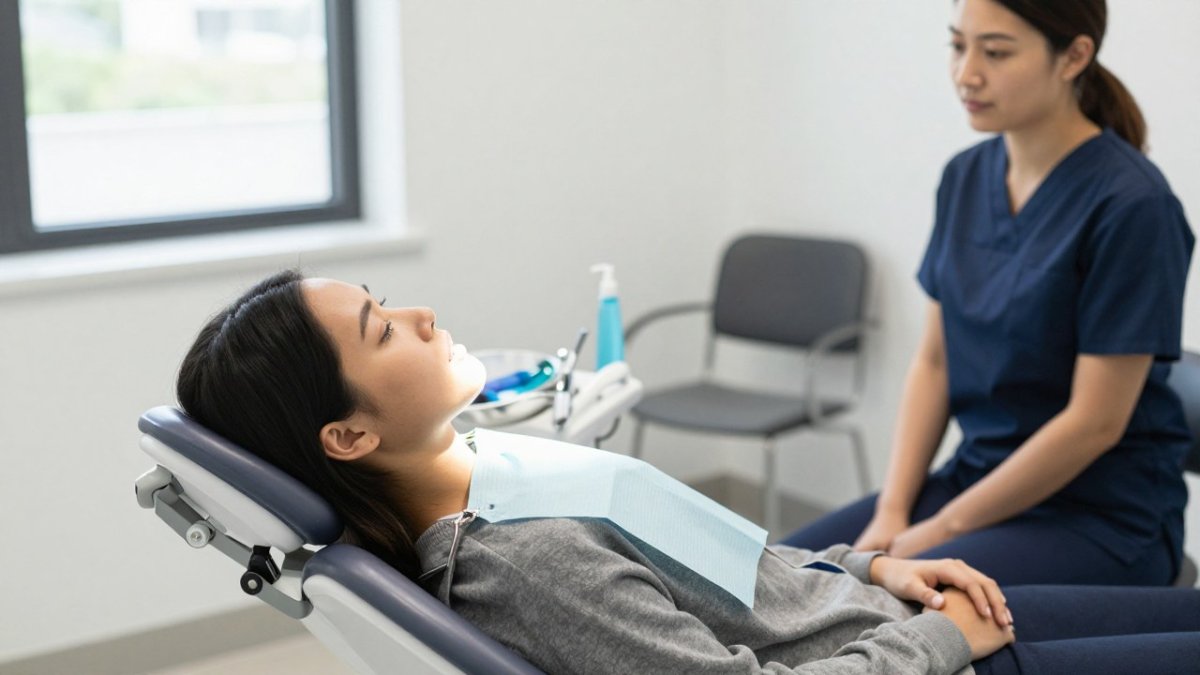
A practical timeline helps you plan the whole day, not just the chair time:
- The day before: Confirm your ride home and your caregiver's schedule. Arrange childcare or pet care if needed, and plan a light, easily digestible meal for after the appointment. Most offices ask you to stop eating solid food about six to eight hours before sedation and to stop clear liquids about two hours before; always follow your own provider's written instructions, since fasting rules vary by medication and office.
- Arrival (about 15 to 30 minutes before treatment): Check-in, paperwork, and a final review of your health history, medications, and allergies. You'll confirm when you last ate or drank. Your escort should stay on site or be reachable by phone.
- Setup and IV placement (10 to 15 minutes): A small catheter is placed in a vein, usually in the hand or arm, and secured with tape. Most people feel a brief pinch. The sedative is started slowly, and you'll feel relaxed and drowsy within a few minutes.
- Procedure: Length depends on the work being done, from under an hour for a few fillings to several hours for more involved treatment. Your team monitors heart rate, blood pressure, and oxygen saturation throughout and can adjust the dose as needed.
- Recovery in the office (typically 30 to 60 minutes after the procedure): The IV is removed and you rest until you're alert enough for safe discharge. Discharge usually requires that you can sit up, respond appropriately, and breathe normally without support; your provider makes that call, not the clock.
- Going home: Your responsible adult drives you. You should not drive, operate machinery, sign legal documents, or make important decisions for the rest of the day.
Watch out: the sedative does not make the dental work itself easier to perform, and it does not shorten the procedure.
For the rest of that day, eat light foods once your provider says it's safe, drink water, and rest. Follow all aftercare instructions carefully, and call the office if you have questions about lingering drowsiness, nausea, or pain.
Booking Your Sedation Consultation at Kevin Nail DDS
If you're considering sedation, a consultation is the best first step. At Kevin Nail DDS, Dr. Kevin Nail personally performs every procedure, and the practice offers family, cosmetic and implant dentistry in Copperfield.
It helps to bring a list of all your medications, your past experiences with anesthesia, and any questions about risks to know before IV sedation. You can also review safety questions to ask about sedation dentistry before your consultation. Call 281-550-9054 to schedule your sedation consultation.
Frequently Asked Questions
How risky is twilight sedation for dental procedures?
Twilight sedation carries risks that depend on your medical history, the medications used, and the level of monitoring during treatment. Because you may be drowsy and breathing can change, the dental team should check your vital signs, including heart rate, blood pressure and oxygen levels, throughout the appointment. Share a complete medical history, all current medications and any past reactions to sedatives before your procedure. A consultation lets the provider review whether sedation suits your health and what precautions apply to you. Your individual risk can only be judged by a qualified professional.
Are you asleep during twilight sedation?
Most patients are not fully asleep. Twilight sedation produces a semi-awake state in which you are drowsy and relaxed, can often respond to simple instructions, and may have little memory of the procedure afterward. Depth varies with the medication dose and your individual response. Your dental team adjusts the level during treatment to keep you comfortable while maintaining safe breathing and monitoring. Ask your provider to explain the expected sedation level for your specific appointment.
How long does it take to recover from dental sedation?
Most patients need a responsible adult to drive them home and stay with them for the rest of the day. Drowsiness usually wears off over several hours, though some people feel groggy longer depending on the medication and dose. Follow the pre-procedure fasting instructions and the aftercare guidance you receive at discharge. Avoid driving, operating machinery and making important decisions until your provider confirms you have recovered. Recovery from the dental procedure itself is a separate timeline your dentist will explain.
What should you ask your dentist before choosing sedation?
Ask about the sedation level you will reach, the medications used, including whether midazolam for dental sedation is part of the plan, and how breathing and vital signs are monitored. Confirm who will administer the sedation, what qualifications and training the provider has, and what emergency equipment is available. Ask how long the effects will last, what you must do before arriving, and who must accompany you home. Request a written plan so you know exactly what to expect.