 How-to
Are Early Dental Visits Worth It for Kids?
Last Updated: November 14, 2026
Quick Summary
Early dental care helps children protect baby teeth, guide healthy jaw development, and catch tooth decay while treatment is still simple. Most children should have a first dental visit by their first birthday, or within six months after the first tooth appears.
- Baby teeth hold space for adult teeth and help with chewing and speech.
- Wipe your baby's gums with a clean, damp cloth after feeding, even before teeth appear.
- Schedule the first dental visit by the first birthday or within six months of the first tooth.
- Children with a family history of cavities or visible white spots may need an earlier visit.
- Use a pea-sized amount of fluoride toothpaste for ages 3 to 6, and have a parent supervise brushing.
Table of Contents
- Why Early Dental Care Matters for Children
- When to Start Oral Care for Baby
- When Your Child Should Have a First Dental Visit
- How Early Visits Help Prevent Cavities and Tooth Decay
- Building Daily Oral Hygiene for Kids
- Dental Hygiene for Kids Activities That Make Brushing Fun
- Booking Your Child's First Visit With Kevin Nail DDS
- Frequently Asked Questions
Why Early Dental Care Matters for Children
Early dental care gives children a head start on healthy teeth and gums.
A baby's first teeth, called primary teeth or baby teeth, do more than look cute. They hold space for adult teeth, help with chewing and speech, and guide the jaw as it grows.
Early care also helps families spot trouble sooner. A dentist can watch how teeth come in, check for early signs of tooth decay, and give simple advice that fits the child's age.
- Protects baby teeth until adult teeth come in
- Helps guide healthy jaw and tooth development
- Catches early tooth decay while treatment is simple
- Builds comfort with the dentist before fear sets in
When to Start Oral Care for Baby
You can start oral care before the first tooth appears. After feeding, gently wipe your baby's gums with a clean, damp cloth or soft gauze. This removes milk and bacteria that can cause early decay.
Once the first tooth comes in, switch to a soft infant toothbrush. Use only a tiny smear of fluoride toothpaste, about the size of a grain of rice.
Watch for these everyday habits:
- Wipe gums before the first tooth appears
- Brush with a soft brush once teeth start to show
- Limit sugary drinks and snacks between meals
- Never dip a pacifier in honey or sugar
When Your Child Should Have a First Dental Visit
Most families should schedule a first dental visit by the child's first birthday, or within six months after the first tooth comes in, whichever comes first. This timing is not arbitrary. Pediatric dental organizations generally recommend this timing because decay can start as soon as the first tooth erupts, and an early visit lets the dentist catch problems while they are still small and easy to manage. Because an early visit also gives parents a chance to ask about brushing, feeding, and other ways to protect new teeth, pediatric dental FAQs can help clarify the questions that often come up along the way.
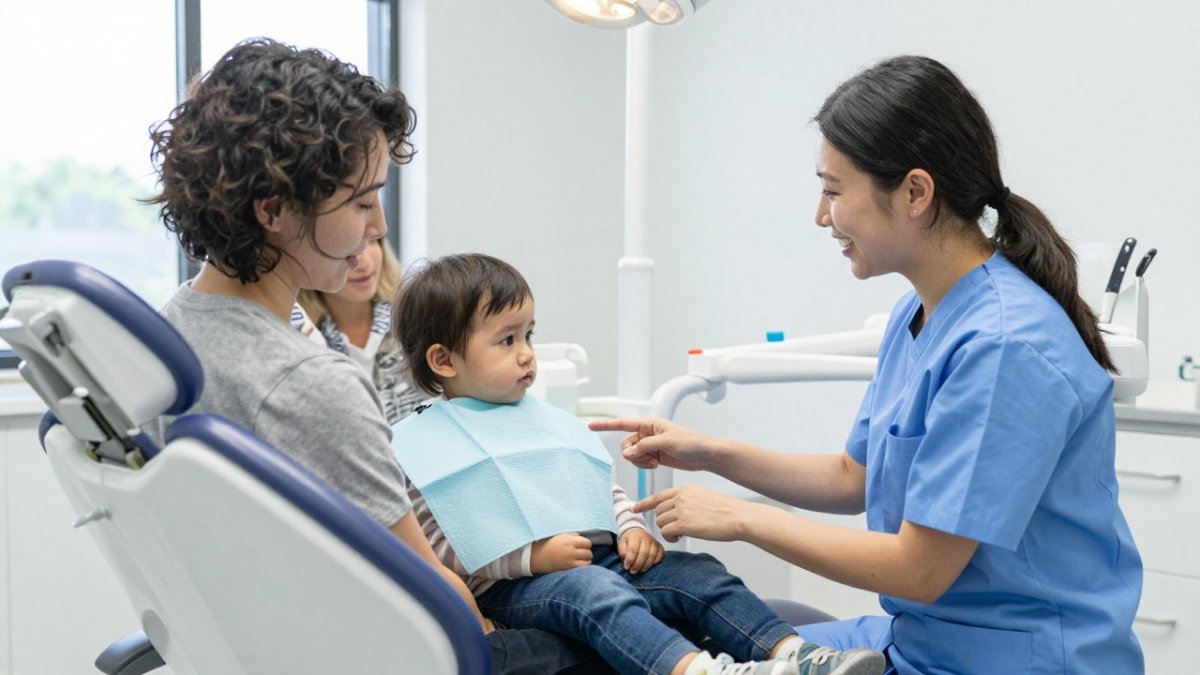
The first visit is usually short and low-key. It is mostly about checking development, looking for early decay, and showing your child what the dentist looks like. Many children do not need any treatment at that first visit. A typical appointment includes:
- A review of your child's health history, feeding habits, and any fluoride exposure
- A lap exam, where your child sits on your lap while the dentist looks at the teeth and gums
- A gentle cleaning if teeth are present
- A conversation about brushing, bottle use, and sippy cups
- A plan for when to return, based on your child's risk level
Some children need to be seen sooner
A first birthday is the default, but it is not the right timing for every child. Talk with your dentist about an earlier visit if any of the following apply:
- A family history of cavities in parents or siblings
- Special health needs that affect feeding, swallowing, or oral care
- Frequent sugary drinks, juice in a bottle, or prolonged bottle use
- Visible white spots, brown spots, or plaque on the teeth
- A chipped or injured tooth
- A child who snores, mouth-breathes, or has trouble chewing
Children at higher risk may need checkups more often than every six months, as a dentist determines. That is a risk-based plan, not a one-size-fits-all schedule, and it is one of the main reasons an early visit matters.
How to prepare for the first visit
Preparation makes the difference between a calm appointment and a stressful one. A few concrete steps help:
- Book the visit for a time when your child is usually rested and fed, not during nap time
- Bring a list of questions and a short note on feeding, brushing, and any habits like thumb-sucking
- Bring your child's insurance card and any prior dental records
- Let your child bring a comfort item, such as a stuffed animal or blanket
- Use simple, positive words, say "the dentist will count your teeth" rather than "it won't hurt"
- Avoid promising treats for being brave, which can signal that the visit is something to fear
Watch out: Avoid promising your child that nothing will be done during the visit. If a cleaning or fluoride varnish is needed, that promise breaks trust and makes the next visit harder.
What happens after the first visit
Most children return for periodic checkups and cleanings, and the dentist will track how teeth are coming in, watch for early decay, and adjust the schedule if risk factors change.
If you are comparing practices, ask how the office handles young children, whether they use a lap exam, and how they decide on visit frequency.
The article lays out when a child should first see a dentist and which factors can call for an earlier visit.
| Situation | Timing | Note |
|---|---|---|
| Standard first visit | By first birthday, or within 6 months of first tooth | Whichever comes first |
| Family history of cavities | Sooner than standard | Discuss earlier visit with dentist |
| Visible white or brown spots | Sooner than standard | Early sign of decay |
| Frequent sugary drinks or bottle use | Sooner than standard | Raises cavity risk |
| Chipped or injured tooth | Sooner than standard | Needs prompt attention |
| Higher-risk children | More often than every 6 months | Set by dentist's risk-based plan |
How Early Visits Help Prevent Cavities and Tooth Decay
Cavities are one of the most common chronic childhood conditions. Early visits give the dentist a chance to spot decay before it grows.
Regular checkups matter because a child's mouth changes quickly. A dentist can track how each tooth is coming in and whether plaque is building up in hard-to-reach spots.
Good prevention also depends on daily habits. Most cavities form when sugary foods and plaque sit on the teeth for long periods.
Fluoride treatments and dental sealants
Fluoride strengthens tooth enamel and helps teeth resist decay (the CDC). Fluoride varnish is one preventive option some dental providers discuss, especially for children at higher risk of cavities. Ask your dentist whether this makes sense for your child.
Dental sealants are thin protective coatings placed on the chewing surfaces of back teeth. Those grooves are hard to clean with a toothbrush, so sealants help block food and plaque.
Building Daily Oral Hygiene for Kids
Good home care does most of the work, but the details change as a child grows. Toothpaste amount, brushing technique, and how much a parent needs to help all shift by age. The guidance below is a practical, age-by-age starting point.
Age-by-age home care
Before the first tooth (0-6 months): Wipe the gums with a clean, damp cloth or soft gauze after feeding. No toothpaste is needed. This removes milk and bacteria that can cause early decay.
Ages 3 to 6: Use a pea-sized amount of fluoride toothpaste. Brush twice a day for about two minutes.
Ages 6 to 9: Children can brush with less help, but a parent should check the results and help with flossing.
Ages 9 and up: Most children can brush and floss independently, but a parent should still spot-check and keep the routine consistent. Continue fluoride toothpaste and regular checkups.
Toothpaste, flossing, and the habits that matter
Fluoride toothpaste is the single most important home-care tool. Use the amount that matches your child's age, and do not let young children swallow toothpaste. For children under 3, a smear is enough; for ages 3 to 6, a pea-sized amount is the standard.
Flossing matters once any two teeth touch, which often happens between the back molars. Many children need help with flossing until they are old enough to do it carefully, usually around age 8 to 10.
A simple daily routine helps:
- Brush twice a day for about two minutes
- Floss once a day, once teeth touch
- Drink water between meals
- Limit sugary drinks and sticky snacks
- Schedule regular dental checkups
Risk-based adjustments
A child's risk level should shape home care, not just the dental office schedule.
Children at lower risk may need only standard twice-daily brushing and routine checkups. The key is to ask your dentist what risk level your child is in and what that means for home care.
Keep toothpaste out of reach and supervise brushing sessions for young children, since swallowing toothpaste is not recommended.
Dental Hygiene for Kids Activities That Make Brushing Fun
Children are more likely to brush well when it feels like a game.
Brushing together also helps. When a parent brushes alongside a child, the routine feels normal and shared. Praise effort, not perfection, and keep the mood light.
For dental anxiety, talk about the dentist in calm, simple words. Read a book about going to the dentist, or play "dentist" at home with a stuffed animal.
Booking Your Child's First Visit With Kevin Nail DDS
Choosing a dentist for your child is a big decision. You can meet our caring team to see who will be there to greet your child and answer your questions.
Families in the Houston area who are also interested in our kid-friendly offers can explore our official dental partner program for Prodigy Baseball families, which includes a free VIP membership plan for players and their families.
If you are still comparing practices, our guide on choosing a private dental practice covers what matters most when picking a dentist for your child. Parents looking for a pediatric specialist can also read our overview of pediatric dentist reviews in Copperfield before deciding. And if your child has PPO coverage, our walkthrough of steps to verify pediatric PPO coverage can help you avoid surprise bills before the first appointment.
To book your child's first visit, call Kevin Nail DDS at 281-550-9054. Early care now means fewer problems later, and a positive first experience helps your child feel confident about dental care for years to come.
Frequently Asked Questions
Should my 2-year-old go to the dentist?
Yes, a first visit around age two or when the first tooth appears is widely recommended by pediatric dental organizations. At this stage the visit is mostly about checking tooth development, reviewing feeding and brushing habits, and making the office feel familiar. Children usually sit on a parent's lap for a short exam. Early visits also give the dentist a chance to spot risk factors such as frequent sugary drinks or bottle use at bedtime, which can be addressed before problems start. Your child's dentist can tell you how often to return based on their individual needs.
How can early dental visits help prevent cavities?
Early visits let the dentist check for early signs of tooth decay and apply preventive treatments such as fluoride varnish when appropriate. Regular checkups also give parents guidance on brushing technique, toothpaste amount and diet. Dental sealants, which cover the chewing surfaces of back teeth, can be placed once permanent molars come in. Because cavities are easier to manage when caught early, consistent visits often mean simpler, less invasive care over time. A dentist can recommend a schedule that fits your child's risk level.
When should parents start brushing a baby's teeth?
Parents can begin cleaning a baby's gums with a soft, damp cloth before teeth appear. Once the first tooth erupts, brush it twice a day with a soft infant toothbrush and a rice-grain-sized smear of fluoride toothpaste. As more teeth come in, a pea-sized amount is typically recommended for children aged three and older. Avoid putting babies to bed with bottles containing milk or juice, since sugars can pool around the teeth. Supervise brushing until your child can spit reliably, usually around age six.
What happens during a child's first dental visit?
A first visit is typically short and relaxed. The dentist or hygienist examines the teeth, gums and bite, checks for early decay and may clean the teeth gently. The provider may count teeth, look at how the jaw is developing and talk with parents about brushing, diet and any habits such as thumb sucking. Children are usually introduced to the tools slowly, and parents are welcome to stay nearby. Questions about your child's specific situation are best answered during the appointment.