 how-to
How to Choose the Best Cosmetic Dentist for Veneers
Table of Contents
- Credentials and Qualifications Every Cosmetic Dentist for Veneers Should Have
- How to Read Before and After Veneer Galleries Like an Expert
- Cosmetic Dentistry Consultation Questions You Should Always Ask
- Veneer Materials: Porcelain, Zirconia, and Composite Bonding Compared
- Porcelain Veneers Cost and Financing Options
- Veneer Procedure Recovery Time and Long-Term Maintenance
- Choosing the Best Cosmetic Dentist for Veneers: Final Decision Checklist
- Conclusion
Last Updated: August 24, 2026
Most people spend more time researching a new car than vetting the dentist who will permanently alter their teeth. Knowing how to choose the best cosmetic dentist for veneers is one of the most consequential decisions you'll make for your smile, oral health, and budget. Veneers involve removing a thin layer of enamel, a largely irreversible process. Choosing the wrong provider can mean compromised bite alignment, premature veneer failure, or structural damage to healthy teeth. This guide breaks down every factor that matters, from clinical credentials to materials and technology, so you can walk into any consultation with confidence.
Credentials and Qualifications Every Cosmetic Dentist for Veneers Should Have
Credentials separate a dentist who has placed a few veneers from one who has built a clinical practice around aesthetic dentistry.
Board Certification and Professional Associations
Cosmetic dentistry is not a recognized specialty under the American Dental Association, which means any licensed dentist can legally market themselves as a cosmetic provider. Professional associations are the most reliable proxy for demonstrated commitment to the field. Look for membership in the American Academy of Cosmetic Dentistry, which offers accreditation through rigorous peer-review involving clinical case submissions and examinations. Fellowship status in the Academy of General Dentistry, which requires at least 500 hours of continuing education plus a comprehensive examination, is another strong signal. According to the American Dental Association's guidance on specialty designations, patients should verify any specialty claim carefully because cosmetic dentistry has no ADA-recognized specialty board.
Continuing Education in Aesthetic Dentistry
Materials and techniques in cosmetic dentistry evolve quickly. Ask directly: how many hours of continuing education in aesthetic dentistry have they completed in the past three years, and through which institutions? Reputable programs from dental schools, the Dawson Academy, or the Kois Center signal that the dentist is actively refining their expertise.
How to Read Before and After Veneer Galleries Like an Expert
Before-and-after galleries are the single most informative tool available to prospective patients, but most people look at them the wrong way.
What Natural-Looking Results Actually Look Like
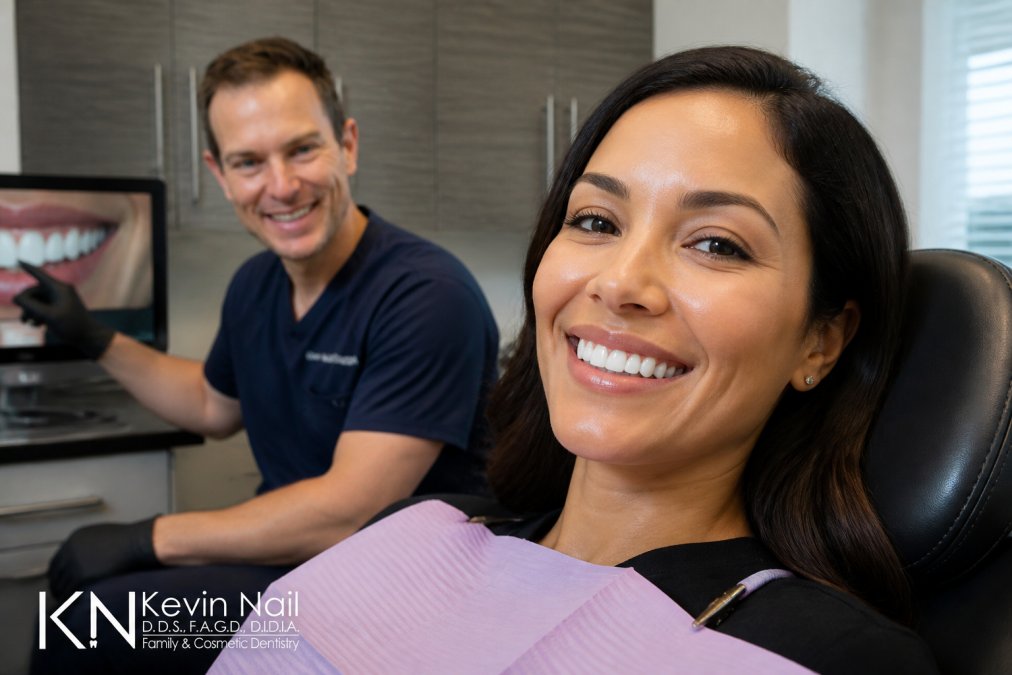
The goal of a skilled cosmetic dentist is to make veneers look like your teeth, only better. When reviewing a gallery, focus on three things. First, translucency: natural teeth are not uniformly opaque, and incisal edges should show subtle light transmission. Veneers that look like white tiles signal poor laboratory work or shade selection. Second, proportion: central incisors are typically the widest and longest teeth visible in a full smile. If all teeth look the same size, the result appears artificial. Third, gum line symmetry: soft tissue framing each tooth should be even and healthy.
Ask whether photos are of the dentist's own patients or sourced from a dental laboratory portfolio. Insist on seeing cases similar to your starting point, not just the most dramatic transformations.
Cosmetic Dentistry Consultation Questions You Should Always Ask
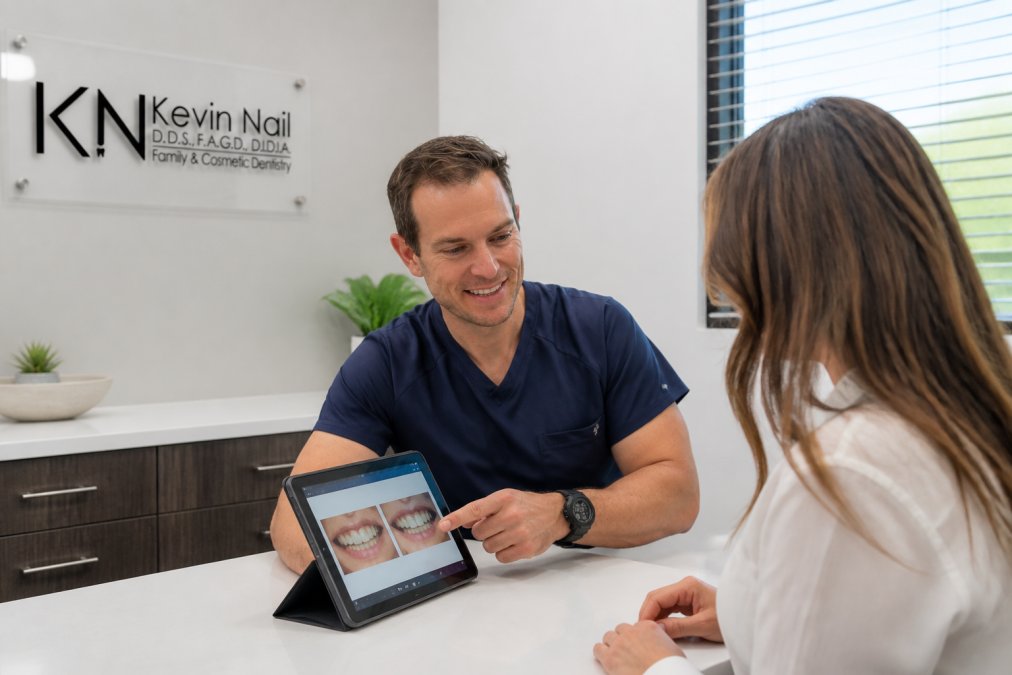
A consultation is an audition, not a sales meeting. The questions you ask reveal as much about the dentist's approach as the answers do.
Come prepared with these:
- How many veneer cases do you complete per year? Volume matters. Regular placement refines technique in ways occasional practitioners haven't achieved.
- Which dental laboratory do you use, and can I see examples of their work? The ceramist who fabricates the veneers is as important as the dentist who prepares the teeth.
- Will you use a Digital Smile Design preview before any preparation? This is non-negotiable for any thoughtful treatment plan.
- How much enamel will you remove, and why? The answer should be precise, not vague.
- What happens if a veneer chips or debonds five years from now? The response reveals the dentist's long-term commitment to their work.
- Do you assess occlusion and bite alignment before placing veneers? Veneers placed without occlusal analysis are prone to premature failure.
Red Flags to Watch For During the Consultation
A rushed consultation is the clearest warning sign. If the dentist proposes a treatment plan before completing a full examination, that's a problem. Other red flags include: no discussion of enamel preparation depth, no mention of the dental laboratory partner, pressure to commit to many veneers immediately, and before-and-after photos that look identical regardless of starting condition. Any dentist who dismisses your questions is telling you something important about how they'll treat you after payment.
Veneer Materials: Porcelain, Zirconia, and Composite Bonding Compared
The material your dentist recommends reveals their clinical philosophy and familiarity with current dental materials.
| Material | Typical Lifespan | Enamel Removal | Best For |
|---|---|---|---|
| Porcelain (lithium disilicate) | 10-20 years | Minimal to moderate | Natural aesthetics, front teeth |
| Zirconia | 15-25 years | Moderate | Durability, bruxism cases |
| Composite bonding | 5-7 years | Minimal to none | Minor corrections, lower cost |
Porcelain veneers, particularly lithium disilicate, remain the gold standard for smile aesthetics. The material mimics light-reflecting properties of natural enamel better than alternatives, and a skilled ceramist can match translucency and shade with remarkable precision.
Zirconia is exceptionally strong, appropriate for patients who grind their teeth or have a heavy bite. The trade-off is that zirconia is more opaque than porcelain, which can look less natural on front teeth. A dentist recommending zirconia for every case without discussing this trade-off is prioritizing durability over aesthetics.
Composite bonding is a direct, chairside alternative requiring little to no enamel removal. It's reasonable for minor corrections and carries lower cost. The limitation is longevity: composite stains and chips more easily than porcelain, requiring replacement within five to seven years.
Veneer Reversibility and Enamel Prep: What No One Tells You
Once enamel is removed to prepare a tooth for a veneer, that tooth will require coverage for life. Enamel does not regenerate. This means your relationship with your cosmetic dentist and with veneers is permanent.
The amount of enamel removed varies significantly by technique. Minimal prep and no-prep veneers require little to no enamel reduction. Traditional preparations involve removing roughly 0.5 to 0.7 millimeters from the front surface. Ask your dentist specifically how much reduction they plan and why. A dentist who cannot answer precisely has not thought carefully enough about your case. According to the American Academy of Cosmetic Dentistry, minimal prep approaches are appropriate for select cases and require careful patient selection.
Digital Smile Design and the Role of Advanced Dental Technology
Digital Smile Design involves photographing and scanning the patient's face, teeth, and gum line, then using specialized software to design the final smile in proportion to unique facial features before any preparation begins. The patient sees a realistic preview, approves the design, and the dentist uses that approved design as the blueprint for preparation and laboratory fabrication.
Practices using intraoral scanners alongside Digital Smile Design eliminate traditional impression materials, improving accuracy and patient comfort. Scan data goes directly to the dental laboratory, reducing error in fit and shade matching. Ask whether the dentist's workflow includes digital scanning and smile design previews.
Porcelain Veneers Cost and Financing Options
Porcelain veneers are a significant financial investment. Pricing varies based on the number of veneers, material selected, dental laboratory used, and the dentist's expertise and geographic market. Contact Kevin Nail DDS directly for current pricing specific to your case.
Insurance vs. Cosmetic Out-of-Pocket: What to Expect
Dental insurance almost universally classifies veneers as cosmetic, meaning they are not covered under standard PPO plans. There are narrow exceptions: if a tooth is structurally compromised and a veneer is clinically appropriate, a portion may be eligible for coverage. Your dentist's billing team can review your specific plan and submit a pre-authorization request.
For out-of-pocket costs, many practices offer third-party financing through CareCredit or Lending Club Patient Solutions, allowing patients to spread costs over time. As noted in guidance from the Consumer Financial Protection Bureau on medical financing, patients should review full terms of any deferred-interest financing carefully, as interest can accumulate retroactively if the balance is not paid within the promotional period.
Veneer Procedure Recovery Time and Long-Term Maintenance
Veneer procedure recovery time is generally short. Most patients experience mild sensitivity for a few days after preparation, particularly to temperature. Once final veneers are bonded, sensitivity typically resolves within one to two weeks. There is no surgical recovery involved.
Long-term maintenance is straightforward but requires consistency. Porcelain veneers are resistant to staining but not immune at the margins where the veneer meets the natural tooth. Brush twice daily with non-abrasive toothpaste, floss carefully around veneer margins, and attend regular professional cleanings. Patients who grind their teeth should wear a custom night guard to protect veneers from excessive occlusal force, the primary mechanical cause of veneer fracture. Avoid biting directly into very hard foods with veneered teeth.
With proper care, porcelain veneers routinely last well over a decade.
Choosing the Best Cosmetic Dentist for Veneers: Final Decision Checklist
Use this checklist before committing to any provider.
| Evaluation Criteria | What to Verify | Why It Matters |
|---|---|---|
| Credentials | AACD membership, FAGD, or equivalent | Signals sustained commitment to cosmetic dentistry |
| Before-and-after gallery | Dentist's own patients, similar cases to yours | Confirms real-world aesthetic outcomes |
| Consultation depth | Full exam, occlusal assessment, no rushed proposal | Reflects clinical rigor |
| Material transparency | Specific material recommendation with rationale | Ensures material suits your case |
| Laboratory partner | Named lab with verifiable quality | Ceramist quality drives final appearance |
| Digital workflow | Intraoral scanner, Digital Smile Design preview | Reduces error, improves predictability |
| Enamel prep discussion | Specific depth explained, minimal prep considered | Protects your long-term dental health |
| Financing clarity | Full terms disclosed, no pressure | Protects your financial decision |
- Dentist has verifiable continuing education in aesthetic dentistry
- Gallery shows cases similar to your starting condition
- Consultation included a full dental health assessment
- Material recommendation was explained with clinical reasoning
- Enamel preparation depth was discussed specifically
- Digital Smile Design or diagnostic wax-up was offered
- Dental laboratory partner was identified by name
- Financing terms were explained in full without pressure
- Post-treatment maintenance plan was discussed
- You felt heard and not rushed at any point
The American Academy of Cosmetic Dentistry's consumer resources offers additional guidance on finding accredited cosmetic providers.
Choosing the right cosmetic dentist for veneers requires more than reading reviews and liking a before-and-after photo. Clinical decisions made during preparation, material selection, and bite analysis determine whether your veneers look natural, function correctly, and last for years. Kevin Nail DDS brings a patient-focused approach to every cosmetic case, with Dr. Nail personally performing every procedure and a commitment to minimally invasive technique that protects your long-term dental health. To discuss your smile goals and find out whether veneers are the right solution for you, call Kevin Nail DDS at 281-550-9054.
Frequently Asked Questions
What type of dentist is best for veneers?
A general dentist with documented postgraduate training in cosmetic and aesthetic dentistry is fully qualified to place veneers. Look for fellowship or diplomate status from recognized organizations such as the Academy of General Dentistry (FAGD), evidence of continuing education in smile design, and a portfolio of real patient cases. Clinical expertise and hands-on experience with porcelain veneers matter more than a specialist title alone. Always ask how many veneer cases the dentist completes per year.
What questions should I ask during a veneer consultation?
Ask which veneer material the dentist recommends for your case and why, how much enamel will be removed, whether a Digital Smile Design preview is available, how the lab relationship works, and what happens if a veneer chips or debonds after placement. Also ask about the full treatment timeline, veneer procedure recovery time, and what maintenance the final result requires. These cosmetic dentistry consultation questions separate thorough clinicians from those offering a one-size-fits-all approach.
Does dental insurance cover porcelain veneers?
Porcelain veneers are classified as a cosmetic procedure by most PPO insurance plans, which means they are typically excluded from coverage. In rare cases where a veneer restores a structurally damaged tooth, partial coverage may apply, but this is uncommon. Porcelain veneers cost varies by case complexity, material, and the number of teeth treated. Most practices offer third-party financing plans to spread the out-of-pocket investment. Confirm your specific plan details directly with your insurer before scheduling treatment.
What should I look for in a cosmetic dentist's portfolio?
Before and after veneer galleries should show cases similar to your own starting point, not just dramatic transformations on already-healthy teeth. Look for consistent color matching across multiple teeth, natural gum line contours, and results that complement the patient's facial features rather than appearing uniformly bright. Ask whether the photos are of the dentist's own patients or stock images.
This article was written using GrandRanker