 how-to
How to Handle Dental Appointment Jitters: 2026 Guide
Table of Contents
- Understanding Dental Appointment Jitters and Anticipatory Anxiety
- Dental Anxiety Management Techniques: Deep Breathing, PMR, and Guided Imagery
- How to Talk to Your Dentist About Anxiety Before Your Visit
- Sedation Dentistry Options: From Nitrous Oxide to Oral Sedation
- Sensory-Friendly Dental Modifications and Distraction Techniques
- Financial Anxiety, Pediatric-to-Adult Transition, and Post-Appointment Recovery
- Conclusion: Building a Long-Term Plan for Dental Appointment Jitters
- Frequently Asked Questions
Last Updated: September 28, 2026
Understanding Dental Appointment Jitters and Anticipatory Anxiety
Dental appointment jitters are the nervous, uneasy feelings people get before a dental visit, and they often start days before the appointment even begins. This guide from Kevin Nail DDS walks you through proven ways to calm those feelings and take back control.
That pre-visit worry has a name: anticipatory anxiety. It's the mind rehearsing a feared event before it happens. The American Dental Association's patient resources notes that fear of pain and loss of control are two of the most common triggers.
Here's the good news. Jitters are learned, and learned responses can be unlearned.
Below, we'll show you exactly how to handle dental appointment jitters using breathing, communication, and comfort planning. Most people never try more than one of these tools. That's the mistake.
Dental Anxiety Management Techniques: Deep Breathing, PMR, and Guided Imagery
Dental anxiety management techniques work best when you practice them before you need them. The three most reliable are deep breathing, progressive muscle relaxation, and guided imagery.
Start at home, not in the waiting room. A skill you've rehearsed ten times is a skill your body already knows.
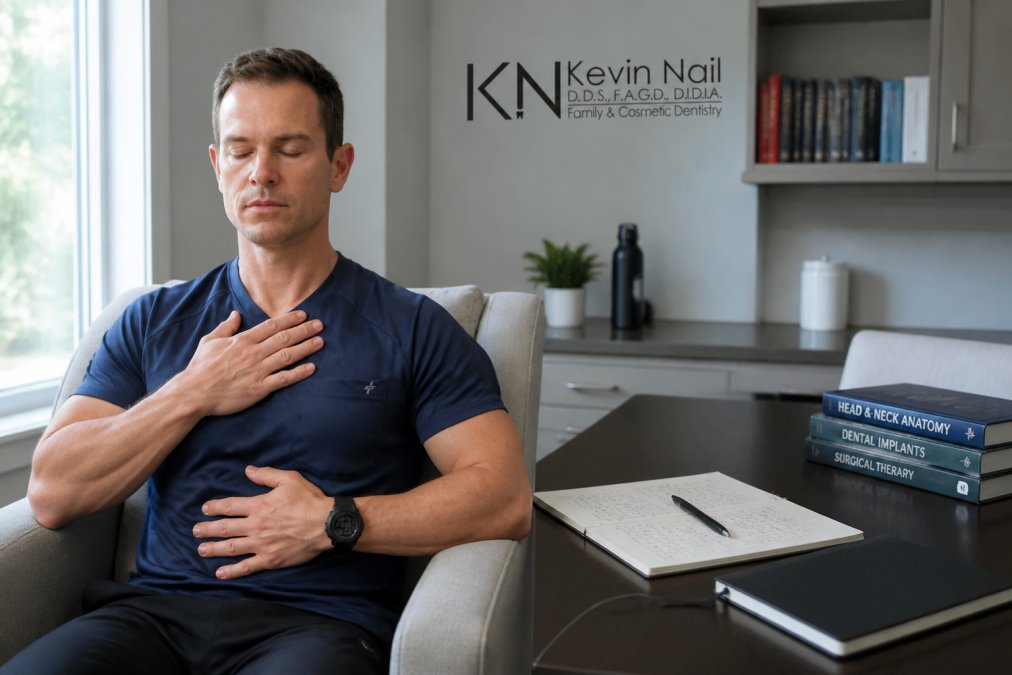
Deep Breathing Exercises You Can Start in the Waiting Room
Try box breathing: inhale for four counts, hold for four, exhale for four, hold for four. Repeat for two minutes.
This slows your heart rate and signals safety to your nervous system. A common mistake is breathing too fast and shallow. Slow it down.
Progressive Muscle Relaxation and Guided Imagery at Home
Progressive muscle relaxation (PMR) is the practice of tensing and then releasing each muscle group, one at a time. Start with your feet and work upward.
Guided imagery means picturing a calm, detailed place. A beach, a forest, your own backyard. Make it specific: sounds, smells, temperature.
- Practice PMR for 10 minutes nightly for a week before your visit
- Pair it with slow breathing, not instead of it
- Use the same imagery every time so it becomes automatic
How to Talk to Your Dentist About Anxiety Before Your Visit
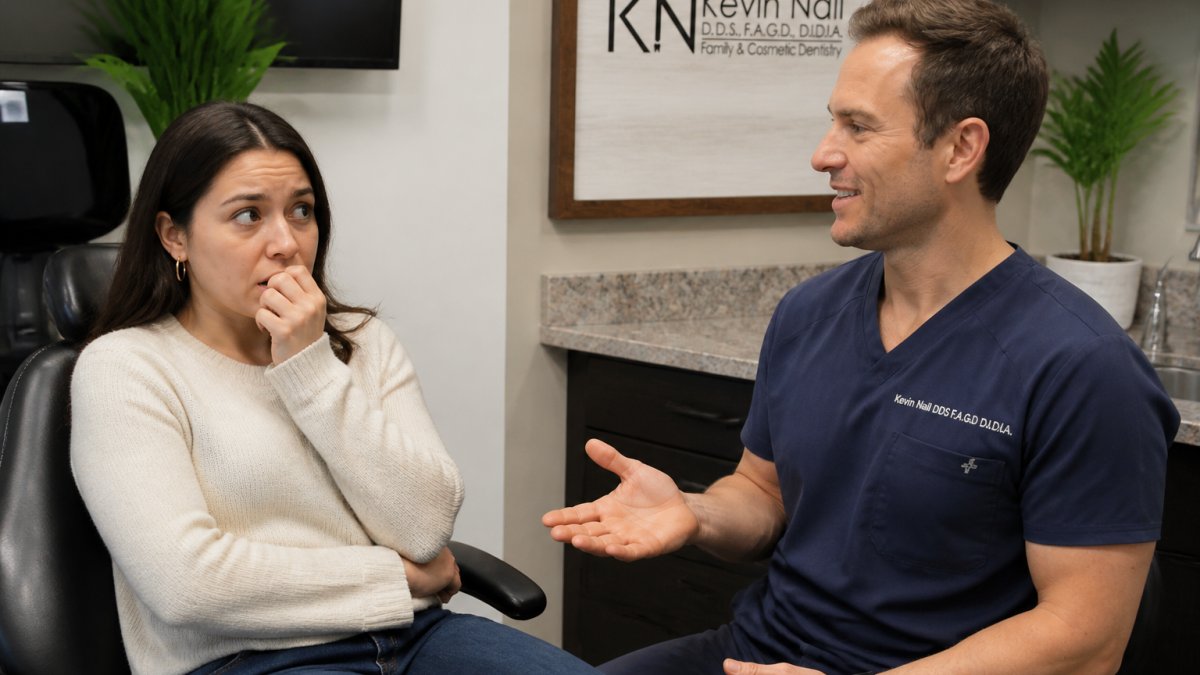
Talking to your dentist about anxiety is the single most effective step, and it's the one people skip most often. Call or message the office before your appointment and say plainly: "I get anxious at the dentist."
That one sentence changes how the dental team prepares for you. It's not a weakness. It's useful clinical information.
Using a Hand Signal and Building a Comfort Plan
Agree on a hand signal that means "stop" or "pause." A raised hand works. This gives you control without needing to speak mid-procedure.
Then build a comfort plan together. A comfort plan is a short, written list of what helps you and what doesn't.
- Your agreed hand signal
- Music, headphones, or silence
- Breaks every few minutes
- What to explain before each step
Sedation Dentistry Options: From Nitrous Oxide to Oral Sedation
Sedation dentistry options range from mild to moderate, and the right one depends on your anxiety level, health history, and the procedure itself. The goal is not to put you to sleep, it's to lower your arousal enough that the appointment stops feeling like a threat.
Nitrous oxide, often called laughing gas, is inhaled through a small mask placed over your nose. You stay awake and responsive, but the edge comes off. The key advantage is titration: your dentist can dial the flow up or down minute by minute, and the effect clears within minutes of removing the mask. That fast on/off is why most patients who use it can drive themselves home afterward.
Oral sedation uses a prescribed pill, typically a benzodiazepine, taken before the appointment, often the night before for longer visits, or about an hour prior for shorter ones. It produces deeper relaxation and often some grogginess. Because the drug is already in your system and can't be dialed back, you'll need someone to drive you and stay with you for a few hours.
IV sedation delivers medication directly into the bloodstream, which allows the deepest level of moderate sedation and the fastest adjustments. It requires a dedicated monitor and, in most practices, a staff member whose only job is watching your vitals. You will not remember much of the appointment, and you will need a driver.
| Option | How It's Given | Onset | Awareness Level | Drive Yourself? |
|---|---|---|---|---|
| Nitrous oxide | Inhaled mask | Seconds to minutes | Relaxed, awake | Usually yes |
| Oral sedation | Pill before visit | 30-60 minutes | Drowsy, relaxed | No |
| IV sedation | Intravenous line | Near-immediate | Deeply relaxed | No |
A few candidacy rules matter more than patients expect. Nitrous oxide is generally avoided during pregnancy, and it isn't a good fit if you have a cold or any condition that makes nasal breathing difficult. Oral and IV sedation require a review of every medication you take, including over-the-counter supplements, because respiratory depression is the main risk. A U.S. Food and Drug Administration guide to sedation is a useful starting point for understanding how these approaches are regulated.
Sedation isn't right for everyone, and it isn't a substitute for the communication and breathing skills covered above. Think of it as a floor, not a ceiling: it lowers the baseline so the other tools have room to work. Always discuss your health history, medications, and procedure type with your dentist before choosing an option.
Sensory-Friendly Dental Modifications and Distraction Techniques
Sensory-friendly dental modifications reduce the sights, sounds, and sensations that trigger anxiety, and for neurodivergent patients, this is often the difference between showing up and canceling. Most guides treat sensory overload as a minor annoyance. For someone with autism, ADHD, or sensory processing differences, it is frequently the primary barrier, not a side issue.
Start by naming your specific triggers before the appointment. Sensory overload is cumulative: a bright light alone is tolerable, but a bright light plus drilling plus a latex smell plus an unexpected touch can tip you into shutdown. Identifying which inputs cost you the most lets the office sequence around them.
Sound. Drilling and suction are the loudest offenders, and they're intermittent, which makes them harder to tune out than steady noise. Noise-canceling headphones with your own audio work better than earplugs alone because they give your brain something to track. Ask whether the practice has a quieter room or a corner operatory away from the main bay.
Light. The overhead operatory light is intense and aimed directly at your face.
- Request sunglasses or an eye mask for the overhead light
- Bring noise-canceling headphones or earplugs
- Ask for an unscented environment if smells bother you
- Request a blanket for warmth and comfort
- Ask for a scheduled quiet time slot, first appointment of the day is usually calmest
- Request a written or visual run-through of the steps if verbal instructions are hard to process under stress
One more gap most guides skip: bring a short written list of your sensory needs to the first visit and ask the front desk to note it in your chart. A verbal request made once at the chair is easy to forget; a chart note travels with you to every future appointment.
Financial Anxiety, Pediatric-to-Adult Transition, and Post-Appointment Recovery
Financial anxiety is an underrated driver of dental avoidance, and it deserves direct attention. Many people skip appointments not because of pain, but because they fear the bill.
- Different office, different smells, different expectations
- Parents no longer sit beside them
- Procedures feel more serious
Conclusion: Building a Long-Term Plan for Dental Appointment Jitters
Managing dental appointment jitters isn't a one-time fix. It's a habit you build with the right provider beside you.
Frequently Asked Questions
How to calm anxiety before a dentist appointment?
Start with slow deep breathing exercises the night before and again in the waiting room. Bring headphones with music or a podcast, and tell the dental team you are nervous so they can explain each step. A written comfort plan, including an agreed hand signal to pause, gives you control. If jitters are severe, ask about sedation dentistry options before your visit so the team can prepare.
What are effective breathing techniques for dental anxiety?
Try 4-7-8 breathing: inhale through your nose for four counts, hold for seven, exhale slowly for eight. Repeat four times. Box breathing (four counts in, four hold, four out, four hold) works well in the waiting room. Both slow your heart rate and reduce the physiological response to stress. Pair breathing with progressive muscle relaxation at home to build the skill before your appointment.
How do I communicate my dental fears to my dentist?
Be specific about what triggers your anxiety, whether it is the sound of the drill, the fear of pain, or feeling trapped in the chair. Ask what sedation dentistry options are available and whether nitrous oxide or oral sedation fits your health history. Request a hand signal you can use to pause treatment. A good dental team will document this in your comfort plan and review it at each visit.
Are there non-pharmacological ways to reduce dental stress?
Yes. Distraction techniques like music, podcasts, or counting exercises work for many patients. Guided imagery, mindfulness, and behavioral therapy can reduce anticipatory anxiety over time. Sensory-friendly modifications such as sunglasses for bright lights, a weighted blanket, or a quiet room help patients with sensory overload. Bringing a support person to your appointment also lowers stress for many adults.