 how-to
Reducing Swelling After Implant Surgery: A Recovery Guide
Table of Contents
- Why Swelling Occurs After Implant Surgery
- How to Use Ice Packs After Oral Surgery
- Head Elevation and Sleeping Position Strategies
- Dental Implant Recovery Timeline: What to Expect
- Activity Restrictions During the First 48 Hours
- Signs of Infection After Dental Implant Surgery
- Managing Pain and Anti-Inflammatory Strategies
- Oral Hygiene and Saltwater Rinses During Recovery
Last Updated: August 30, 2026
Why Swelling Occurs After Implant Surgery
When Dr. Nail places a dental implant, the surgical site experiences trauma even with minimally invasive flapless techniques. Your body's natural response is to send fluid and immune cells to the area, creating inflammation and swelling, a sign your healing process is working.
Post-operative swelling depends on several factors: the complexity of implant placement, the amount of bone work required, and how your individual body responds to surgical trauma. Some patients experience mild swelling that peaks within 24-48 hours; others see more noticeable inflammation that takes several days to resolve. Neither response is abnormal.
At Kevin Nail DDS, Dr. Nail uses flapless implant placement with 3D cone beam CT guidance, which reduces tissue trauma significantly compared to traditional flap surgery. This means less cutting of gum tissue, faster tissue healing, less swelling, less bleeding, and quicker return to normal activity. The inflammatory response typically peaks around day 2-3 after surgery, then gradually decreases over the next week to 10 days (peer-reviewed research).
How to Use Ice Packs After Oral Surgery
Applying cold therapy immediately after your implant procedure is one of the most effective ways to control swelling. Cold compress application causes vasoconstriction, narrowing blood vessels in the surgical area and reducing fluid accumulation in tissues (peer-reviewed research). Start using ice packs as soon as you get home from surgery.
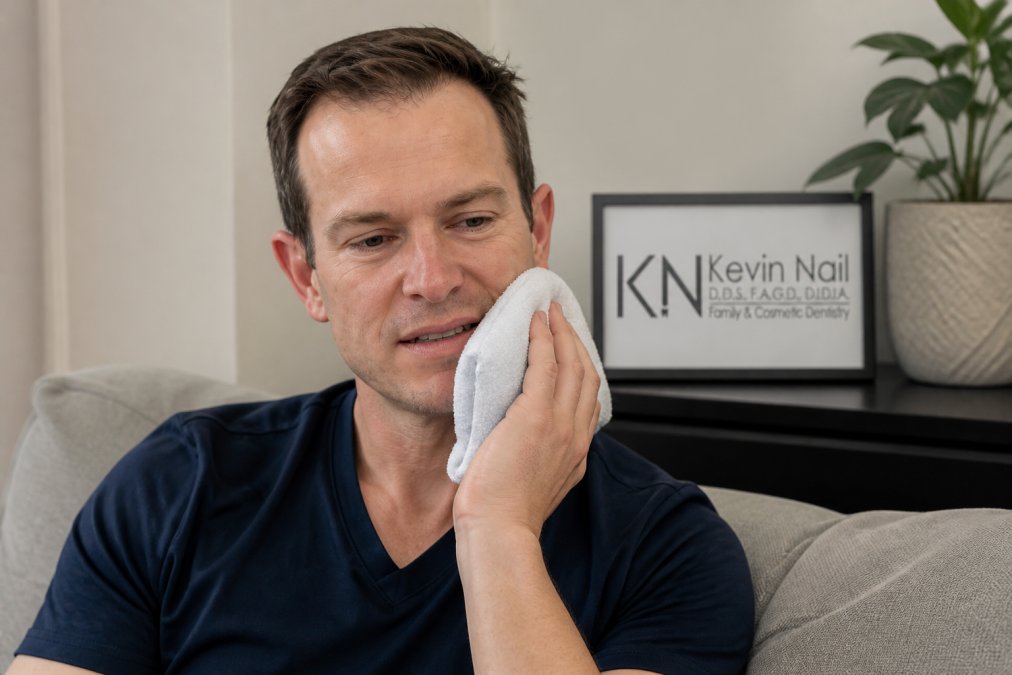
Apply ice for 20 minutes, then remove it for 20 minutes. Continue this cycle for the first 24-48 hours after surgery. Never apply ice directly to your skin; always wrap the ice pack in a thin cloth or towel to prevent ice burn. A bag of frozen peas wrapped in cloth works well and conforms nicely to your face. Gel ice packs are also effective and stay cold longer.
After the first 48 hours, transition to warm compresses if swelling persists. Warm therapy increases blood flow, helping your body clear inflammatory fluid more efficiently. Alternate between warm and cold applications, 10 minutes warm, 10 minutes cold, to maximize your body's natural healing response.
Head Elevation and Sleeping Position Strategies
How you position your head during sleep and rest directly impacts swelling reduction after implant surgery. Gravity pulls fluid downward, so when your head is level with your body, fluid pools in your face and jaw. Elevating your head above heart level allows fluid to drain away from the surgical site more effectively.

For the first week after surgery, sleep with your head elevated at a 30-45 degree angle using 2-3 pillows or a wedge pillow designed for post-operative recovery. Maintain consistent elevation throughout the night; rolling onto a flat pillow loses the anti-swelling benefit. A body pillow on each side helps you stay in the elevated position.
Maintain head elevation during the day as well. When sitting, keep your head higher than your heart. Avoid lying flat for any extended period during the first 3-4 days of recovery. Try to sleep on your back rather than your side, especially on the side where the implant was placed. Side sleeping can put pressure on the surgical area and increase swelling.
Dental Implant Recovery Timeline: What to Expect
The first 24 hours are critical for swelling management, when your body's inflammatory response is strongest. By day 2-3, swelling typically reaches its peak, don't panic if you look more swollen on day 3 than day 1; this is completely normal. Continue your ice therapy and elevation protocol through this peak period.
Days 4-7 show noticeable improvement. Swelling begins to decrease visibly, though you may still feel tenderness and jaw tightness. Many patients can return to light activities by day 5-7, though you'll still need to avoid strenuous exercise and heavy lifting. This is when you might transition from ice to warm compresses.
By week 2-3, most patients see dramatic improvement. Swelling is minimal, bruising (if present) begins to fade, and you can usually return to normal activities. The surgical site continues healing beneath the surface for months, with full osseointegration taking 3-6 months depending on bone quality and implant design.
Activity Restrictions During the First 48 Hours
Avoid any strenuous physical activity, heavy lifting, or intense exercise during the first 48 hours after implant surgery. Physical exertion increases blood pressure and heart rate, driving more blood flow to the surgical site and increasing swelling significantly. This means no gym sessions, running, sports, or heavy housework for at least 2 days.
Beyond the first 48 hours, gradually return to activity. By day 3-4, light walking is fine. By day 5-7, you can usually resume most normal activities, though you should still avoid contact sports, heavy lifting over 10 pounds, and anything that elevates your heart rate significantly.
Avoid bending over or lying flat, as these positions increase blood flow to your head and can increase swelling. If you need to pick something up off the ground, squat down rather than bending at the waist. Avoid heat during the first 48 hours, don't use heating pads, take hot showers, or expose the surgical area to direct heat. Heat causes vasodilation and will increase swelling. Stick to cool or lukewarm water for rinsing and bathing during the first few days.
Signs of Infection After Dental Implant Surgery
Most swelling after implant surgery is normal inflammation, but you need to recognize the difference between typical post-operative swelling and signs of infection. Contact your dentist immediately if you notice fever (temperature above 101°F), which suggests your body is fighting an infection rather than simply healing from surgery (the CDC).
Increasing swelling after day 3-4 can indicate infection. Normal swelling peaks around day 2-3 and then decreases. Pus or discharge from the surgical site is another clear warning sign. Severe pain that doesn't improve with prescribed pain medication, or pain that suddenly worsens after improving, warrants immediate attention.
Difficulty swallowing or breathing, or swelling that extends beyond the immediate surgical area to your neck or throat, requires emergency evaluation. These symptoms suggest the infection is spreading beyond the local surgical site. Don't wait for a routine appointment; call immediately or visit an emergency room if you experience these symptoms.
Most implant patients never develop infections, especially with proper post-operative care and oral hygiene. If you have any concerns about your recovery, contact Dr. Nail's office at 281-550-9054.
Managing Pain and Anti-Inflammatory Strategies
Your dentist will likely prescribe pain medication for the first few days. Take it as directed, staying ahead of pain is easier than trying to catch up once it's severe. Most patients need stronger medication for the first 2-3 days, then transition to over-the-counter options.
Ice therapy serves double duty: it reduces swelling and provides natural pain relief through numbing. Continue regular ice applications through at least the first 48 hours.
What you eat matters for reducing inflammation. Focus on soft foods that don't require much chewing during the first week. Avoid hot foods and beverages, which increase blood flow and swelling. Eat cool or room-temperature foods: yogurt, smoothies, applesauce, mashed potatoes, and soft pasta.
Foods with natural anti-inflammatory properties support your body's healing response: berries, fatty fish (if soft), leafy greens, and turmeric. Avoid processed foods, excess sugar, and alcohol. Alcohol thins your blood, which can increase bleeding and swelling.
Stay well-hydrated by drinking plenty of water. Dehydration slows healing and increases pain perception. Avoid caffeine during the first few days, as it can increase anxiety and make pain feel worse. Sleep quality directly impacts pain and swelling, aim for 7-9 hours nightly while maintaining that elevated head position.
Oral Hygiene and Saltwater Rinses During Recovery
Maintaining oral hygiene after implant surgery is crucial, but you need to be gentle around the surgical site. For the first 24 hours, avoid rinsing or touching the area at all. Your blood clot is forming, and disturbing it can delay healing and increase bleeding.
Starting on day 2, gentle saltwater rinses become important. Mix 1/2 teaspoon of salt in 8 ounces of warm water. After meals and before bed, gently rinse with this solution. The saltwater promotes healing, reduces bacteria, and keeps the area clean without harshness. Don't swish vigorously; let the solution gently flow over the area. Continue saltwater rinses 3-4 times daily for at least one week.
Avoid commercial mouthwash containing alcohol during recovery. Alcohol is harsh on healing tissues. Stick with saltwater rinses or alcohol-free mouthwash.
For the rest of your mouth, continue brushing and flossing as normal, but avoid the surgical area. Use a soft-bristled toothbrush and be gentle around the implant site. By day 7-10, you can usually resume normal brushing habits around the surgical area, but continue being gentle for at least 2 weeks.
Don't use a water flosser or irrigation device near the surgical site for at least one week. Avoid smoking and tobacco products entirely during recovery. Smoking dramatically increases infection risk and slows healing by reducing blood flow to the surgical site.
Reducing swelling after implant surgery requires consistency with proven strategies: ice therapy, head elevation, activity modification, and gentle oral care. Most swelling resolves within 7-10 days, and you'll feel substantially better by week 2. The minimally invasive flapless implant techniques Dr. Nail uses at Kevin Nail DDS significantly reduce post-operative swelling and bleeding compared to traditional implant placement, meaning faster recovery and quicker return to your normal routine. If you're considering dental implants or have questions about what recovery looks like, call 281-550-9054 to schedule a consultation and learn how our advanced implant approach can minimize your recovery time.
Frequently Asked Questions
When is swelling the worst after a dental implant?
Peak swelling typically occurs 24 to 48 hours after implant surgery. This is normal as your body's inflammatory response is at its highest during this period. The first 48 hours are critical for cold therapy and rest. Most patients notice the swelling beginning to decrease after day three, though some residual swelling may persist for 7 to 10 days depending on the complexity of the procedure.
What is the dental implant recovery timeline for returning to normal activities?
Most patients can resume light activities after 3 to 5 days, though the complete dental implant recovery timeline extends 3 to 6 months for full osseointegration. During the first week, avoid strenuous exercise, heavy lifting, and activities that elevate your heart rate. By week two, many people return to work and normal routines. However, avoid contact sports and intense workouts for at least 4 weeks. Your dentist will provide specific guidance based on your procedure complexity.
What are signs of infection after dental implant surgery I should watch for?
Watch for signs of infection after dental implant surgery including fever above 101°F, increasing pain after day 3, pus or unusual discharge from the surgical site, severe swelling that worsens after day 5, or a foul taste in your mouth. Mild discomfort and some swelling are normal, but these warning signs require immediate attention. Contact your dentist if you experience any of these symptoms, as early treatment prevents serious complications.
How long does swelling typically last after implant surgery?
Most post-operative swelling peaks at 24 to 48 hours and begins noticeably improving by day 3. Significant swelling usually resolves within 7 to 10 days with proper cold therapy and elevation. However, minor swelling can persist for 2 to 3 weeks as tissue healing continues. Individual healing rates vary based on age, overall health, and the extent of the surgical procedure. Minimally invasive flapless techniques typically result in less swelling and faster recovery than traditional approaches.
This article was written using GrandRanker