 blog
blog
7 Best Family Dentists for Kids in Houston 2026
Table of Contents
- What to Look for in a Family Dentist for Kids
- Family Dentist vs. Pediatric Dentist: Understanding the Difference
- The Importance of Children's Dental Checkups and Preventive Care
- Why Comprehensive Family Dentistry Matters for Houston Families
- Key Credentials and Experience to Verify
- Access, Convenience, and Same-Day Emergency Care
- Making Your Final Decision
- Frequently Asked Questions
Last Updated: October 7, 2026
What to Look for in a Family Dentist for Kids
Finding the right family dentist kids Houston means finding a practice that handles preventive care, treats children comfortably, and serves the whole family under one roof. The best combine technical skill with patience, explaining procedures in child-friendly language and creating an environment where kids feel safe rather than anxious.
Look for credentials that signal expertise in children's dental care: board certification, membership in organizations like the Academy of General Dentistry, and specific pediatric training. A dentist who personally performs procedures rather than delegating everything to hygienists shows commitment to quality and continuity.
Experience with different age groups is essential: first visits for toddlers, cleanings for school-age children, and orthodontic referrals for teenagers. Long-term staff who know your children by name reduce anxiety.
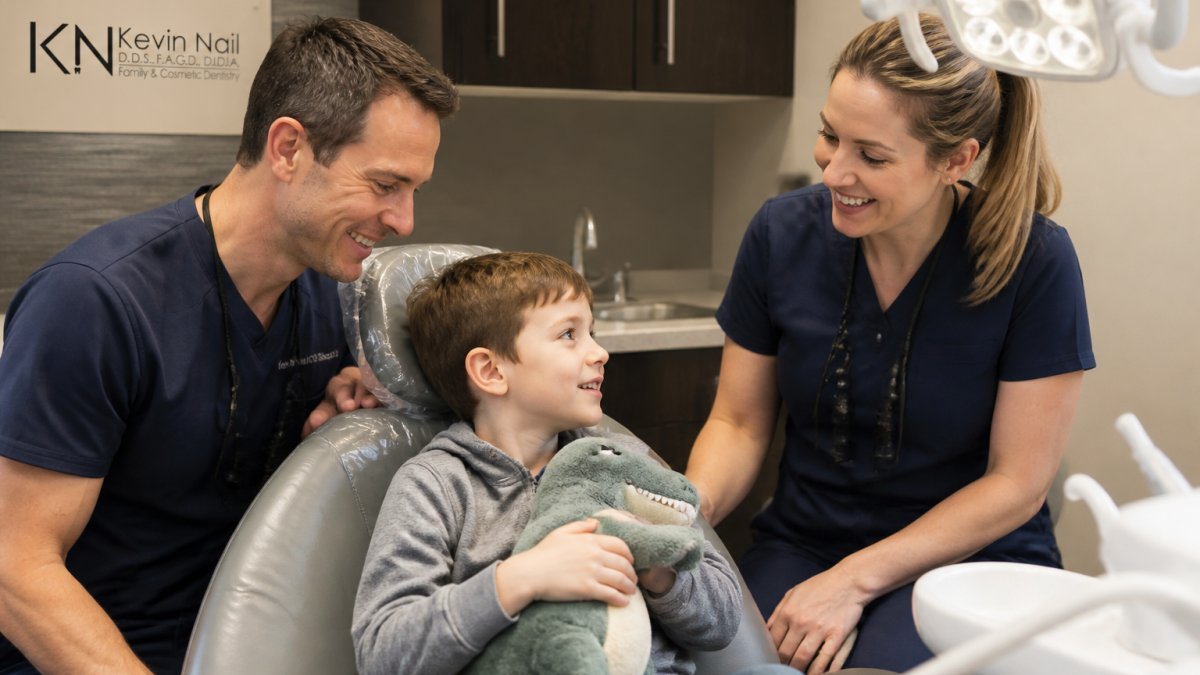
Emergency access matters too. A family dentist offering same-day care for a knocked-out tooth, sudden pain, or infection removes the stress of searching for help during a crisis. Ask about Saturday and after-hours availability.
Family Dentist vs. Pediatric Dentist: Understanding the Difference
A family dentist is a general dentist trained to treat patients of all ages, providing cleanings, fillings, crowns, and basic restorative work for the whole household while referring complex pediatric cases to specialists.
A pediatric dentist has 2-3 additional years of postgraduate training focused exclusively on children's dental development, behavior, and special needs. They're experts in anxious children, early cavities, bite development, and dental trauma, using smaller instruments designed for growing teeth and jaws.
The practical difference: a skilled family dentist works well for straightforward preventive needs and no anxiety. A pediatric specialist becomes valuable if your child is extremely anxious, has complex developmental issues, or needs specialized care.
For most households, a family dentist with pediatric training who enjoys working with children delivers the convenience you want: no juggling providers and consistent preventive care.
The Importance of Children's Dental Checkups and Preventive Care
"Visit the dentist twice a year" is correct but incomplete, what a checkup looks like, and how often it should happen, changes dramatically between a one-year-old and a sixteen-year-old.
First visit: by age one, or within six months of the first tooth.
Toddlers (ages 1-3): every six months, plus a fluoride varnish at each visit.
The main risks are early childhood caries and habits like prolonged bottle use or nighttime nursing without cleaning.
School-age children (ages 4-12): every six months, with sealants on the first permanent molars.
This is when sealants matter most. The first permanent molars erupt around age six, and their chewing surfaces have deep grooves where cavities start.
Teens (ages 13-18): every six months, with a growing focus on hygiene and orthodontics.
Teenagers face more independence, more sugary drinks, more orthodontic hardware that traps plaque, and, for some, the beginning of gum disease.
What actually happens at a routine checkup.
A standard six-month visit usually includes:
- A visual exam of teeth, gums, tongue, and soft tissues
- A professional cleaning to remove plaque and tartar that brushing cannot reach
- X-rays on a schedule the dentist sets based on your child's cavity risk (often less frequent for low-risk kids)
- A fluoride treatment, if indicated
- Sealants, if the child has newly erupted molars
- Coaching on brushing and flossing technique, aimed at the child as they get older
- A written or verbal summary of what was found and what to watch
Why the six-month interval is a starting point, not a rule.
A child with no cavities and good hygiene may be fine on a six-month schedule.
The cost logic of prevention.
A filling is more expensive, more time-consuming, and more stressful for a child than a cleaning and a sealant.
American Academy of Pediatric Dentistry, first visit and preventive care recommendations
American Dental Association, sealants and fluoride guidance for children
Why Comprehensive Family Dentistry Matters for Houston Families
Comprehensive family dentistry means one practice handles routine preventive care, restorative work, and cosmetic improvements for every family member. Instead of coordinating appointments across three offices, you visit one trusted location where the dentist knows your family's history.
This continuity improves care quality. A dentist who sees your entire family notices patterns, hereditary bite issues, cavity risk factors, or habits affecting multiple members, and makes better recommendations because they understand the full picture.
Convenience matters too: one insurance relationship, one billing system, one set of records, and coordinated scheduling reduce administrative burden for busy families.
A comprehensive practice also provides better emergency response. When a child chips a tooth or has sudden pain, you call the dentist you already know, not a stranger, familiarity reduces distress during a crisis.
Many comprehensive practices also offer cosmetic services, veneers, bonding, whitening, and clear aligners, for parents who want smile improvements alongside their children's care.
Key Credentials and Experience to Verify
"Look for experience" is not useful when two practices both claim 20 years in family dentistry.
1. Is the treating dentist a board-certified pediatric dentist or a general/family dentist?
A pediatric dentist completes an accredited residency of roughly two to three additional years after dental school, focused on child behavior, growth and development, sedation, and medically complex children.
Neither path is automatically better. A general dentist is usually right for a healthy child with low cavity risk and no anxiety.
2. Can you verify the credential, not just hear it?
You can confirm a pediatric dentist's board status through the American Board of Pediatric Dentistry's public verification tool, and confirm any dentist's license and disciplinary history through the state dental board's licensee lookup.
3. What pediatric-specific capabilities does the office actually have?
Credentials matter less than what the office can do on the day your child needs it. Ask about:
- Behavior guidance techniques, tell-show-do, voice control, positive reinforcement, and when they use each
- Nitrous oxide (laughing gas), whether it is offered in-office and at what age
- Oral conscious sedation, whether the dentist is licensed to provide it and what monitoring is used
- General anesthesia, whether they have hospital or surgical-center privileges, or refer out
- Special-needs experience, how they accommodate children with autism, Down syndrome, or sensory sensitivities, including quiet rooms, longer appointments, or desensitization visits
- Trauma and emergency training, how they handle a knocked-out permanent tooth, a fractured incisor, or a soft-tissue injury
- Orthodontic screening, whether they monitor bite development and when they typically refer to an orthodontist
If a practice cannot answer these questions clearly, that is your answer.
4. Who actually treats your child?
At many practices the dentist does the exam and the hygienist does the cleaning, which is normal.
5. Continuing education and current technique.
Every licensed dentist must complete continuing education to renew a license, so "takes CE" is not a differentiator.
6. Reviews, read the right way.
Don't just look at the star average. Read the most recent 20 to 30 reviews for three things: how staff handled a scared child, wait times and scheduling, and billing surprises.
American Board of Pediatric Dentistry, verify a pediatric dentist's board certification
State dental board licensee lookup, verify license status and disciplinary history
Access, Convenience, and Same-Day Emergency Care
A family dentist for kids needs to be accessible: convenient location, flexible scheduling, and emergency availability.
Location matters practically. A practice in your neighborhood or along your commute reduces travel time and makes appointments easier to keep. For Houston families, proximity to home or work can be the difference between a visit that fits your schedule and one that requires rearranging your day.
Scheduling flexibility is equally important. Can you book before school or after work? Do they offer Saturday hours? Can they accommodate last-minute appointments when a child develops sudden pain?
Same-day emergency care distinguishes excellent practices from average ones. A knocked-out tooth, severe pain, or infection requires immediate attention. Practices that reserve time for emergencies rather than turning you away to an ER show genuine commitment. Ask how they handle urgent calls and whether they have same-day availability.
Making Your Final Decision
Choosing a family dentist for kids comes down to three factors: clinical skill, comfort with children, and practical accessibility.
Start with recommendations from friends, family, and your pediatrician, personal referrals often point to practices with strong reputations for treating children well. Read online reviews, focusing on how staff treated children and whether families felt heard and respected.
Schedule a consultation before committing to ongoing care. This lets you observe the office environment, meet the dentist and staff, and assess whether your child feels comfortable. A good practice welcomes questions and makes time for your concerns.
Ask about the dentist's approach to anxiety. Do they use slow, clear explanations? Do they let children bring a parent into the treatment room? Do they offer sedation for nervous kids? A dentist's willingness to adapt to your child's temperament matters enormously.
Compare practical factors: location, hours, emergency access, and insurance acceptance. The most skilled dentist won't help if you can't easily get there or afford the care.
Trust your instinct. A strong relationship with a family dentist kids Houston sets the foundation for lifelong oral health and positive attitudes toward dental care.
Finding the right family dentist for kids requires balancing clinical expertise, genuine comfort with children, and practical convenience.
Frequently Asked Questions
How do I choose a family dentist for kids?
Look for a dentist with experience treating both children and adults, board certifications in general or family dentistry, and a patient-centered approach. Verify they offer preventive care like cleanings and checkups, can handle routine fillings and cavity prevention, and maintain long-term staff relationships so your family sees familiar faces. Ask whether they perform all necessary procedures in-house or refer out, and confirm they accept your insurance. Schedule a consultation to assess the office environment, a comfortable, welcoming space designed for children is essential.
What is the difference between a family dentist and a pediatric dentist?
A family dentist treats patients of all ages, from young children through adults, in a single practice. A pediatric dentist specializes exclusively in children's dentistry with additional training in child behavior, growth and development, and age-specific oral health needs. Both can provide excellent children's dental care. Family dentists are ideal for multigenerational care when parents want one trusted provider for the whole family. Pediatric dentists may offer specialized expertise for anxious children or complex pediatric cases, but many families find a skilled family dentist meets all their needs.
How often should my child have dental checkups?
Most children should have a dental checkup and professional cleaning every six months, starting around age one or when the first tooth appears. Regular checkups allow your dentist to monitor oral health, catch tooth decay early, and provide fluoride treatments or dental sealants for cavity prevention. If your child has a history of cavities or other risk factors, your dentist may recommend more frequent visits. These routine examinations are essential for establishing good oral health habits and preventing more costly restorative work later.
Can a family dentist handle emergency dental care for kids?
Many family dentists offer same-day emergency care for urgent issues like knocked-out teeth, severe pain, or broken teeth. When evaluating a practice, ask specifically about their emergency availability and whether they can see your child the same day if needed. Some practices reserve same-day slots for emergencies; others may offer extended hours or weekend appointments. Having a family dentist who can handle emergencies means your child receives care from someone familiar with their history and anxiety level, which is especially comforting during a dental crisis.