 ultimate-guide
How to Find a Family Dentist: A Complete Guide
Table of Contents
- What to Look for When Finding a Family Dentist
- How to Verify Dentist Credentials and Licensing
- Benefits of Choosing a Private Dental Practice
- Key Questions to Ask a New Dentist
- Evaluating Office Location, Hours, and Accessibility
- Checking Insurance Coverage and Financial Transparency
- What to Expect During Your First Visit
- Frequently Asked Questions
Last Updated: September 19, 2026
What to Look for When Finding a Family Dentist
When you find family dentist care that serves every age in your household, you're making one of the most important healthcare decisions you'll make. When you're learning how to find family dentist that fits your needs, you're looking for someone with specific credentials, a comfortable environment, and the ability to manage care across generations.
A good family dentist combines general dentistry skills with the patience and training to work with children, teenagers, and adults. They keep detailed records, remember your family's history, and adjust their approach based on individual anxiety levels or health conditions.
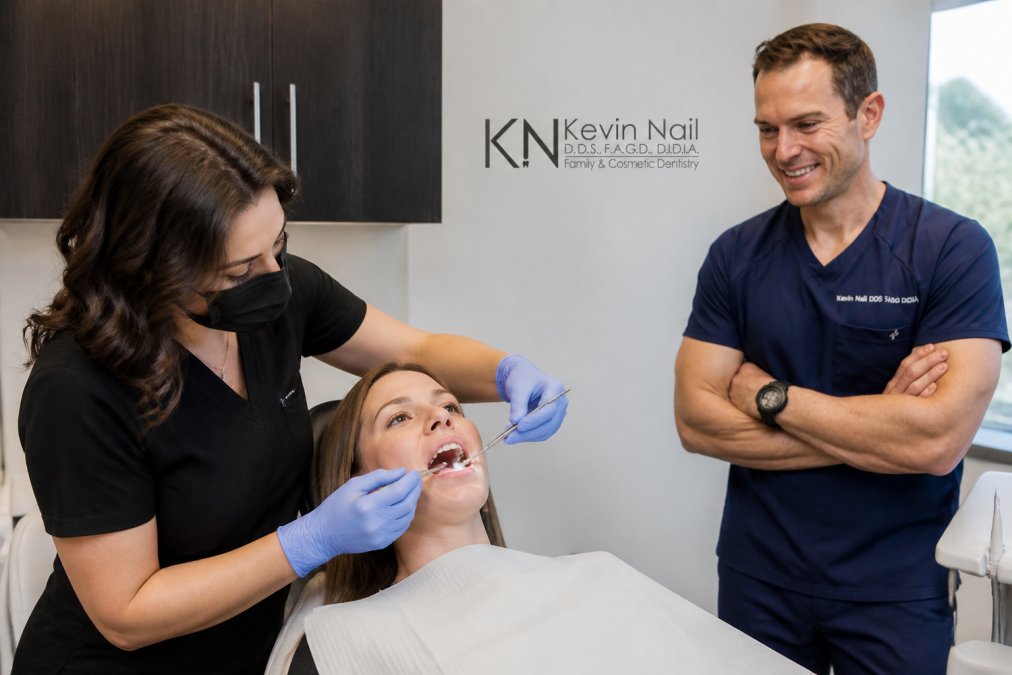
At Kevin Nail DDS, we've built our practice on the principle that families deserve comprehensive care under one roof. Dr. Nail personally performs every procedure, whether it's a child's routine cleaning or an adult's complex implant restoration, ensuring consistency and personalized attention that many larger practices simply cannot match.
How to Verify Dentist Credentials and Licensing
Before you commit to any dentist, verify their credentials and licensing status through your state's dental licensing board website. Look for the dentist's name, license number, and whether any disciplinary actions are listed.
A board-certified dentist has passed rigorous exams beyond their basic license (Recognized Certifying Boards). Look for credentials like FAGD (Fellow of the Academy of General Dentistry) or MAGD (Master of the Academy of General Dentistry), which require continuing education and demonstrate commitment to staying current with dental advances.
Ask whether the dentist has formal training in pediatric dentistry or continuing education in treating children. This difference shows up immediately in how comfortable your children feel in the chair.
Dr. Nail holds fellowship status with the Academy of General Dentistry and is a diplomate of the International Dental Implant Association, qualifications that reflect years of advanced training and demonstrated expertise. His recognition as the first and only accredited AMII protocol-trained dentist in Texas speaks to his commitment to advanced, minimally invasive techniques that benefit families seeking the most current approaches to dental care.
Benefits of Choosing a Private Dental Practice
Private dental practices offer advantages that larger corporate chains cannot replicate. You typically see the same dentist and hygienists consistently, and the team gets to know your preferences, anxieties, and health history over time.
A private practice owner has direct incentive to keep you satisfied and build community reputation. This translates into more time spent on your care, willingness to address concerns, and genuine interest in your long-term oral health.
Private practices can also move faster on decisions. A private practice owner can often fit you in for same-day emergency care and discuss payment options directly without corporate approval delays.
The consistency of care is especially valuable for families. Your children grow up seeing the same dentist, who watches their teeth develop and can catch problems early. This continuity reduces anxiety and improves outcomes.
Key Questions to Ask a New Dentist
Before your first appointment, call and ask how long the dentist has been practicing and whether they see patients of all ages. Some dentists claim to be family dentists but primarily see adults.
Ask about their approach to preventive care. A dentist committed to preventive care emphasizes regular cleanings, fluoride treatments for children, and patient education.
Ask about emergency protocols. Can you reach someone if your child has a toothache on a weekend? Do they reserve time for emergency patients?
Ask about specific techniques and equipment. If you're interested in minimally invasive approaches, ask about advanced imaging like 3D cone beam CT scans. If you have dental anxiety, ask about sedation options. If you're considering implants, ask about their implant training and success rates.
Ask about their communication style. Do they explain treatment options and let you decide? Do they answer questions patiently? Your comfort with the dentist's communication matters as much as their technical skills.
Evaluating Office Location, Hours, and Accessibility
Convenience matters when choosing a family dentist. Look for a practice within 15-20 minutes of your home or workplace. Use Google Maps to check drive time during your typical appointment window to account for traffic.
Office hours should align with your family's schedule. Ask whether the practice blocks time for families or schedules separately. Some practices reserve specific hours for pediatric patients, reducing wait times and creating a more child-friendly environment.
Parking should be easy and nearby. If you're managing multiple children and trying to navigate a parking garage, that friction adds up. Ask whether parking is free, whether it's in a lot or street parking, and whether spaces are plentiful during peak appointment times.
Accessibility for patients with dental anxiety. Dental anxiety affects roughly 36% of the population and up to 12% experience severe anxiety that prevents them from seeking care. Ask the practice directly: Do you have experience treating anxious patients? What techniques do you use? Some practices offer nitrous oxide (laughing gas) to help patients relax; others use behavioral techniques like "tell-show-do" (explain the procedure, show the instrument, then use it). Ask whether the dentist is willing to go slowly, take breaks, or schedule longer appointments for anxious patients. Some practices also allow a support person (parent or partner) to sit in the operatory, which can reduce anxiety significantly.
Accessibility for patients with sensory sensitivities. Children with autism, ADHD, or sensory processing disorder often struggle in dental offices because of bright lights, loud noises, and unfamiliar sensations. Ask whether the practice can accommodate sensory needs: Can they dim the lights? Use a quieter suction tool? Allow the patient to wear headphones or sunglasses? Can they schedule a shorter "meet and greet" visit before the first full appointment? Some practices have a separate quiet room or allow patients to arrive early to acclimate to the space.
Accessibility for patients with physical disabilities. Ask whether the office is wheelchair-accessible, including the parking area, entrance, and restroom. If a patient uses a walker or cane, can they navigate the waiting room and hallway? Are the dental chairs adjustable to accommodate patients who cannot transfer independently, or can the dentist work with a patient who remains in their wheelchair? Ask whether staff are trained to assist patients with mobility challenges.
Accessibility for patients with communication differences. If a family member is deaf or hard of hearing, ask whether the practice can provide a sign language interpreter or use video relay services. If a patient has a speech disorder or uses AAC (augmentative and alternative communication), ask whether staff are patient and willing to take time to understand the patient's communication method.
Waiting room environment. Is there a separate pediatric waiting area, or do children sit with anxious adults? Are there toys, books, or a television to keep children calm? Some practices have a sensory-friendly waiting room with soft lighting and minimal noise. For families with multiple children, ask whether the waiting room is large enough to accommodate everyone comfortably.
Staff training and attitude. Call the practice and listen to how staff respond to your questions about accessibility. Do they seem knowledgeable and accommodating, or dismissive? Staff attitude often predicts whether the practice will be genuinely welcoming to patients with special needs. A practice that trains staff in trauma-informed care and disability awareness will feel noticeably different from one that doesn't.
Checking Insurance Coverage and Financial Transparency
Before you choose a dentist, verify that they accept your insurance plan. Not all dentists participate in all plans, and in-network providers typically cost significantly less than out-of-network ones. Call the practice and provide your insurance details; they should be able to tell you immediately whether they're in-network and what your plan covers.
Understand the difference between what your insurance covers and what you'll pay out-of-pocket.
What to Expect During Your First Visit
Your first appointment is typically longer than routine visits. The dentist needs to understand your medical history, current medications, and any dental concerns. Expect to spend 45 minutes to an hour in the office. They'll likely take X-rays to establish a baseline of your dental health and identify any hidden problems.
Frequently Asked Questions
What is the best way to find a good family dentist?
Start by asking for referrals from friends, family, and your primary care physician. Check online reviews and verify credentials through your state dental board. Ensure the dentist offers comprehensive family care for all ages, accepts your insurance, and has convenient office hours. Schedule a consultation to assess the office environment, staff friendliness, and whether the dentist takes time to explain treatment options.
How do I verify a dentist's credentials and licensing in Texas?
Contact the Texas State Board of Dental Examiners to confirm active licensure and check for any disciplinary history. Look for professional memberships like the Academy of General Dentistry (AGD) or the International Dental Implant Association. Ask the dentist directly about their education, specialized training, and any board certifications. Legitimate dentists display their credentials in the office and are transparent about their qualifications.
What questions should I ask a new dentist during my first visit?
Ask about their experience with family dentistry, how they handle dental anxiety, and whether they personally perform procedures or delegate to other dentists. Inquire about their approach to preventive care, treatment planning, and how they stay current with dental technology. Ask about emergency care availability, billing policies, and how they communicate with patients about costs and insurance coverage.
What are the main benefits of choosing a private dental practice?
Private practices often provide personalized, continuity-based care where you see the same dentist and familiar staff members. The owner-dentist typically invests in advanced technology and takes personal responsibility for patient outcomes. You benefit from direct communication with the decision-maker, customized treatment plans, and a more intimate office environment that can reduce dental anxiety compared to larger corporate settings.
Should I prioritize a dentist who performs procedures personally?
Yes, when possible. A dentist who performs procedures personally takes direct responsibility for your care and outcomes. This approach typically results in better continuity, as the same provider understands your dental history, preferences, and any special needs. However, ensure the dentist has appropriate training and credentials for the specific procedures you need, especially for advanced work like implants or cosmetic dentistry.
How do I know if a family dentist can handle care for all ages?
Ask specifically about their experience treating children, adults, and older patients. A true family dentist should offer pediatric care, preventive services, restorative procedures, and geriatric-focused treatment. They should have a comfortable approach to working with anxious children and explain procedures in age-appropriate language. Ask if they've successfully transitioned young patients into adult care and how they adapt their approach for different age groups.