 how-to
How to Know What Happens at a Family Dental Checkup
Quick Summary
A family dental checkup is a scheduled visit where the dental team examines teeth, gums, and soft tissues of the mouth, then cleans and reviews results. The visit usually follows the same sequence for children and adults, starting with check-in and a health history review.
- Bring insurance cards, photo ID, a medication list, and any past X-rays or records.
- Check-in includes a health history form and a review of your dental chart.
- The soft tissue exam includes an oral cancer screening that is routine for adults.
- X-rays show decay and bone levels, and gum pockets are measured with a periodontal probe.
- The exam and the professional cleaning are two different steps done by different team members.
Table of Contents
- Before You Arrive: Preparing the Whole Family for a Dental Checkup
- Step 1: Check-In, Health History and Dental Chart Review
- Step 2: The Soft Tissue and Oral Cancer Screening
- Step 3: X-Rays, Cavity Checks and Gum Assessment
- Step 4: Professional Cleaning and Dental Exam vs Cleaning Explained
- What Changes for Kids: The Dental Exam for School and Pediatric Visits
- Managing Dental Anxiety and Understanding Costs and Insurance Before Your Family Visit
- Booking Your Family's Next Checkup at Kevin Nail DDS
- Frequently Asked Questions
Before You Arrive: Preparing the Whole Family for a Dental Checkup
Last Updated: November 4, 2026
Most families walk into a checkup not knowing what will happen next. That uncertainty is the main reason parents and kids feel nervous. This pattern is common, and it is easy to fix with a little preparation. Knowing the sequence of a family dental checkup makes each step feel routine instead of stressful.
A family dental checkup is a scheduled visit where the dental team examines teeth, gums, and the soft tissues of the mouth, then cleans and reviews results. It usually runs the same way for children and adults, though the details shift with age.
Before your visit, gather a few things:
- Insurance card and photo ID for each family member
- A list of current medications and supplements
- Any past dental X-rays or records from another office
- Questions you want answered, written down
Tip for kids: Describe the visit in simple, positive words. Say "the dentist counts your teeth" rather than "the dentist will poke you." Children handle a clear plan far better than surprises.
Watch out: Do not skip the medication list. Blood thinners, some heart medicines, and diabetes drugs can change how a dentist plans care, so mention them at check-in even if they seem unrelated.
Step 1: Check-In, Health History and Dental Chart Review
The visit starts at the front desk. Staff confirm your identity, insurance, and contact details, then hand you a health history form. This form asks about allergies, medications, past surgeries, and any changes in your health since your last visit.

Next, the team reviews your dental chart. This is the record of your previous treatments, X-rays, and notes. For families, a shared chart makes it easier to track each person's history in one place.
Here is what the review usually covers:
- Medical history: Conditions that affect healing or infection risk
- Dental history: Past fillings, extractions, or gum treatment
- Concerns: Pain, sensitivity, bleeding gums, or bite changes you noticed
- Goals: Cosmetic questions or planned treatment
Be honest on the form. A small detail, like occasional jaw clicking, can point the dentist toward a useful check.
Step 2: The Soft Tissue and Oral Cancer Screening
Once the history is reviewed, the dentist examines the soft tissues. This includes the lips, cheeks, tongue, the roof and floor of the mouth, and the throat area. The goal is to spot anything unusual, such as sores that do not heal, lumps, or color changes.
An oral cancer screening is a routine part of this exam. The dentist looks and feels for abnormal areas. The screening is typically quick and is generally not uncomfortable. It is a standard check for adults and an important one for anyone who smokes or uses tobacco.
Many people assume the soft tissue exam is only for adults, but children benefit from it too.
Watch out: A sore that lasts more than two weeks is worth mentioning, even if it does not hurt. Early review gives the best options.
Step 3: X-Rays, Cavity Checks and Gum Assessment
Next come imaging and measurements. Bitewing X-rays show the spaces between teeth, where cavities often start. The dentist may also take other images depending on your needs. X-rays show what the eye cannot see, such as decay under a filling or bone levels around a tooth.
The dentist then checks each tooth for cavities. Small spots of decay may be visible, but many are only confirmed on X-ray. Treating a small cavity early can often mean a simpler treatment.
Gum health is measured with a periodontal probe. The probe gently measures the depth of the pockets around each tooth. Healthy gums typically have shallow pockets. Deeper pockets can signal gum disease, which the team will explain.
Common gum findings include:
- Bleeding when brushing or flossing
- Red, swollen, or tender gums
- Receding gum lines
- Loose or shifting teeth in adults
Step 4: Professional Cleaning and Dental Exam vs Cleaning Explained
Many families mix up the dental exam and the cleaning. They are two different steps. The exam is the examination and diagnosis. The cleaning removes buildup.
The cleaning is usually done by a dental hygienist. The process has three main parts:
- Scaling: Removing plaque and tartar from above and below the gumline
- Polishing: Smoothing tooth surfaces to slow new buildup
- Fluoride treatment: Strengthening enamel, often recommended for children
Tartar cannot be removed by brushing alone. It hardens from plaque that stays on teeth too long (Plaque | MouthHealthy). That is why a professional cleaning matters, even for people who brush well.
The dentist usually reviews findings after the cleaning. You will hear what is healthy, what needs watching, and what treatment is recommended. Ask questions here. This is the best time to clarify anything.
For a quick comparison:
| Part of Visit | Who Usually Does It | What It Does |
|---|---|---|
| Dental exam | Dentist | Checks teeth, gums, and soft tissues |
| Professional cleaning | Dental hygienist | Removes plaque and tartar |
| X-rays | Dental team | Shows hidden decay and bone levels |
| Treatment plan | Dentist | Explains next steps |
What Changes for Kids: The Dental Exam for School and Pediatric Visits
Children's checkups follow the same basic sequence as adults, but the emphasis shifts with age. A pediatric-focused visit tracks growth and development as much as it tracks decay, and the team adjusts the pace and the tools for a child's comfort.
Age-based checkpoints. Most dental organizations recommend a first visit by a child's first birthday or within six months of the first tooth erupting. Early visits are often short and focus on guidance for parents about brushing and feeding habits. Visit contents vary with age and needs, and your dentist can explain what is included for your child.
Fluoride varnish and sealants. Fluoride varnish is a topical fluoride that can be applied to tooth surfaces, and sealants are thin coatings that may be placed on the chewing surfaces of back teeth. Whether either is appropriate depends on your child's needs, and your dentist can explain the options.
Primary versus permanent teeth. The dentist tracks which baby teeth are loose, which permanent teeth are erupting, and whether spacing is adequate for the adult dentition. Early crowding, crossbites, and prolonged pacifier use are noted and monitored. If orthodontic evaluation is warranted, the dentist will say so and explain the timing rather than rushing a referral.
School and sports forms. Some schools and sports programs require a dental exam form or mouthguard recommendation. Ask your school or program what is required, and mention it at check-in.
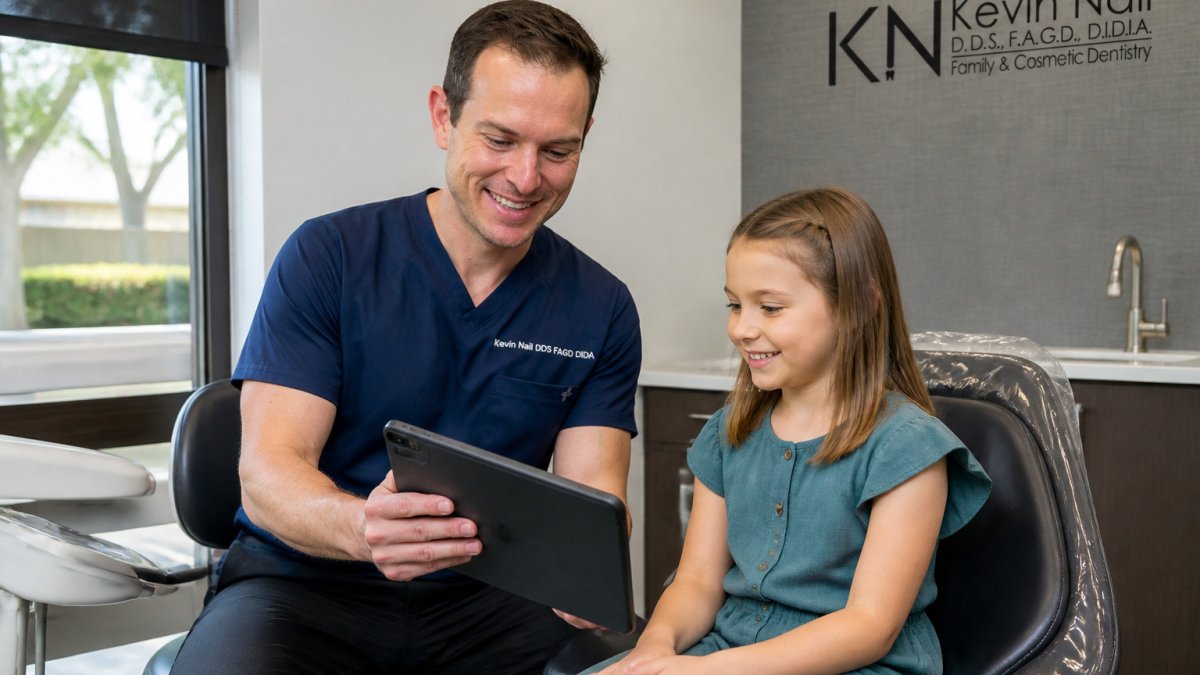
Behavior and comfort. Children do best when the visit is predictable. Read practical steps to prepare your child for their first dental visit. Many pediatric-focused offices use a tell-show-do approach, where each instrument is explained and demonstrated before use. Morning appointments, a comfort item, and simple language ("the dentist counts your teeth") reduce anxiety. Parents can model calm behavior by sitting nearby for younger children and stepping back for older ones who want independence.
Watch out: Do not wait for a child to complain of pain before scheduling a checkup. Early cavities in baby teeth often progress silently, and a small filling is simpler and less costly than a pulpotomy or extraction.
Managing Dental Anxiety and Understanding Costs and Insurance Before Your Family Visit
Dental anxiety is common in both adults and children, and it can cause some families to delay care. The clinical steps are predictable, so the anxiety usually comes from uncertainty about pain, cost, or loss of control. Address both before the appointment and the visit runs smoother for everyone.
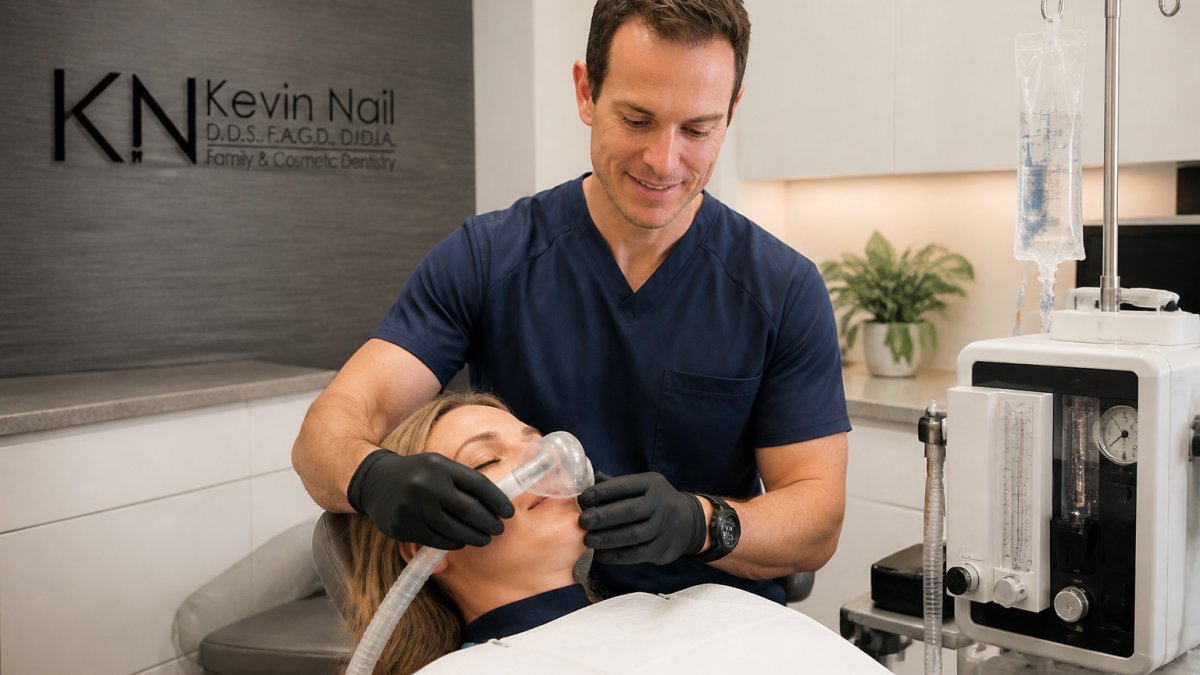
Anxiety management that works. Tell the office when you book, not when you arrive. Many offices can schedule extra time or plan a gentler approach for nervous patients, so it helps to tell the office when you book. Agree on a stop signal, such as a raised hand, so the patient controls the pace. For children, a morning appointment when they are rested, a comfort item, and simple positive language help more than reassurance during the visit. For adults with severe fear, ask about sedation options in a private consultation before the day of treatment; sedation is a separate discussion with its own consent and cost. Compare the five main sedation types to see how each one works.
Preventive versus diagnostic services. Dental insurance plans often group services into preventive, basic, and major categories, with coverage levels that differ by plan. Your plan's summary of benefits will show the specifics for your coverage. Diagnostic services such as X-rays may fall under preventive or basic depending on the plan, so confirm the category before the visit.
What to verify before you book. Ask the office to help you review your benefits, including your annual maximum, deductible, coverage for each service category, and any waiting periods. Also ask whether the practice is in-network for your plan. If X-rays were taken recently at another office, request them so you are not charged twice.
Questions to ask before you book:
- Which services count as preventive under my plan?
- Are X-rays and cleanings included in the same visit or billed separately?
- Is there a fee for a consultation or a sedation discussion?
- Are payment plans available for larger treatment?
- What is my estimated out-of-pocket cost for the recommended treatment?
Watch out: Do not assume a cleaning and an exam are billed as one service. Many plans bill them separately, and a visit that includes X-rays, a cleaning, and a comprehensive exam can produce three line items. Ask for a pre-treatment estimate so there are no surprises. Check your pediatric PPO coverage step by step before you book.
Booking Your Family's Next Checkup at Kevin Nail DDS
Families who want one dental team for everyone can book a family dental checkup at Kevin Nail DDS. Staff can review your insurance and explain what to expect for each person.
If you are traveling to the office, you can confirm directions and appointment times with the team before your first visit. Find your nearest office and check the route so the trip is simple.
When you call, share any anxiety concerns and your insurance details. Preparing ahead can help the visit run more smoothly. Call 281-550-9054 to schedule your family's next checkup.
Frequently Asked Questions
Do dentists clean your teeth during a check-up?
Many routine family checkups include a professional cleaning, which is often performed by a dental hygienist. The cleaning removes plaque and tartar that brushing and flossing miss, and it is often followed by polishing. Some visits are exam-only, depending on the appointment type and your dental history, so confirm with the office when you book. A cleaning is typically included in routine visits, but coverage and any out-of-pocket costs depend on your plan, so check with your insurance provider before the appointment.
How long does a family dental checkup take?
Appointment length depends on how many family members are seen, their ages, and whether X-rays or a cleaning are scheduled. Visits for young children are often shorter, while adults needing a full exam, X-rays and cleaning take longer. Scheduling family members back to back can reduce the number of trips. Ask the office for an estimate when you book so you can plan your day around it.
How often should children and adults have dental checkups?
Many dental professionals recommend checkups about every six months, but the right interval depends on your oral health, risk of cavities or gum disease, and any treatment you are receiving. Children may need visits at a set interval as their teeth develop. Your dentist can recommend a schedule for each family member based on their individual needs.
What happens if the dentist finds a cavity?
If a cavity is found, the dentist will explain its size and location and discuss treatment options, which may include a filling or other restoration. Small cavities caught early are often simpler to treat. You can ask questions and review options before any treatment begins, and you are welcome to get a second opinion if you prefer.