 how-to
How to Prepare for Your First Veneer Consultation
Table of Contents
- What to Expect at a Veneer Consultation
- Your Veneer Consultation Checklist: What to Bring and Disclose
- How to Communicate Your Aesthetic Goals Clearly
- Questions to Ask Before Getting Veneers
- How Long Does It Take to Get Veneers?
- Candidacy, Oral Health Prerequisites, and Alternatives to Veneers
- Frequently Asked Questions
Last Updated: October 17, 2026
What to Expect at a Veneer Consultation
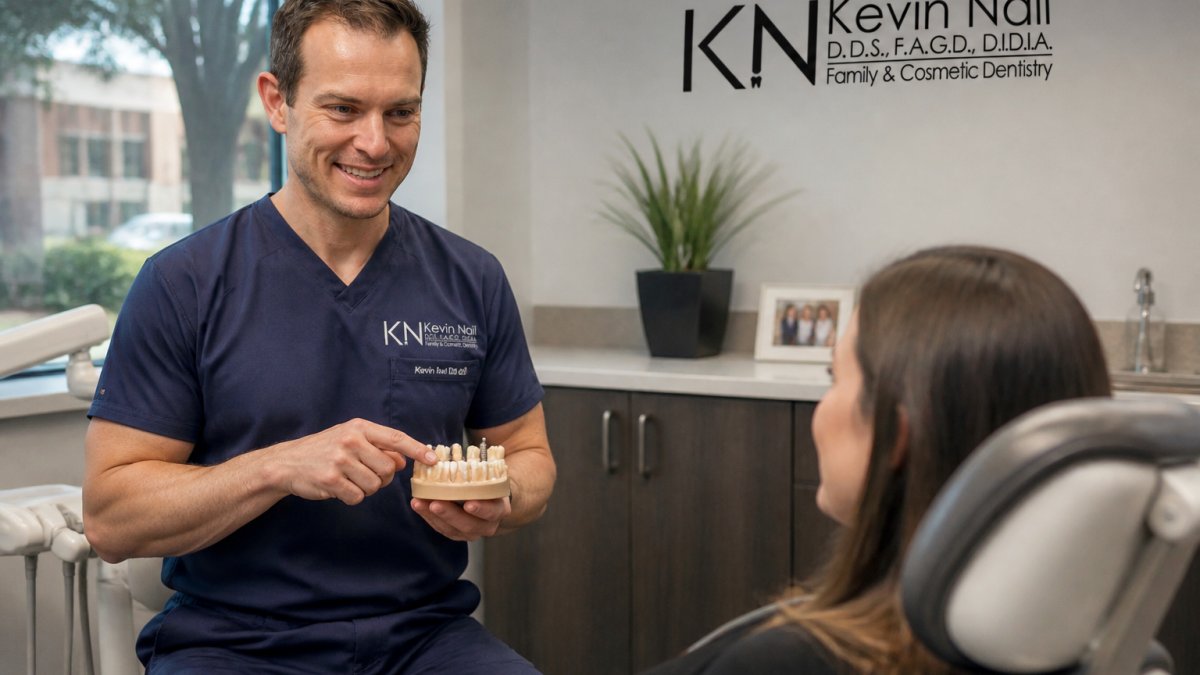
A veneer consultation is a fact-finding appointment, not a sales pitch. It is where you and your dentist decide together whether thin shells of porcelain or composite can safely give you the smile you want. At Kevin Nail DDS, we treat this visit as the most important step in the entire process.
Most first consultations follow a simple arc. Here is the short version:
- History and goals. You talk first. What bothers you about your smile? What do you want it to look like?
- Dental examination. Your dentist checks every tooth, not just the front ones.
- Imaging. X-rays or digital scans show what is happening under the surface.
- The plan. You leave with options, a timeline, and a realistic idea of what each path involves.
The visit usually takes 30 to 60 minutes. Bring your questions. The best consultations feel like a conversation, not a lecture.
The Exam, the Conversation, and the Plan
The exam covers more ground than most patients expect. Your dentist looks at tooth discoloration, chipped teeth, gaps between teeth, and overall tooth shape. They also check tooth alignment and your bite.
Why the bite? Veneers sit on top of your natural teeth, so how your upper and lower teeth meet matters. A heavy bite can crack thin porcelain. Your dentist will also assess gum health and look for signs of teeth grinding, which can shorten the life of any restoration.
The conversation comes next. This is where you describe your aesthetic expectations and your dentist explains what is realistic. Then comes the plan: which teeth, which material, how many visits, and what it costs.
Your Veneer Consultation Checklist: What to Bring and Disclose
Walk in prepared and the appointment moves faster. Walk in unprepared and you may need a second visit before you have answers. Here is what to bring to a veneer consultation:
- A list of all medications, including supplements and over-the-counter pain relievers
- Your dental insurance card and any financing paperwork
- Names of past dentists and roughly when you last had X-rays
- A short written list of what you dislike about your smile
- Photos of smiles you like, and one or two you do not
- Questions written down, because you will forget half of them
- A note of any anxiety you feel about dental work
Disclosure matters as much as paperwork. Tell your dentist about teeth grinding, past orthodontic work, and any habit like nail biting or chewing ice. Mention past dental work that failed, whether it was bonding or a crown. If you have had gum treatment, orthodontic relapse, or a history of clenching, say so even if it feels minor. Your dentist is building a risk profile, and small details change the plan.

The Financial Questions to Ask Before You Book
Cost is the item most patients leave until the end, and it is the one that most often derails a plan. Veneers are typically a cosmetic procedure, so many dental insurance plans exclude them or cover them only when a veneer restores a damaged tooth rather than improving appearance. Ask these questions at the consultation, not after:
- Is this procedure considered cosmetic or restorative under my plan, and does that change coverage?
- What is the total cost per tooth, and does the quote include the consultation, imaging, temporaries, and any follow-up adjustments?
- Is there a separate fee for lab work, and is it included in the per-tooth price?
- What payment options or third-party financing does the practice offer, and what are the terms?
- If a veneer chips or fails, what is the replacement policy and cost?
- Will you provide a written treatment plan with itemized costs I can submit to my insurer?
Be honest about your budget. A good treatment plan works within your limits instead of pushing past them. If the full case is out of reach today, ask whether phasing treatment (for example, starting with the most visible front teeth) is safe and sensible, or whether a lower-cost alternative like bonding would meet your goal. A dentist who answers these questions plainly is giving you the information you need to decide, not a sales pitch.
How to Communicate Your Aesthetic Goals Clearly
Vague goals produce vague results. "I want a nicer smile" gives your dentist almost nothing to work with. Specific language gets you closer to the outcome you picture.
Try describing your goals in three layers:
- Shape: Do you want rounder edges, squarer corners, or longer-looking front teeth?
- Color: Do you want your natural shade, a little brighter, or a noticeable change?
- Character: Do you want perfectly uniform teeth, or slight variation so the result looks natural?
That last point matters. Many patients worry veneers will look fake or too white. A skilled dentist uses shade selection and subtle variation in tooth shape so the finished smile reads as yours, only better.
Bring reference photos if words fail you. Point at what you like and say why. "I like how the edges are slightly rounded" is more useful than "I like this one."
Questions to Ask Before Getting Veneers
Ask direct questions and expect direct answers. A dentist who welcomes questions is a dentist worth staying with. Here are the ones that matter most:
- How many teeth need veneers to reach my goal?
- Which material do you recommend for me, porcelain or composite, and why?
- How much enamel will you remove, if any?
- What happens if a veneer chips or comes loose?
- How long should I expect my veneers to last with good care?
- What does the total treatment cost, and what does my insurance cover?
- How many visits will this take, and how long between them?
Add one more: ask who performs the work. At Kevin Nail DDS, Dr. Nail personally handles every procedure, so the dentist you meet at the consultation is the dentist in the chair on treatment day.
How Long Does It Take to Get Veneers?
Most veneer cases take two to three visits spread over two to four weeks. The exact timeline depends on the number of teeth, the material, and how much tooth preparation is needed.
Here is the typical sequence:
- Consultation and planning. Digital scans or dental impressions are taken, and you approve the plan.
- Tooth preparation. A small amount of enamel is removed, and temporary veneers go on.
- Laboratory work. A dental laboratory builds your custom veneers, usually over one to two weeks.
- Final placement. Your dentist bonds the veneers with dental cement, checks your bite, and polishes the edges.
Composite veneers can sometimes be completed in a single visit because they are built directly on the tooth (Smile makeover with direct composite veneers: A two-year follow-up report). Porcelain veneers need the lab step, which is why they take longer.
Recovery is short. Some tooth sensitivity for a few days is normal. After that, care is simple: brush, floss, and avoid biting hard objects.
Candidacy, Oral Health Prerequisites, and Alternatives to Veneers
Not everyone is a good candidate, and that is worth hearing early. Good candidacy rests on healthy teeth and gums. If you have active decay, gum disease, or significant enamel loss, those need treatment first. Veneers bond to enamel, so a tooth with too little healthy enamel may not support one without additional work.
Candidate suitability also depends on your bite and habits. Heavy grinding can damage veneers, and a dentist may recommend a night guard or treat the grinding pattern before placing them. Severe misalignment may respond better to orthodontics before any cosmetic work, because straightening teeth can sometimes reduce how many veneers you need. A common pattern is to address active problems first, then plan cosmetic work once the foundation is stable.
When an Alternative Fits Better
Alternatives to veneers exist, and sometimes they fit better. The right choice depends on what you actually want to change:
- Bonding: Composite resin is applied directly to the tooth. It usually costs less per tooth, removes little or no enamel, and can often be completed in one visit, but it tends to stain and chip sooner than porcelain and may need replacement more often. A good fit when the change is minor or the budget is tight.
- Clear aligners: A better fit when the real problem is tooth alignment rather than shape or color. Straightening teeth can close gaps and correct crowding that veneers would otherwise mask, and it preserves natural tooth structure.
- Whitening: The simplest option when discoloration is the only concern. Professional whitening is less expensive than veneers and non-invasive, though it will not change tooth shape, close gaps, or fix chips.
- Crowns: A crown covers the entire tooth and is typically reserved for teeth that are heavily damaged or have had root canal treatment. Crowns remove more tooth structure than veneers, so they are not a cosmetic upgrade for healthy teeth.
A useful way to decide is to name the specific problem. If it is color only, whitening is the first conversation. If it is alignment, aligners come first. If it is shape, chips, or gaps on otherwise healthy teeth, veneers or bonding are the realistic options. Many patients combine treatments, such as whitening before veneers so the surrounding teeth match the new shade.
At Kevin Nail DDS, we would rather steer you toward the treatment that fits your mouth than sell you the one with the biggest price tag.
Frequently Asked Questions
How do you prepare for a veneer consultation?
Write down your goals, bring a list of medications and prior dental work, and note any habits like teeth grinding. Gather reference photos of smiles you like so you can discuss shade and shape. Arrive with a clean mouth and be ready to talk honestly about sensitivity, past treatments, and what you want to change. A prepared veneer consultation moves faster and gives the dentist better information to build a plan that fits your goals.
What questions should I ask a dentist about veneers?
Ask which material they recommend and why, how much enamel will be removed, and what the veneer consultation checklist covers for your case. Ask about the number of visits, how temporaries are handled, and what happens if a veneer chips. Bring up cost, financing, and insurance before treatment starts. Also ask how they match shade to your natural teeth and how they handle gum health or bite issues first.
How long does it take to get veneers from consultation to final placement?
Most cases take two to three visits after the consultation. The first visit covers preparation and impressions or digital scans, then temporaries are placed while the dental laboratory makes your custom veneers. Final bonding usually happens one to three weeks later. Total time from consultation to finished smile is often two to four weeks, though gum treatment or bite adjustments can extend the timeline.
Can I get veneers if I have cavities or gum disease?
Active cavities or gum disease usually need treatment before veneers. A dentist will check gum health, tooth decay, and bite during the exam. If gum disease is present, it should be managed first so the veneers sit on a healthy foundation. Small cavities may be filled before preparation. Your dentist will explain the order of treatment and whether veneers are appropriate now or later.
A smile you love should start with answers you trust, not pressure. If you are weighing veneers, book a consultation with Kevin Nail DDS, where Dr. Nail personally performs every procedure, our long-term team knows patients by name, and we offer same-day emergency care when something goes wrong. Call 281-550-9054 to schedule your visit and get a plan built around your goals.