 How-to
How to Explain Dental Anxiety to Your Dentist
Last Updated: November 9, 2026
Quick Summary
Say it out loud, early: tell your dentist you have dental anxiety and what you need, such as a heads-up before each step and an agreed hand signal to pause. You can send a short email or phone script before the visit so the note is on your chart, and mention it again at the front desk when you check in.
- Name your physical symptoms, like a racing heart or trouble sleeping the night before, so your dentist has something to work with.
- Agree on a stop signal before treatment starts: one raised hand means pause now, no questions asked.
- Ask which sedation option fits your fear level, from nitrous oxide to oral conscious sedation to IV sedation.
- Book a morning slot and skip caffeine so anticipatory anxiety and a raised heart rate do not build.
- On the drive home, note what helped and what spooked you, then tell your dentist before the next visit.
Table of Contents
- Why Telling Your Dentist About Dental Anxiety Changes the Visit
- Dental Anxiety Symptoms You Can Name Out Loud
- Scared of the Dentist but Need Treatment: Scripts and Non-Verbal Signals That Work
- Severe Dental Anxiety and Panic: Building a Stop Signal and a Slower Pace
- Dental Anxiety Medication and Sedation Options to Ask About
- Coping Mechanisms for the Day of Your Appointment
- Debrief After the Visit So the Next One Is Easier
- Booking a Visit Where Your Dental Anxiety Is Expected
- Frequently Asked Questions
Why Telling Your Dentist About Dental Anxiety Changes the Visit
Dental anxiety is a real, common, and treatable fear of dental care, not a personality flaw. Many patients put off care for years because of dental anxiety.
Here is why that works. The American Dental Association's guidance on managing dental fear makes the same point: communication is the first step in care.
Below, you will find practical guidance on what to say, when to say it, and how to plan a visit that does not leave you dreading the next one.
Dental Anxiety Symptoms You Can Name Out Loud
Most people cannot describe their fear, so they say "I'm fine" and white-knuckle it. Naming symptoms gives your dentist something to work with. Here is a simple way to sort them.
Physical Signs Before and During the Appointment
These are the body signals worth mentioning:
- Racing heart or tight chest in the waiting room
- Sweating palms or a dry mouth
- Nausea, dizziness, or feeling faint
That last one matters. Anticipatory anxiety, the dread that builds days ahead, tells your dentist the fear starts long before the chair.
Behavioral Signs That Point to Dentophobia
Dentophobia is the clinical term for an intense, persistent fear of dental treatment. It goes past uneasiness. Watch for these patterns in yourself:
- Canceling appointments, sometimes hours before
- Avoiding care for years, even with pain
- Needing someone to drive you or sit with you
Avoidance behavior is the clearest sign. If you have been putting off a cleaning for three years, say so. That one sentence tells your dentist more than any questionnaire.
Scared of the Dentist but Need Treatment: Scripts and Non-Verbal Signals That Work

If you are scared of the dentist but need treatment, the words can be the hardest part. Most guides tell you to "tell your dentist" and stop there. That advice assumes the conversation is easy. It is not.
Short Scripts for the Chair
You do not need to explain your whole history. Pick one line and say it early:
- "I have dental anxiety. I need you to tell me what you're doing before you do it."
- "I'm nervous. Can we agree on a hand signal if I need a break?"
- "I haven't been to a dentist in years. Please don't lecture me about it."
Short, direct, and impossible to misread. A common mistake is over-apologizing. You do not owe anyone an apology for a fear response.
Copy-Paste Email Template for Before Your Appointment
Send this when your nerves are lower, days ahead of the visit. It sets expectations, gives the front desk a reason to schedule you well, and means you do not have to explain yourself twice.
Subject: Appointment request, dental anxiety accommodation
Hi,
I'm booking a cleaning and I want to flag that I have significant dental anxiety. I'd like a little extra time, a heads-up before each step, and an agreed hand signal to pause.
If you are booking by phone instead, use the same structure in three sentences: state the fear, state the accommodation you want, ask what to bring. A common pattern is that the person answering the phone is not the clinician, so keep it short and ask them to note it on your chart.
Copy-Paste Phone Script
"Hi, I'd like to book a cleaning. I have dental anxiety and I'd like the team to know before I arrive. Could you note on my file that I'd like a heads-up before each step and an agreed hand signal to pause?
Watch out: if the person on the phone says "don't worry, everyone's nervous," that is not a plan. Ask directly whether the note will be on your chart and whether the hygienist will see it before you arrive.
Non-Verbal Signals to Agree On Before Treatment Starts
A stop signal is a physical gesture you and your dentist agree on before anything begins. One raised hand means "pause now." No questions asked.
Beyond the stop signal, agree on a short protocol:
- One hand up, pause immediately, no explanation needed.
- Two fingers up, I need to sit up or rinse.
- Tap the armrest twice, I can't talk, but I need attention.
Ask your dentist to narrate each step before it happens and to check in after each one. A good dentist will offer breaks without being asked.
For more tools, see our guide on coping strategies for dental panic attacks.
Severe Dental Anxiety and Panic: Building a Stop Signal and a Slower Pace
For severe dental anxiety, the goal is control, not courage.
Agree on this in the chair, out loud, before anything begins. Then test it once: raise your hand, confirm the dentist stops, and lower it.
Ask for a slower pace too. A good dentist will narrate each step, offer breaks, and check in.
For more tools, see our guide on coping strategies for dental panic attacks.
Dental Anxiety Medication and Sedation Options to Ask About
Dental anxiety medication ranges from mild to deep sedation, and you should ask which fits your fear level. Here is the general range, from lightest to deepest:
| Option | What It Does | Best For |
|---|---|---|
| Nitrous oxide | Relaxes you, wears off fast | Mild nerves, short visits |
| Oral conscious sedation | Pill taken before the visit | Moderate fear, longer work |
| IV sedation | Deeper relaxation, monitored | Severe anxiety, complex care |
Local anesthesia is separate. It numbs the treatment area and does not touch anxiety. Many nervous patients need both.
Ask about safety directly: who monitors you, what training they have, and what the recovery feels like. Honest answers are a good sign. sedation dentistry for anxious patients, and we compare them side by side in the five sedation types explained.
Coping Mechanisms for the Day of Your Appointment
The day itself needs a plan, not willpower. Most guides stop at "bring headphones and breathe." That is a start, but it does not tell you what to do when the suction sound hits or when the chair reclines faster than you expected. Build these in before you leave the house, and know the mechanism behind each one so you can adapt.
Before You Leave the House
- Book a morning slot so you are not waiting all day. Anticipatory anxiety builds with idle time; a 9 a.m. appointment cuts the runway.
- Skip caffeine that morning. Caffeine raises heart rate and mimics the physical signs of panic, which makes it harder to tell nerves from the drink.
- Eat something light. Low blood sugar amplifies dizziness and shakiness, two symptoms anxious patients already fear.
In the Chair: A Sensory Plan
Sensory overload drives a lot of dental fear. The drill, the light, the smells, the latex. Map each channel to a tool:
- Sound: headphones, plus ask the hygienist to warn you before the suction and the polisher.
- Light: sunglasses or a folded paper towel over your eyes.
- Smell: a dab of peppermint or lavender on your wrist, or ask whether a scented mask is available.
Use distraction techniques in the chair that fit the procedure: counting ceiling tiles works for cleanings, but during a filling you may need something that occupies your hands, a squeeze ball, or pressing your thumb into your palm on each breath.
The Check-In Move Most Patients Miss
Tell the front desk you are anxious when you check in, not when you are already in the chair. It changes how the whole visit runs: the hygienist can introduce themselves before you sit down, the dentist can plan an extra five minutes, and you do not have to have the conversation with a mouth full of cotton.
Watch out: if you wait until the chair reclines to mention anxiety, you have already lost the chance to set the pace. Say it at the desk.
After the Visit: Debrief So the Next One Is Easier
Most patients leave and never say what worked. Do the opposite. On the drive home, note three things: what helped, what spooked you, and what you want changed next time.
This feedback loop is how trust-building actually happens. It also helps your dental team plan your treatment better. Small adjustments, repeated, turn a dreaded appointment into a routine one. Our guide to handling appointment jitters has more day-of tactics.
Debrief After the Visit So the Next One Is Easier
Most patients leave and never say what worked. Do the opposite.
Then tell your dentist at the next visit, or send a short note. "The headphones helped. The suction sound got me. Can we warn me next time?"
This feedback loop is how trust-building actually happens. It also helps your dental team plan your treatment better. Small adjustments, repeated, turn a dreaded appointment into a routine one.
Booking a Visit Where Your Dental Anxiety Is Expected
The right practice will not be surprised by your fear. It will have a process for it.
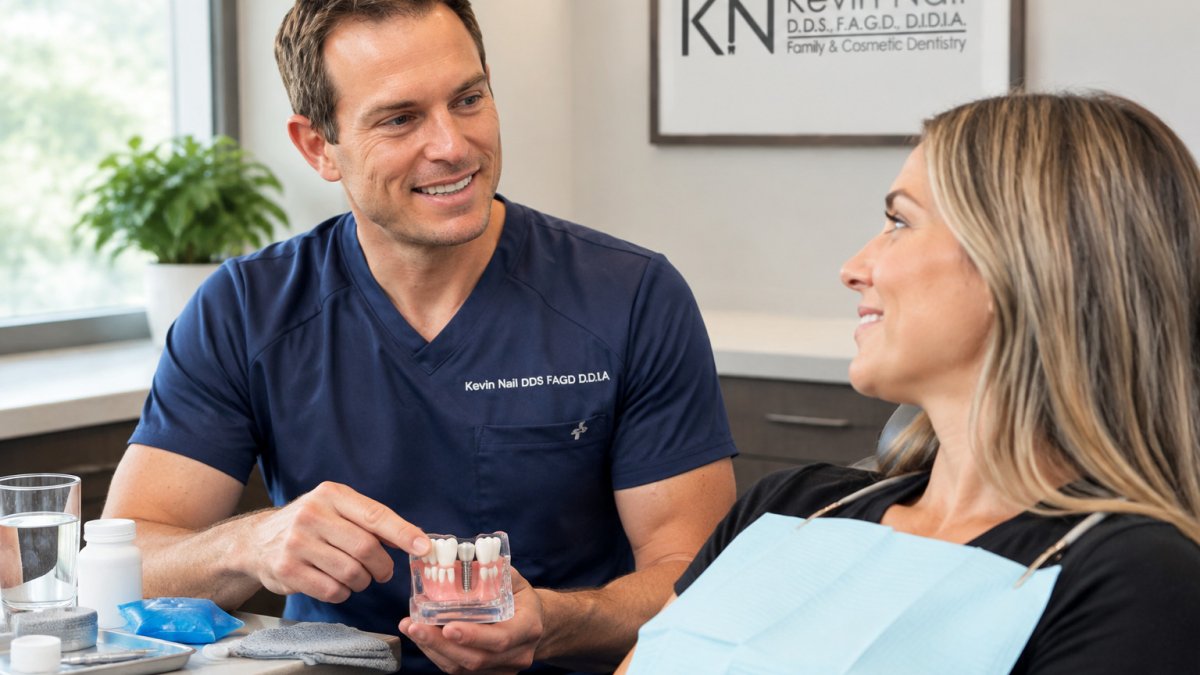
Kevin Nail DDS is a privately owned practice where Dr. If you want tips on choosing the right fit, read finding a dentist for phobic patients.
Anxiety does not have to keep you out of the chair. A short conversation, a stop signal, and a team that expects your fear can change the whole experience.
Frequently Asked Questions
How do I tell my dentist I have dental anxiety?
Say it plainly at the start of the visit or in a pre-appointment message: name the feeling, name what triggers it, and name what helps. For example: "I have dental anxiety, the drill sound is my biggest trigger, and I'd like you to tell me before you start anything." You can also send this by email or mention it when you book. A dentist who treats anxious patients will adjust the pace, explain each step, and agree on a stop signal before treatment begins.
What are common dental anxiety symptoms I should mention?
Physical signs include a racing heart, sweating, shaking, nausea, tight jaw, and dizziness, and some people faint during treatment. Behavioral signs include putting off appointments, canceling at the last minute, or feeling dread for days beforehand. Tell your dentist which ones you get and when they start, because anticipatory anxiety before the appointment often needs a different plan than panic in the chair. Naming your symptoms helps the team prepare the room, the pace, and any sedation options.
Can dental anxiety medication help, and what should I ask about?
Medication can help, and there are several levels: nitrous oxide for mild anxiety, oral sedatives taken before the appointment, and intravenous sedation for more involved cases. Ask your dentist which option fits your health history, what the recovery time looks like, and whether you need someone to drive you home. Sedation dentistry is not risk-free, so be honest about all medications and conditions you have. Your dentist should explain the plan and get your informed consent before anything is given.
What if I'm scared of the dentist but need treatment now?
Tell the practice when you call that you are scared of the dentist but need treatment, and ask whether they see anxious patients and offer sedation. You can ask whether a first visit can be a talk-only conversation with no instruments, so you can meet the team and agree on a signal to pause. If you are in pain, say so, since same-day emergency care is available. You keep patient autonomy throughout: you can ask to stop, ask for a break, or ask for a different approach at any point.