 Ultimate guide
Why Patient-Centered Dental Care Matters for Your Health
Last Updated: November 22, 2026
Quick Summary
Patient-centered dental care means the dentist builds each treatment plan around the person in the chair, including their health history, concerns and goals. This approach matters because patients who understand their options are more likely to accept a plan and follow through with care. Patients can recognize it by whether the dentist listens first, explains alternatives and respects their choice.
- Patient-centered dental care treats the patient as a partner in treatment decisions, not a recipient of instructions.
- Good communication shows up as understanding, acceptance and follow-through with recall visits and home care.
- Ask for a written treatment plan that shows costs, alternatives and what insurance will cover.
- Practices should measure involvement, not just friendliness, using questions about explanations and decision input.
- Patients can use a checklist to judge whether a dentist asks about concerns and shows alternatives before recommending treatment.
Table of Contents
- What Is Patient-Centered Dental Care?
- Why Dentist-Patient Communication Changes Outcomes
- How Shared Decision-Making in Dentistry Works
- Easing Dental Anxiety With Patient-Centered Care
- Building Personalized Dental Treatment Plans
- How to Measure Patient-Centered Care and Spot It in a Practice
- Booking Your First Patient-Centered Visit in Houston
- Frequently Asked Questions
Patient-centered dental care is the approach where the dentist builds each treatment plan around the person in the chair, their health history, their concerns and their goals. When a dentist listens to a patient’s concerns and explains each step, discussing pain-free dental treatment options can make it easier to choose care that feels right.
Most patients have had at least one visit where they left feeling rushed, confused or unheard. The gap between a treatment that is technically sound and one that a patient understands and accepts is where the quality of care is often decided.
What Is Patient-Centered Dental Care?
Patient-centered dental care is a model in which the dental team takes each patient's values, preferences and clinical needs into account when diagnosing and planning treatment. The patient is treated as a partner in the decision, not a recipient of instructions.
In practice, it rests on a few core principles:
- Listening first. The dentist asks about symptoms, past experiences and what the patient wants before recommending anything.
- Explaining options. Each reasonable treatment is described along with its benefits, risks and cost.
- Respecting choice. The patient decides how to proceed, within what is clinically safe.
- Following up. The team checks how the patient is doing and adjusts the plan as needed.
A common misunderstanding is that patient-centered care simply means a friendlier office. Friendly service matters, but the defining feature is that clinical decisions are made with the patient, not just explained to them.
Why Dentist-Patient Communication Changes Outcomes
Communication is where patient-centered care either works or fails. A patient who does not understand why a crown is needed, or what happens if they delay it, is less likely to follow through.
Good communication tends to show up in three places:
- Understanding: the patient can explain their diagnosis and the options in their own words.
- Acceptance: the patient agrees to a plan they actually intend to complete.
- Follow-through: the patient returns for recall visits and follows home-care instructions.
Watch out: a treatment plan delivered as a list of procedures and prices, with no discussion of trade-offs, often produces a patient who postpones or abandons care.
How Shared Decision-Making in Dentistry Works
Shared decision-making is the process of combining clinical evidence with the patient's own priorities. In dentistry this often means choosing between treatments that are all reasonable, such as a removable partial denture, an implant-supported bridge or a fixed bridge on natural teeth. Each has different costs, timelines and maintenance demands, and the patient's life outside the chair usually decides which trade-off is acceptable.
The mechanics of a real decision conversation
A typical shared decision follows a sequence, and the sequence matters as much as the content:
- State the problem in plain language. The dentist describes the diagnosis and what happens if it is left untreated, without using it as a scare tactic.
- Lay out the realistic options. This includes doing nothing or delaying, when that is clinically defensible, alongside the active treatments.
- Compare on the dimensions patients actually weigh. For each option, discuss expected longevity, number of visits, discomfort and recovery, maintenance at home, appearance, and total cost including what insurance will and will not cover.
- Ask what matters most. The patient names their priority, whether that is speed, comfort, appearance, budget or avoiding a particular procedure.
- Narrow and agree on a next step. The decision can be staged. A patient can choose a temporary option now and revisit a permanent one later.
- Document the choice. A note in the record that the patient was given alternatives and chose a specific path protects both parties and makes the plan easier to follow at the next visit.
Where cost transparency fits
Cost is a clinical variable in dentistry, not an administrative afterthought. A patient who is told a crown costs a certain amount but is not told what their plan will actually pay is being asked to decide with incomplete information.
Watch out: a treatment plan presented as a single recommended procedure with a price, and no discussion of alternatives or insurance, tends to produce a patient who postpones or abandons care.
When patient preference and clinical recommendation diverge
Shared decision-making does not mean the patient's preference automatically wins. It means the preference is heard and weighed against the evidence. If a patient wants to extract a tooth that could likely be saved, or wants an implant when bone support makes it risky, the dentist's job is to explain the trade-off clearly, document the conversation, and decline to provide care that falls below the clinical standard.
What informed consent requires
Informed consent in dentistry is more than a signature. It requires that the patient be told the diagnosis, the nature of the proposed treatment, the reasonable alternatives, the material risks and benefits, and the likely consequences of declining.
The article lays out how the costs of different options compare, so a reader can see the main trade-offs side by side.
| Option | Key trade-off | Practical note |
|---|---|---|
| Removable partial denture | Lower cost, removable | Discuss expected longevity and maintenance |
| Implant-supported bridge | Longer-lasting, more visits | Depends on bone support and healing |
| Fixed bridge on natural teeth | Fixed, requires adjacent teeth | Compare cost and timeline with patient |
| Staged treatment | Temporary option now, permanent later | Patient can revisit the permanent option |
Easing Dental Anxiety With Patient-Centered Care
Dental anxiety keeps many adults from getting care they need, and it often gets worse with every postponed visit.
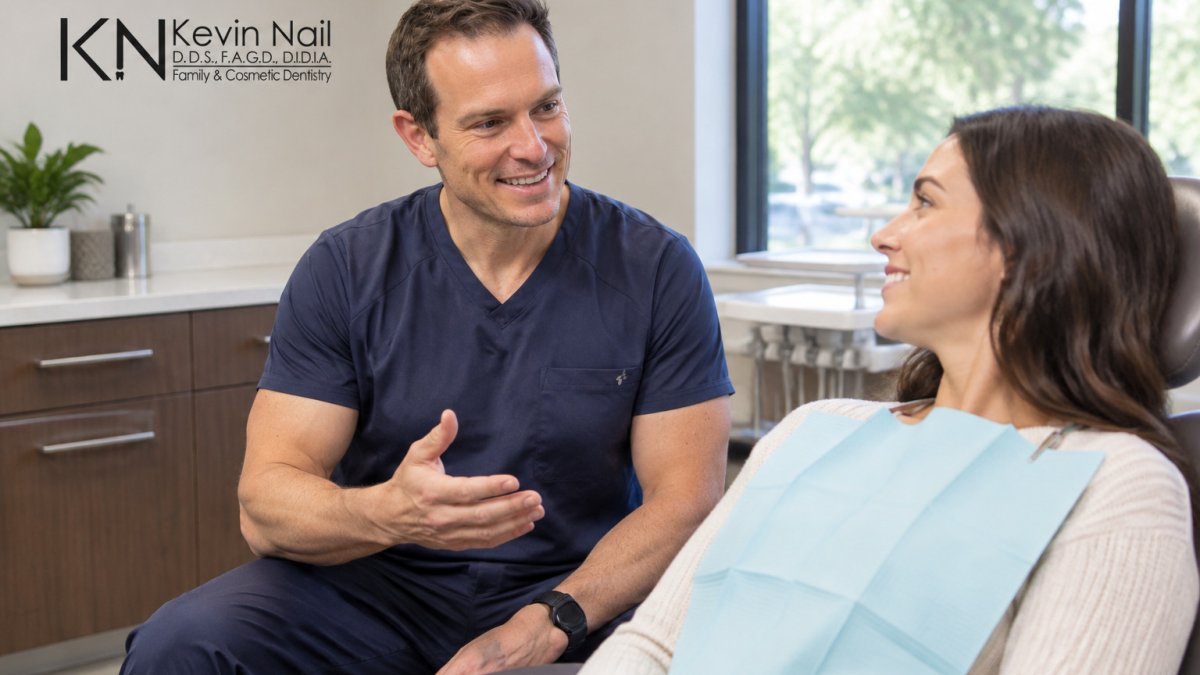
Several practical steps help. Explaining each step before doing it reduces surprise. Agreeing on a signal for a break gives the patient control. Patients weighing the choices can compare sedation options for dental phobia side by side.
Some anxious patients do best with shorter, more frequent visits, which lets trust build gradually. Readers choosing a dentist who puts comfort first can read how to find a dentist prioritizing patient comfort for what to look for.
Building Personalized Dental Treatment Plans
A personalized treatment plan reflects the patient's specific mouth, health history, habits and goals rather than a standard template.
A useful personalized plan usually includes the diagnosis in plain language, the recommended sequence of treatment, the reasonable alternatives with trade-offs, the estimated timeline and the expected maintenance afterward.
When it comes to implant dentistry, personalization matters a great deal. Factors such as bone density, the number of missing teeth and the patient's healing capacity all influence whether a procedure is appropriate and how it should be done.
How to Measure Patient-Centered Care and Spot It in a Practice
You do not have to take a practice's word for it. Patient-centered care can be observed and, to some extent, measured. Most practices that do this well use a mix of patient-reported feedback, operational data and direct observation rather than a single score.
Patient-reported measures
The most direct way to assess patient-centeredness is to ask patients. Validated instruments exist and are used in dental settings, including the Consumer Assessment of Healthcare Providers and Systems (CAHPS) surveys, which the Agency for Healthcare Research and Quality (AHRQ) maintains for multiple care settings, and dental-specific patient satisfaction instruments used in academic and health-services research. A practice does not need a research-grade instrument to start. A short post-visit survey that asks four things covers most of the ground:
- Did the dentist explain your diagnosis and options in a way you understood?
- Were you given a chance to ask questions and state your preferences?
- Did you feel involved in the decision about your treatment?
Track the share of patients who answer positively on each item, not just an overall average. A practice can score well on friendliness and poorly on involvement, and the two are different problems.
Operational measures
Patient-reported feedback is only half the picture. The following operational measures are commonly used to assess whether the approach is working in practice:
- Treatment acceptance rate: the share of diagnosed treatment that patients agree to and schedule. A low rate can signal communication problems as much as cost concerns.
- Recall adherence: the share of patients who return for scheduled hygiene and recall visits within the recommended interval.
- No-show and late-cancellation rates: frequent last-minute cancellations often track with anxiety, unclear expectations or unresolved cost questions.
None of these measures is a perfect proxy for patient-centeredness on its own. Read together, they show whether the practice is paying attention to the patient across the whole episode of care, not just at the chair.
Direct observation
A patient can assess much of this without any instrument. Watch for whether the dentist explains options before recommending one, whether you receive a written treatment plan with costs and alternatives, whether your questions are answered without rushing, and whether you see the same people over time. For guidance on what distinguishes a private practice focused on individual patients, see choosing a private dental practice.
A checklist for evaluating a dental provider
Use this checklist when comparing dentists or deciding whether your current provider meets the standard:
- Does the dentist ask about your concerns and history before recommending treatment?
- Are you shown alternatives, not just one recommended procedure?
- Is the cost explained, including what insurance will and will not cover?
A provider who answers most of these clearly is likely practicing patient-centered care. One who avoids several of them may not be, whatever the marketing says.
Watch out: a practice can post strong review scores and still fall short on involvement if the survey only asks about friendliness. Ask what the practice actually measures before treating a star rating as evidence of patient-centered care.
Booking Your First Patient-Centered Visit in Houston
If you are looking for a dental office in Houston that works this way, start with a consultation rather than a treatment.
At Kevin Nail DDS in Copperfield, Dr. Kevin Nail personally performs every procedure, and the team includes long-term staff members. The practice's services are described in its own materials; contact the office for current details on what it offers.
Frequently Asked Questions
What is patient-centered care in dentistry?
Patient-centered care in dentistry means treatment is shaped around the individual patient's needs, values, preferences and concerns, not just the clinical checklist. The dentist explains options clearly, asks about fears and goals, and involves you in choices about your oral health. In practice, this looks like a visit where you understand what is being done and why, can ask questions without feeling rushed, and agree on a plan together. Many patients find this approach improves trust and makes it easier to follow through on care over time.
How can I tell if a dental practice is patient-centered?
Look for a dentist who listens before recommending treatment, explains options in plain language and gives you time to decide. Ask whether the same team members see you regularly, how the office handles dental anxiety, and whether treatment plans are written out with alternatives. Pay attention to how staff answer your questions during your first call or visit. A practice that is consistent in these areas is more likely to deliver personalized, patient-focused care.
How can I communicate my dental fears to my dentist?
Tell the dentist or hygienist about your fear at the start of the appointment, even if it feels awkward. Be specific about what worries you, such as pain, the sound of equipment or past bad experiences. Ask for a signal you can use to pause, and ask the team to explain each step before it happens. Discussing comfort options, including sedation dentistry where appropriate, can help. A qualified dentist can assess which approach suits you.
What should I ask when choosing a dentist?
Useful questions include: Will I see the same team members at each visit? How are treatment options explained, and can I take time to decide? What happens if I need same-day care? How are costs estimated before work begins, and how does the office handle insurance? Can I get a written treatment plan? The answers reveal how the practice approaches communication and personalized care. For current pricing and availability, contact the office directly.